
The pre-Inca Wari culture flourished in the Andes and the southern coast of Peru approximately between 450 and 1000 A.D. With its political and religious capital in the city of Huari (Ayacucho), this civilization is known for having set up the first imperial state in the Andean region before the Incas. Their control spread along different routes, managing a vast territory that was connected by a system of provincial capitals and a large road network.
The power of the Wari Culture Peru was based on an advanced administrative organization and great economic resilience. They used complex systems of agricultural terraces and irrigation canals that gave them basic stability. This strength allowed them to resist a 30-year drought at the end of the 6th century A.D., a period that helped cause the collapse of contemporary cultures in the coastal areas, such as Nazca and Moche.
Culturally, the Wari had a significant influence, spreading their iconography (especially in textiles and ceramics) marked by the Staff God motif. Their methods of state organization, the building of regional administrative centers (like Pikillacta near Cusco) and their unique art laid the foundation that the later Inca civilization would adopt and perfect.
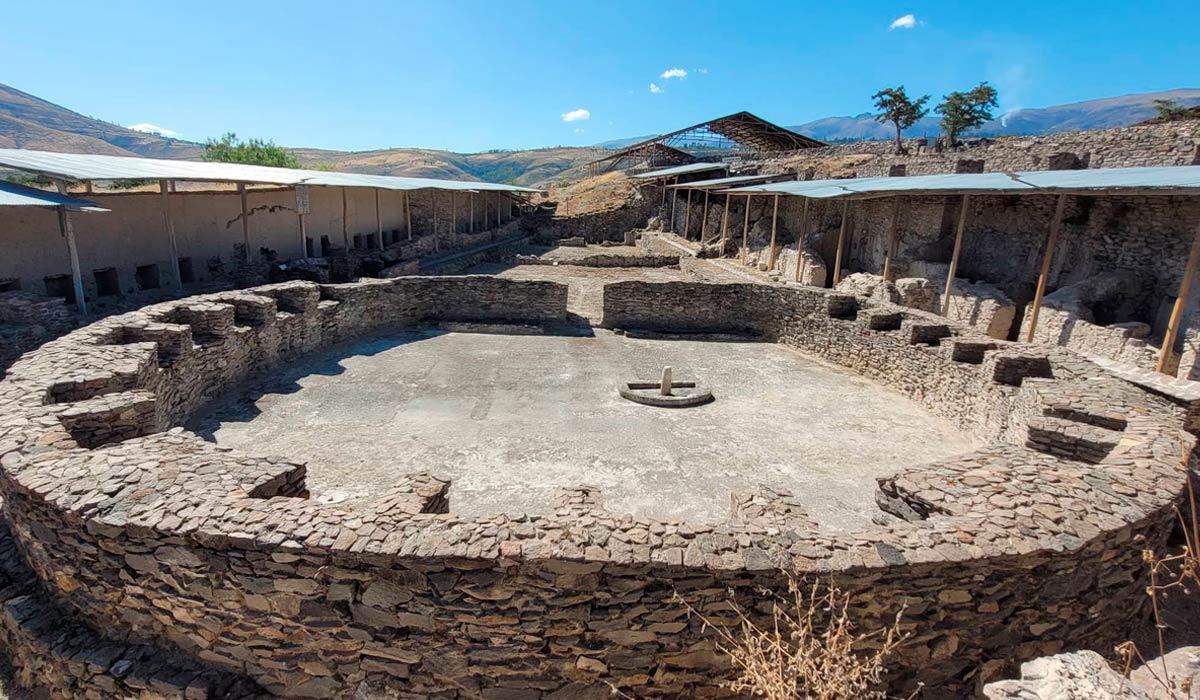
Wari Archaeological Complex Ayacucho
Huari: The Wari Imperial Center
The capital of the Wari Empire (Huari), was the heart of the Wari civilization's expansion in ancient Peru. Located 25 kilometers north of modern Ayacucho and at an altitude of 2,800 meters, this metropolis covered up to 15 km² and held an estimated population of up to 70,000 inhabitants at its height (around 750 A.D.). From here, the Wari applied a combined strategy of military and economic power to strengthen their rule.
Monumental Architecture and Decline
Huari's architecture stands out for its scale. The city was defined by enormous walls up to 10 meters high, built with unworked stones joined with mortar. The interior buildings were organized into labyrinths of two or three-story compartments. Specific centers have been identified, such as the temple of Moraduchayuq, an underground structure that was painted red. Surprisingly, the city appears to have been deliberately abandoned around 800 A.D. for reasons still unknown, and several buildings were ritually destroyed before the total collapse.
Economy and Funerary Findings
The prosperity of the Wari Culture was based on a large trade network and an advanced infrastructure. Huari was surrounded by irrigated fields and was supplied with fresh water through underground aqueducts. The findings confirm trade with distant regions, shown by imported materials such as shells from the coast and spondylus (seashells) from Ecuador.
Excavations in the Monjachayoq area revealed the sophistication of their funerary rites, including a royal tomb made up of 25 chambers on two levels, all lined with fine stone slabs. These findings, dating from between 750 and 800 A.D., have provided valuable evidence about Wari Peru iconography, especially through their textiles and ceramics.
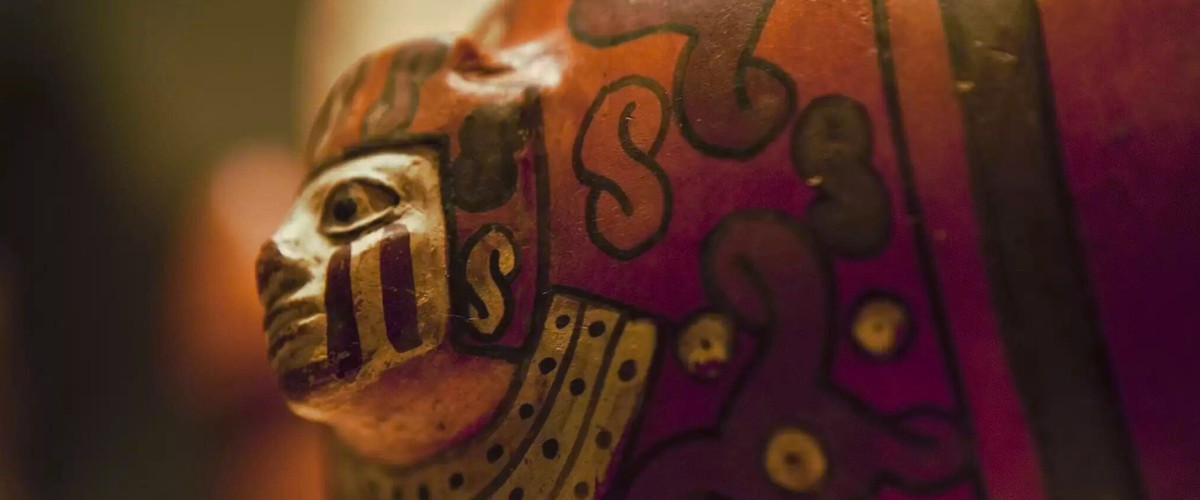
Pikillacta Cusco: The Wari Administrative and Military Center
Pikillacta was one of the most important provincial centers of the Wari Empire, founded around 650 A.D. Located southeast of the capital Huari, at an altitude of 3,250 meters, this complex is remarkable for its urban planning. The settlement has a large rectangular layout (approximately 745 x 630 meters), with buildings set up according to a strict geometric pattern of squares, which shows the advanced organization of the Wari state.
Where is this archaeological center located?
The archaeological site of Pikillacta is located in the Cusco region, about 30 kilometers southeast of the city. Geographically, it is placed in the South Valley (a tourist route less crowded than the traditional Sacred Valley), in the province of Quispicanchi. Its location at 3,250 meters above sea level is a key point, as it places it at a slightly lower altitude than Cusco (3,399 masl), making it an ideal stop for travelers' acclimatization before visiting other higher altitude sites.
About its Architecture and Control
The architecture of Pikillacta shows its role as an administrative and military center. The city was surrounded by impressive walls and access was strictly controlled by a single, winding, and defensive entrance. Its inner buildings, built with mortar, usually had two or three floors. It is known that the city was abandoned between the years 850 and 900 A.D., and evidence suggests that its destruction was deliberate, with some buildings sealed or ritually burned before the total abandonment.
Findings and Ceremonial Wealth
The archaeological findings at Pikillacta are key to understanding the power and ritual practices of the Wari elite. Offering objects that show the richness of the Wari culture have been dug up:
- Miniature Figurines: 40 tiny figures carved from green stone that represented elite citizens were found.
- Precious Metals: Small figures of shamans, warriors, and captives made of copper, gold, and semi-precious stones were also discovered.
- Trade: The presence of these materials, along with imported products like shells from the coast and spondylus from Ecuador, points to a large trade network and the empire's ability to get resources from distant regions.
Other Wari Centers
In addition to Huari and Pikillacta, the Wari administrative network extended to other important provincial centers that followed a similar architectural pattern, such as Viracochapampa, Jincamocco, Conchopata, and the fort Cerro Baúl, all connected by their road system to ensure imperial control.
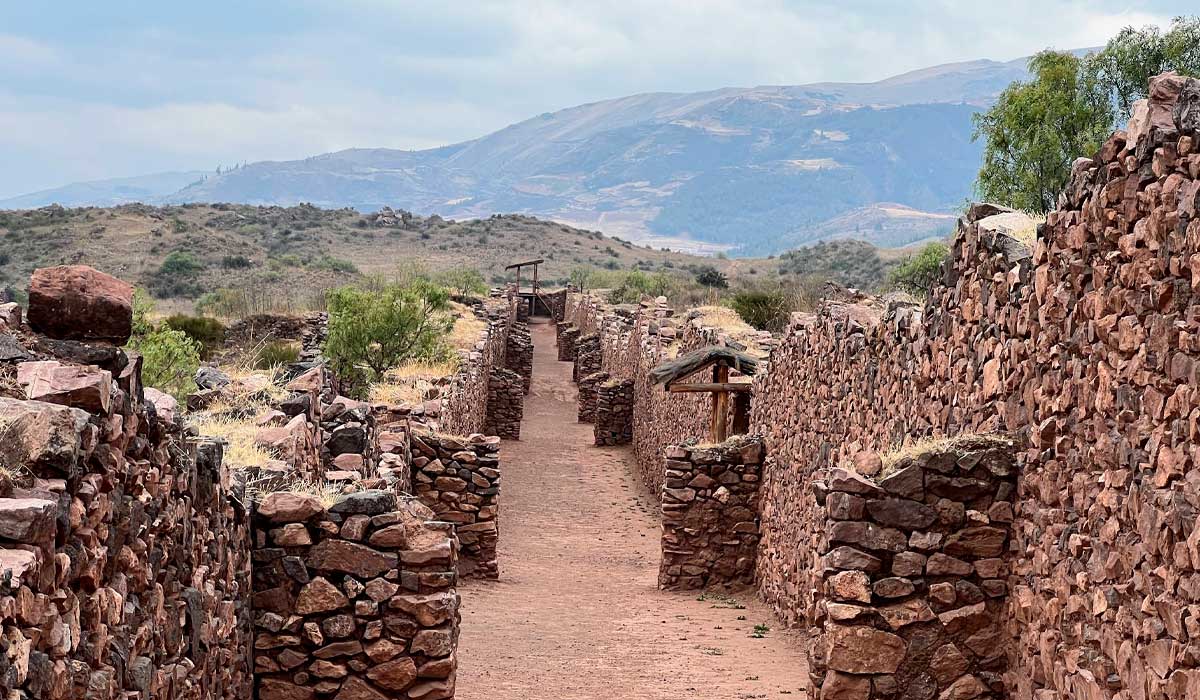
Pikillacta Archaeological Park | Wari Culture
Wari Art
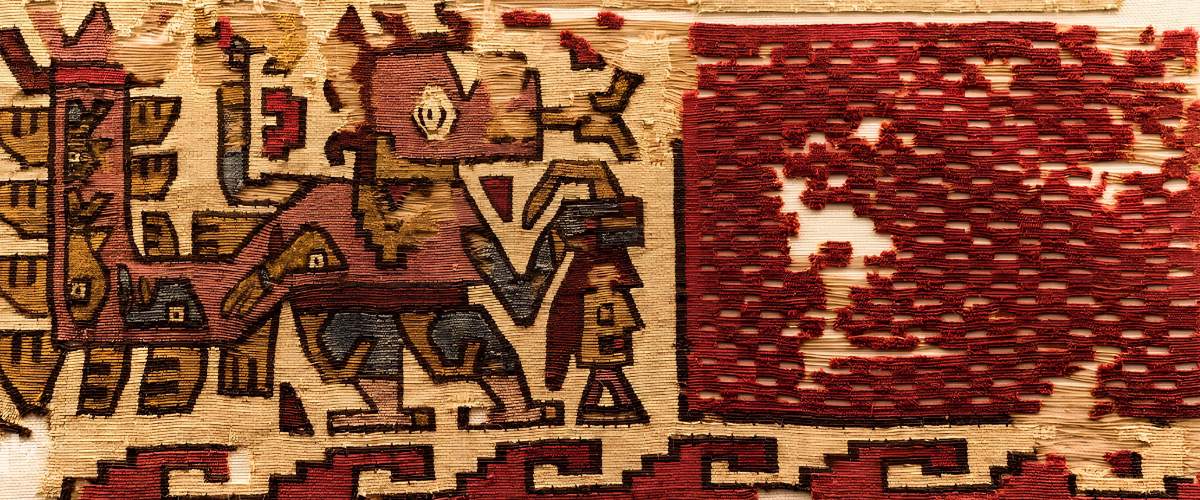
The best examples of Wari art are seen in textile finds that occasionally represent the god of the staff, plants, the flower of the San Pedro cactus, pumas, condors, and especially llamas, illustrating the importance of these herds of animals for the Wari. Textiles were burned with the dead and tombs in the dry desert have been well preserved. The textiles were multicolored, although blue was very present, and the designs were predominantly composed of rectilinear geometric shapes, especially the stepped diamond motif. At the same time, despite the apparent regular geometric patterns, weavers sometimes introduced a single random motif or a color change (typically using green or indigo) into their pieces. These could have been signatures or an illustration that rules could always have exceptions.
Eventually, Wari designs became so abstract that the figures were essentially unrecognizable, perhaps in a deliberate effort by the elite to monopolize their interpretation. The abstract figures distorted almost beyond recognition could also be an effort to represent shamanic transformation and trances of consciousness through substance use, which were part of Wari religious ceremonies.
Popular forms of Wari pottery were the double-poured vessels also present in other Andean cultures, large urns, glasses, plates, and molded effigies. The decorative designs were strongly influenced by those used in Wari textiles production. The staff god was an especially popular theme for pouring vessels (kero) as well as warriors with dart spears, shields and military tunics.
Precious metals were also a popular medium for elite goods. Notable discoveries from a royal tomb at Espíritu Pampa include a silver mask and breastplate, gold bracelets, and other jewelry in semiprecious stones such as greenstone and lapiz lazuli. Human figures in typical Wari attire (sleeveless tunics and four-horned caps) were also made in hammered precious metals.
The Wari legacy
Although the exact causes of the Wari decline are not known, theories range from the overextension of the empire to another period of extended drought in the 9th century AD. Whatever the reasons, the region returned to a situation of fragmented governments for several centuries.
The most lasting legacy of the Wari is their artistic style, which not only influenced their Moche contemporaries but also the later Lambayeque culture, and even later, the Incas. Many of the roads built by the Wari were also used by the Incas within their extensive road system, as well as the large number of Wari terraces for agriculture. The capital of Huari was sacked in ancient times, and again in the 16th century by the Spanish.
Wari culture was rediscovered in the mid-20th century; The first excavations began in the 1940s and today continue to reveal the wealth and power once enjoyed by one of the most important Andean cultures.
Machu Picchu Travel Tours
Reserve our guided trips to Machu Picchu by contacting our travel experts and you will be closer to completing your adventure:
- Cusco Tours
- Machu Picchu Day Trip
- Sacred Valley to Machu Picchu
- Machu Picchu Peru
- Machu Picchu tours from Lima
- Inti Raymi Festival and Machu Picchu
- Combo Sacred Valley to Machu Picchu

Best Hiking Tours
Many are the routes that take you to Machu Picchu, but none is like the Inca Trail Tours, the most famous pedestrian path in the Americas. After flying from the capital of Perú, Lima, you will arrive in Cusco to walk for four days along a path through forests and dense fog, millenary stone steps and discovering the ruins of ancient fortifications and Inca cities, and all the time enjoying majestic views.
- Salkantay Trek to Machu Picchu 5 days
- Hiking the Inca Trail to Machu Picchu 5 days
- Inca Quarry Trail 4 Days
- 2 Day Inca Trail Tour
- 2 Day Inca Trail with Camping
- 3 Day Inca Trail
- Vilcabamba Hike to Machu Picchu 6 days
- Choquequirao trek to Machu Picchu 9 days
- Ausangate trek 7 days
If you want to visit Machu Picchu, we recommend you to book your Machu Picchu Ticket in advance, so you will enjoy your Vacation in Machu Picchu without any problem.


