
As heirs to both Native American and European cultures, Peruvians have preserved a rich diversity of festivals and traditions that comprise their cultural heritage. Throughout the year, countless colorful and energetic celebrations bring passion and joy to Peruvian communities. These celebrations feature vibrant dances and deep expressions of religious devotion.
Peru is considered the birthplace of much ancient Latin American history. Civilizations such as Caral, Chavín, Paracas, Nazca, Moche, Wari, Tiahuanaco, Chimú, and Chachapoyas established important foundations long before the rise of the Inca Empire. Later, under the leadership of Emperor Pachacútec, the Inca government established the Tahuantinsuyo, an empire that extended across much of South America, from Peru and Chile to Bolivia, Ecuador, and parts of Argentina and Colombia. During this time, Andean traditions and the worship of the Creator God spread throughout the empire. Following the arrival of the Spanish, European traditions blended with local customs, forming a unique fusion of history, culture, and multilingual identity.
Today, Peru is recognized as one of the world’s most multicultural countries, with traditions found in every corner of the nation. Each year, local communities celebrate numerous festivals that reflect their history and cultural pride.
Below, we highlight the most important festivals to experience during your trip to Peru:
Top Peruvian Festivals: Must-See Celebrations for Your Trip to Peru
Top 1: Inti Raymi Festival in Cusco
The Inti Raymi Festival is the main celebration dedicated to the Sun, an important element of Andean life in Peru. The principal ceremony takes place in Cusco, the ancient capital of the Tahuantinsuyo. Inti Raymi is celebrated every year on June 24th. The festival begins on the esplanade of Coricancha, where the Inca greets the sun and performs a brief ceremony. The celebration then moves to Cusco’s Main Square, where the past and present symbolically meet, and finally continues to Sacsayhuamán, where the main reenactment lasts around four hours.
During the Inca Empire, this festival was one of the most important religious ceremonies dedicated to the Sun God, and today more than 1,000 actors participate in the performance.
The celebrations extend throughout the entire month. Beginning on June 1st, Cusco comes alive with daily dances and cultural activities performed by schools, universities, organizations, and even groups from neighboring countries such as Bolivia and Ecuador who visit to honor the city’s anniversary. June is considered the peak tourist season, and every day the city is filled with festivities for both locals and visitors.
Top 2: Semana Santa in Ayacucho: The Largest Catholic Celebration in the Region
In March, Semana Santa is celebrated throughout Peru as people remember the crucifixion of Jesus. Major celebrations take place in Cusco, Puno, Arequipa, and especially Ayacucho. This city hosts the most important and impressive festival, where large processions carry the images of the Virgin Mary, Mary Magdalene, and the representation of Jesus’ burial. These processions move through Ayacucho’s Main Square, creating a powerful display of faith and devotion.
In Ayacucho, religious fervor and tradition come together to create a remarkable festival enjoyed by many travelers who seek to experience the culture of this region. If you are planning a trip to Peru, this is an ideal time to visit. You can design an itinerary that includes a three-day stay in Ayacucho; however, booking in advance is highly recommended as this period is considered peak season.
Top 3: Candelaria in Puno – Where Folklore and Religion Create a Beautiful Festival
From January 1st to 15th, Puno celebrates one of Peru’s most important festivals: “Mamacha Candelaria.” Throughout the week, the people of Puno proudly wear traditional costumes and perform dances such as the Diablada and the Tunantada as they parade through the city's main streets.
On the festival's main day, numerous dance groups gather at the Puno stadium to present their traditional choreography in a lively competition. February 2 is the central day of the Festival of the Virgin of Candelaria. With great cultural and religious devotion, Puno proves why it is considered the folklore capital of Peru.
If you are planning to visit Peru in February, consider adding Puno to your itinerary. You can enjoy this incredible celebration and explore Lake Titicaca, the world’s highest navigable lake. Tours are available to the Uros Islands, Amantani, and Taquile.
It is a significant religious and cultural celebration in Peru.
Top 4: Cajamarca: Capital of the Carnival of Peru
Cajamarca is one of those heirs, considered the capital of the Carnival in Peru. This region constitutes an agrarian zone of great importance in the Peruvian economy, because its predominant activities are based on agriculture and livestock; due to the richness of its pastures and the fecundity of its soil. Among its main resources are: corn, wheat, coffee, barley, cocoa, potatoes, olluco, cattle, sheep and goats. Small companies consist of the processing of milk and its derivatives: blancmange, butter, cheese, yogurt, etc. In addition, in this region is one of the most important mineral deposits in Peru, its soils are extracted copper, silver zinc, lead and coal.
Cajamarca was one of the first cities to be inhabited by the Spaniards. On November 16, 1,532, the current square was the stage where two cultural powers faced each other: the Andean and the western, when the Inca Atahualpa was taken prisoner by a group of Spaniards under the command of the conquistador Francisco Pizarro, whom he offered in Inca a room full of gold and two rooms full of silver, as payment for his ransom. Months later the Inca was sentenced to death by garrote.
Due to its historical, archaeological importance and the beauty of its landscapes, on February 14, 1986, the Organization of American States declares it as Historical and Cultural Heritage of the Americas.
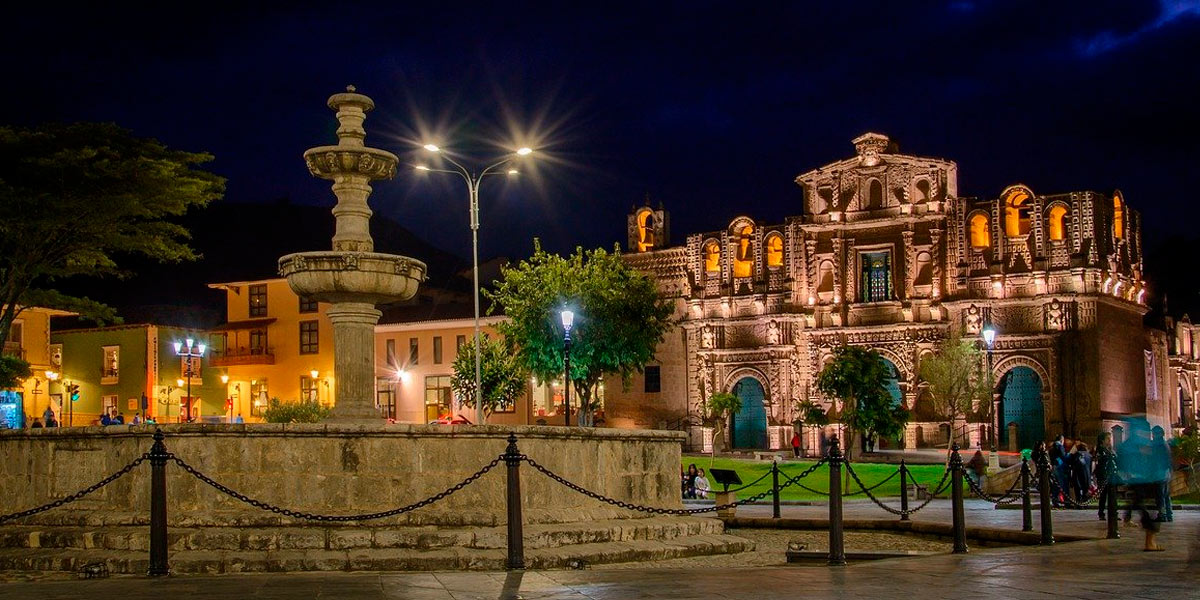
Where is Cajamarca located?
Cajamarca is a city in northern Peru, capital of the Department and the Province of Cajamarca, located at 2720 meters above sea level on the eastern slopes of the Andes Mountains, in the northern highlands of the country.
Cajamarca what to do?
Here are a list of the Main Tourist Attractions in Cajamarca:
- Main Square
- Viewpoint of Santa Apolonia
- Temple of the Cathedral
- Recoleta Church
- The Rescue Room
- Bethlehem Monumental Complex
- San francisco Church
- Inca Baths
- Ventanillas de Otuzco
- Cumbemayo
- Three Windmills Ranch
- Porcón Farm
- The Collpa
- Kuélap Fortress
Cajamarca Culture
In this region there are important historical monuments such as the Cumbemayo canal, the Otuzco windows, the rescue room, church, museum and crypt of San Francisco, Belén church, San Pedro and San Jorge church, the Cajamarca Cathedral, and the Largest forest park in Peru: the Porcón farm.
Among its main dishes are:
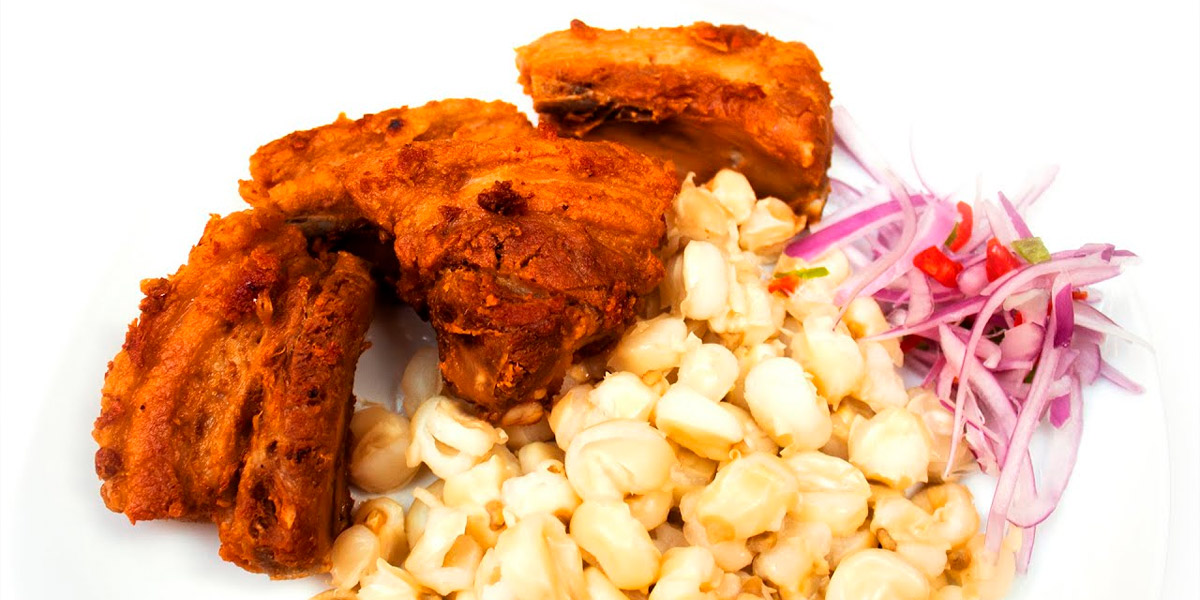
- Guinea Pig with potato in the Cajamarca style.
- Pork Rind with corn
- Wheat soup.
- Quinoa soup
- Humitas.
- Suck or green broth.
To drink do not forget to try the delicious and refreshing chicha de jora or also the cañazo (schnapps). It is also recommended to the famous sweets such as the white delicacy, milk cookies, among other dairy products.
Cajamarca Festivities
- February 11th: Creation Anniversary of the City of Cajamarca.
- February 22: Carnival of Cajamarca, is the most important festival in the city. Corsican presentation, coronation of queens, preparation of typical dishes and drinks, and choppers. Cajamarca is known as the Capital of Carnival in Peru.
- April (movable date): Holy Week in Cajamarca. Traditional festivity of greater popular fevor in Peru, from immemorial years, diverse processions are realized that remember to the Passion and Death of Jesus Christ during 08 days.
- April 13th: Fiesta de las Cruces, in the Province of Cajamarca, Poblado de Porcón.
- May 15th: Feast of San Isidro Labrador.
- June 24: Feast of San Juan Bautista.
- July 16th: Feast of the Virgen del Carmen in Celendín.
- July 24 to 31: FONGAL Fair of Cajamarca, in the province of Cajamarca, district of Baños del Inca. Exhibition and sale of agricultural and industrial products.
- July 28 and 29: Independence Day: Patriotic Anniversary, throughout Peru, civic-military activities are carried out; parade throughout the homeland, in addition are popular regional and local fairs, folk concerts (Andean and Creole) with the presentation of rock groups. During these dates it is very usual to observe the circuses installed in different regions of Peru.
- July 23 to 25: Lord of Huamantanga, in the Province of Jaén, district of Jaén. Presentation of the Great Regional Fair, in which framework religious, cultural and sports activities are carried out.
- October 07: Start of the Tourist Week.
- October 18 to 28: Celebration in homage to the Lord of Miracles.
- December 08: Feast of the Immaculate Conception.
- December 25: Child Christmas God.
Cajamarca Carnival
The Carnival is a celebration that is celebrated all over Peru, with common characteristics; parades, costumes, parties and games with water.
We could say that Peru, given its great cultural diversity, has carnivals for all tastes, but the best known and visited both by nationals and foreigners is Cajamarca, in the region known as the capital of Carnival.
It should be noted that this party has a touch of sarcasm and social criticism, visible both in some of the masks and in the picaresque Testamento de Ño Carnavalón (which is read in public), which alludes to authorities and politicians, institutions and popular characters.
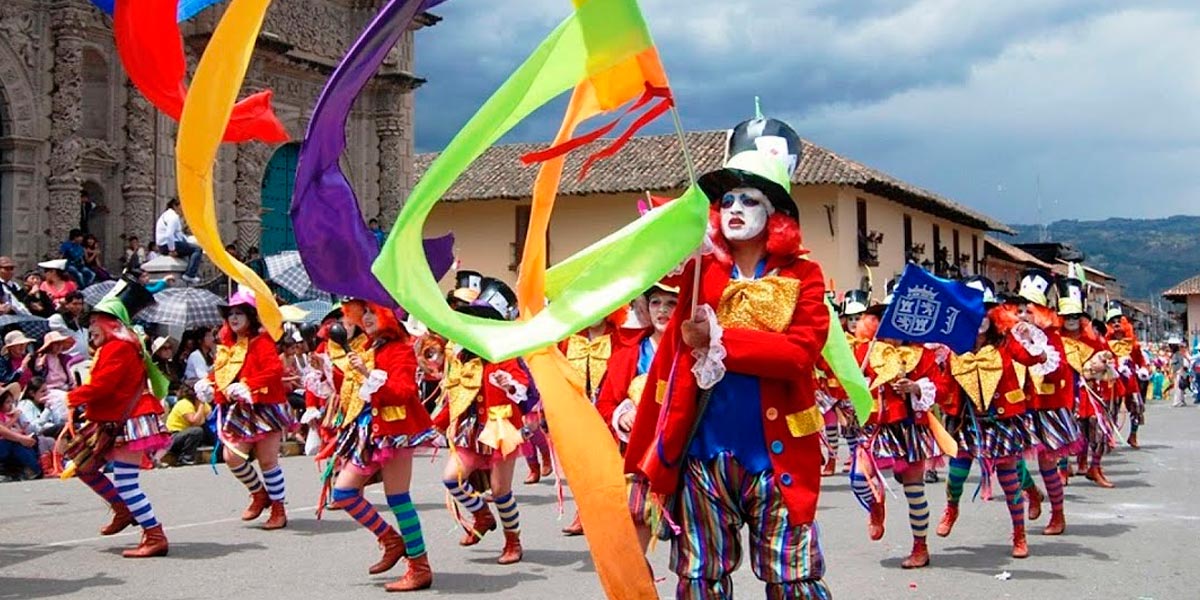
The Cajamarca Carnival is organized as follows according to the official program:
First day:
Entrance of Ño Carnavalón (the Andean version of King Momo) to the city, in a colorful parade that gathers thousands of people (armed with water, paintings and talcum) in search of dance, drinks, party and debauchery, to the rhythm of the traditional songs and counterpoints of the Cajamarquino carnival.
By the way, no one is saved from the water, not even the police, and many of them end up with uniforms full of talcum powder and paint.
Second day:
Contest of patrols and comparsas, groups of friends and dancers with colorful costumes. For professional and amateur photographers this is an ideal day to obtain original images, and for the celebrants in general it is reason for more celebration and party in the streets.
Third day:
Corso de Carnaval, with the participation in addition to floats (at least 50), bands of musicians, dance groups, regional beauty queens and, of course, the Queen of Carnival, as well as acrobats, giants and bigheaded. It is on this day that the best carnival costume is chosen and the prize for the best is to enter the collection of the best costumes in the history of this carnival.
Last day:
The Wake of Ño Carnavalón. The town gathers around the coffin, crying the death of the king of the party with beers, cigarettes, the traditional broth of head. Led by jocosas widows (men disguised as women), Ño Carnavalón's funeral procession crosses the streets of the city. The funeral ends with the reading of the Testament of Ño Carnavalón mentioned at the beginning. In parallel, with the public festival we can also enjoy local cuisine, at events such as the traditional Festival of chicha and bread, which not only awards the best chicha de jora (corn) and the best bread, but also It also has spaces for other typical foods, starting with the traditional head broth (made with a ram's head). The songs and counterpoints sung between bands (by neighborhoods) are perhaps the most beloved and characteristic part of this carnival, so much so that they have been declared officially Cultural Patrimony of the Nation, being an original expression within the oral tradition of the region, result of the appropriation of lyrical genres associated with the Spanish romancero resignified during the colonial and republican stages, according to the law that made it official. These coplas are born spontaneously during the hullabaloo of the celebrations, and the most funny, accurate or picaresque are added to the local collection. Another component of this carnival is the unsha, which is the Cajamarca name for a tree decorated with balloons and gifts, which in many Andean festivals is demolished during the dance as part of the party: the couple that knocks it down will be in charge of replenish it at the next carnival. In other places of the Andes this tree is known as yunsa, arbolazo, cortamonte and, in the jungle, as húmisha. Among the Cajamarca music of carnivals are well known and popular songs such as El Cilulo, and La Matarina, among others.
Lima to Cajamarca flights
Regular flights from Lima to the city of Cajamarca (1 hour) and Jaén (1 hour and 15 minutes).
Top Peru Tours other than Cajamarca Festival
Many are many famous routes in Peru, but none is like the Inca Trail Tours, the most famous pedestrian path in the Americas. After flying from the capital of Perú, Lima, you will arrive in Cusco to walk for four days along a path through forests and dense fog, millenary stone steps and discovering the ruins of ancient fortifications and Inca cities, and all the time enjoying majestic views.
- Salkantay Trek to Machu Picchu 5 days
- Hiking the Inca Trail to Machu Picchu 5 days
- Inca Quarry Trail 4 Days
- 2 Day Inca Trail Tour
- 2 Day Inca Trail with Camping
- 3 Day Inca Trail
- Vilcabamba Hike to Machu Picchu 6 days
- Choquequirao trek to Machu Picchu 9 days
- Ausangate trek 7 days
If you want to visit Machu Picchu, we recommend you to book your Machu Picchu Ticket in advance, so you will enjoy your Vacation in Machu Picchu without any problem.
When is the best time to hike to Machu Picchu?
The best season is during the dry season, which covers the months April to the end of September. In October the rains begin and you can find Machu Picchu covered by clouds. If you travel in June, we recommend you to book the Inti Raymi 2026 Tour that takes place in June 24th, and also hike the Palcoyo Mountain Tour, which is an incredible Rainbow Mountain located in the Andes.


