
The Inti Raymi 2025 (Sun Feast) although formerly known as Wawa Inti Raymi (Festival of the child Sun) was a ceremony that was performed on June 24 (Winter Solstice in the southern hemisphere) in the Main Square (formerly called Huacaypata) of the city of Cusco in Peru. Inti Raymi means resurrection of the Sun in quechua.
The day of Inti Raymi was the largest and most important celebration that took place in the Inca period. Their religion was based on the worship of the Sun, the incas were considered to be the children of the Sun and they thanked its existence to him, they respected him and they corresponded him with sacrifices and offerings.
The event was created by the Inca Pachacutec and all the people attended to the ceremony which lasted 15 days and consisted in the realization of dances, ceremonies and sacrifices. The last Inti Raymi held was on 21 June of 1535.
Unfortunately with the arrival of the Spaniards, the Inti Raymi stopped being done, but returned in its contemporary and tourist version on June 24, 1994. This ceremony starts in the Coricancha, where a fictitious Inca makes an invocation to the Sun. While spectators are in the Esplanade of Sacsayhuaman waiting for to come the procession to start the central and most important the festivity part.
INTI RAYMI SCHEDULE:
- 09:00 hrs. Qorikancha: start of the ceremony (Lasts 30 minutes).
- 11:00 hrs. Main Square (Auqaypata): The Inka and his royal entourage enters to the Main Square (Last 45 minutes).
- 13:30 hrs. Sacsayhuaman: Main ceremony (Last 90 minutes).
HOW TO SEE THE INTI RAYMI:
The performances made in the Qorikancha and the Plaza de Armas are free access to all the public. We recommend to go early for a good location to access and thus to witness the event from an optimal perspective. The activity takes place in 3 different places so it is important to choose where you want to get better visibility. Although you can witness the three staging’s, it will be harder to get good location in Plaza de Armas for those who seek a good location in the Qorikancha (where it starts) since thousands of people will be distributed in these places.
The entrace and location in the installed bleachers in the Sacsayhuaman Esplanade are through the purchase or reservation of numbered tickets and according to the areas that are specified in the table of rates and location map that can be displayed on the web site of EMUFEC (the company that organizes the event).
If you want to witness the event at Sacsayhuaman for free, you can do it from the hills surrounding the fortress. You need to arrive early to get a good location, just in the first two places (Qorikancha and the Main Square).
If you want to avoid all these problems you can book an Inti Raymi Tour with us.
THE PLACES WHERE THE INTI RAYMI IS DONE:
The Inti Raymi takes place in three areas:
- The Qoricancha (Golden fence): In the Incas time this was the main temple dedicated to the sun.
- Main Square (Auqaypata or Warrior Square): During the Inca period, this square was dedicated to the ceremony of the great ushnu.
- Sacsayhuaman: This impressive archeological center is located at 3,555 MAMSL.
The staging that will take place in Sacsayhuaman comprises the following table arts:
- Ceremonial location.
- Report of the 4 Suyos or regions: Qollasuyo, Kuntisuyo, Antisuyo and Chinchaysuyo.
- Rite of the Chicha.
- Rite of the sacred fire.
- Sacrifice of the llama (Andean camelid) and omens.
- Rite of the Sankhu (sacred bread).
- Q’ochurikuy (outbreak of the popular exaltation).
This new version is submitted on the initiative of Humberto Vidal Unda and with the script of Faustino Espinoza Navarro. This ceremony is very important for the inhabitants of Cusco because thanks to the event, during the month of June, the city receives a large number of national and foreign tourists, and this make large profits on the tourist level.
Bolivia also performs the celebration of Inti Raymi, but under the name of Andean New Year- Amazonian (although not all the Amazonian communities celebrate it).
This event has been a tradition for many years and is one of the most expected festivity in Peru.
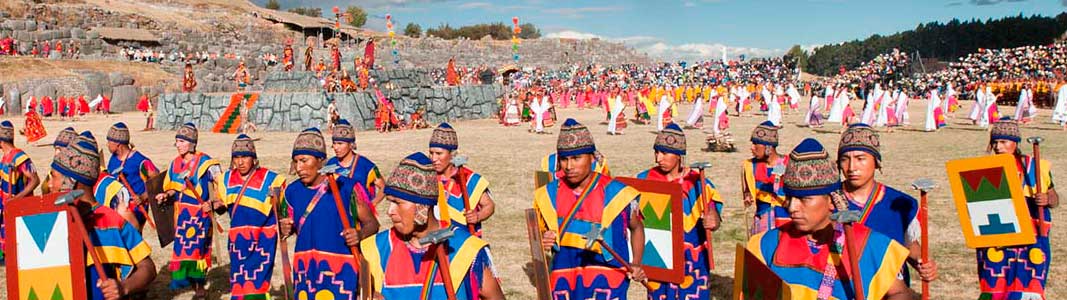
The meaning of Inti Raymi
Inti Raymi is a Quechua term that means "Festival of the Sun". It was a religious ceremony celebrated by the Inca Empire in honor of the sun god Inti, one of the most important deities in their religion. The festival was held on the winter solstice in the Southern Hemisphere, which falls on June 21st or 22nd each year.
Inti Raymi was a celebration of the beginning of a new year and the start of the agricultural season. During the festival, the Inca people would offer sacrifices to the sun god in exchange for a bountiful harvest and a prosperous year ahead. The festival was also a time for the Inca people to renew their allegiance to the Inca emperor, who was believed to be the son of Inti.
Today, Inti Raymi is still celebrated in Peru as a cultural and historical event. The festival is a way to honor the Inca heritage and preserve the traditions of the Quechua people. It attracts tourists from around the world who come to witness the colorful costumes, music, and dance performances that are part of the celebrations.
Recommendations for Inti Raymi
- Inti Raymi is an important festival celebrated in Peru that marks the winter solstice and honors the Incan sun god Inti. Here are some recommendations for experiencing and enjoying the festival:
- Plan ahead: Inti Raymi is a popular event, so it's important to plan ahead and make any necessary travel arrangements well in advance.
- Dress appropriately: The festival takes place during the winter solstice, so be sure to dress warmly and wear comfortable shoes for walking around.
- Get there early: The festival is held at Sacsayhuaman, an archaeological site outside of Cusco, and can get quite crowded. Arriving early will help you secure a good spot to view the festivities.
- Hire a guide: Hiring a knowledgeable guide will help you understand the history and significance of Inti Raymi.
- Be respectful: Inti Raymi is a religious and cultural event, so it's important to be respectful of the participants and their beliefs.
- Bring snacks and water: The festival can last several hours, so it's a good idea to bring some snacks and water to keep you nourished and hydrated.
- Be prepared for crowds: The festival can attract large crowds, so be prepared for crowds and lines.
- Stay safe: Be mindful of your belongings and surroundings, and stay safe during the festival.
- Take photos: Inti Raymi is a beautiful and colorful event, so be sure to capture the memories by taking photos.
- Immerse yourself in the culture: Inti Raymi is a unique opportunity to experience Incan culture and history, so take the time to fully immerse yourself in the experience.
About the ticket for Inti Raymi
The ticket prices and availability may vary depending on the type of seating and the location of the event.
It's important to purchase tickets in advance, as the festival is a popular event and tickets can sell out quickly. Some tour operators may also offer packages that include Inti Raymi tickets and transportation to and from the event.
Keep in mind that there are different sections for the seating arrangements, with different price points. The most expensive sections are the closest to the stage, while the cheapest sections are the furthest away. Regardless of which section you choose, you will still be able to experience the festival and witness the performances.
Amazing Tours in Cusco that you must take after the Inti Raymi
Many are the routes that take you to Machu Picchu, but none is like the Inca Trail Tours, the most famous pedestrian path in the Americas. After flying from the capital of Perú, Lima, you will arrive in Cusco to walk for four days along a path through forests and dense fog, millenary stone steps and discovering the ruins of ancient fortifications and Inca cities, and all the time enjoying majestic views.
- Salkantay Trek to Machu Picchu 5 days
- Hiking the Inca Trail to Machu Picchu 5 days
- Inca Quarry Trail 4 Days
- 2 Day Inca Trail Tour
- 2 Day Inca Trail with Camping
- 3 Day Inca Trail
- Vilcabamba Hike to Machu Picchu 6 days
- Choquequirao trek to Machu Picchu 9 days
- Ausangate trek 7 days
- Palcoyo Mountain Tour 1 Day
If you want to visit Machu Picchu, we recommend you to book your Machu Picchu Ticket in advance, so you will enjoy your Vacation in Machu Picchu without any problem.


