
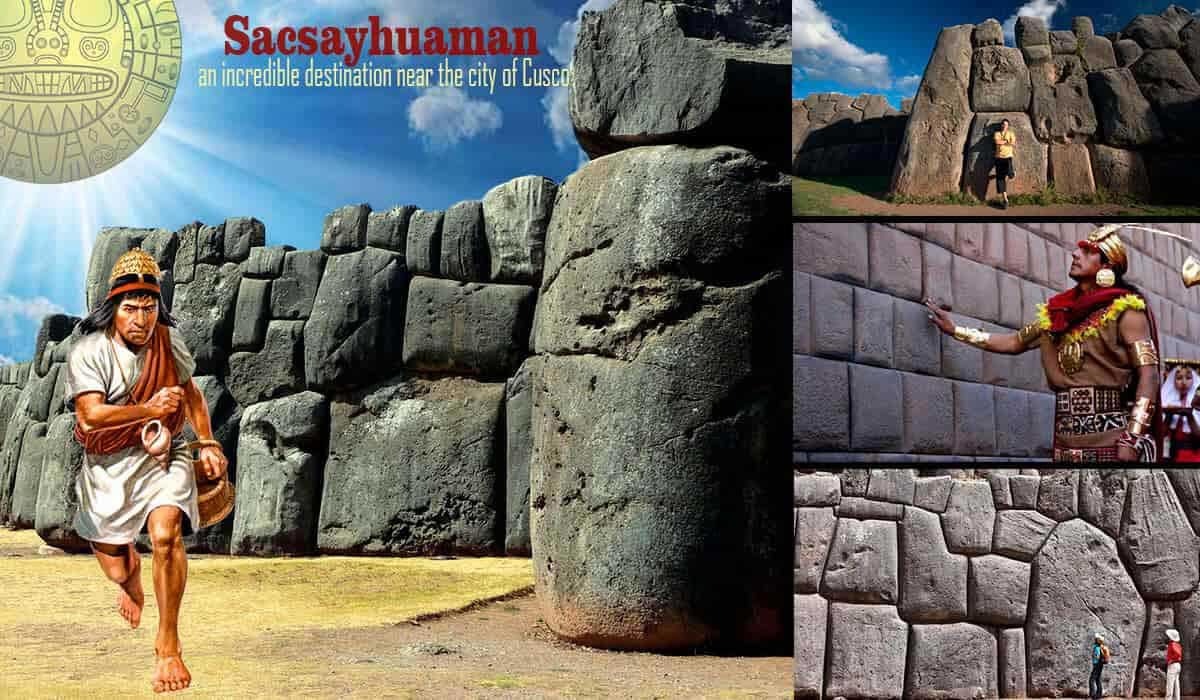
Sacsayhuaman, also called Saqsaywaman, is another impressive Incan construction, just like Machu Picchu. It probably started being built during the rule of the Inca Pachacutec in the 15th century, but it was finished by Huayna Cápac in the 16th century.
We only see about 40% of the Archaeological Complex of Sacsayhuaman. Even so, the site has structures weighing up to 125 tons. It's impossible to transport them by human means. They were built without the knowledge of the wheel or the use of mortar to hold them together. These structures cover 3,000 hectares of colorful Inca enclosures, landscapes, and abundant local flora and fauna.
Some people thought it was a military structure or an Inca stone fortress. This was because of the big battle to defend the city of Cusco. The Inca Cahuide and his army fought against the Spanish in the famous Battle of Sacsayhuaman. But many studies say that Sacsayhuaman is a religious site. They found pottery, bones, and other things from the people who lived there.
The true purpose of this great construction is still unknown, and many questions arise. This makes the construction a mysterious and magical place for local and foreign visitors.
General information about Sacsayhuaman:
To fully enjoy this amazing building, it is important to know the details of how to get there and what time it is open. Sacsayhuaman is more than just a group of big stones. It is a place where the height and weather have an important effect on visitors. Here are the most important facts you should know:
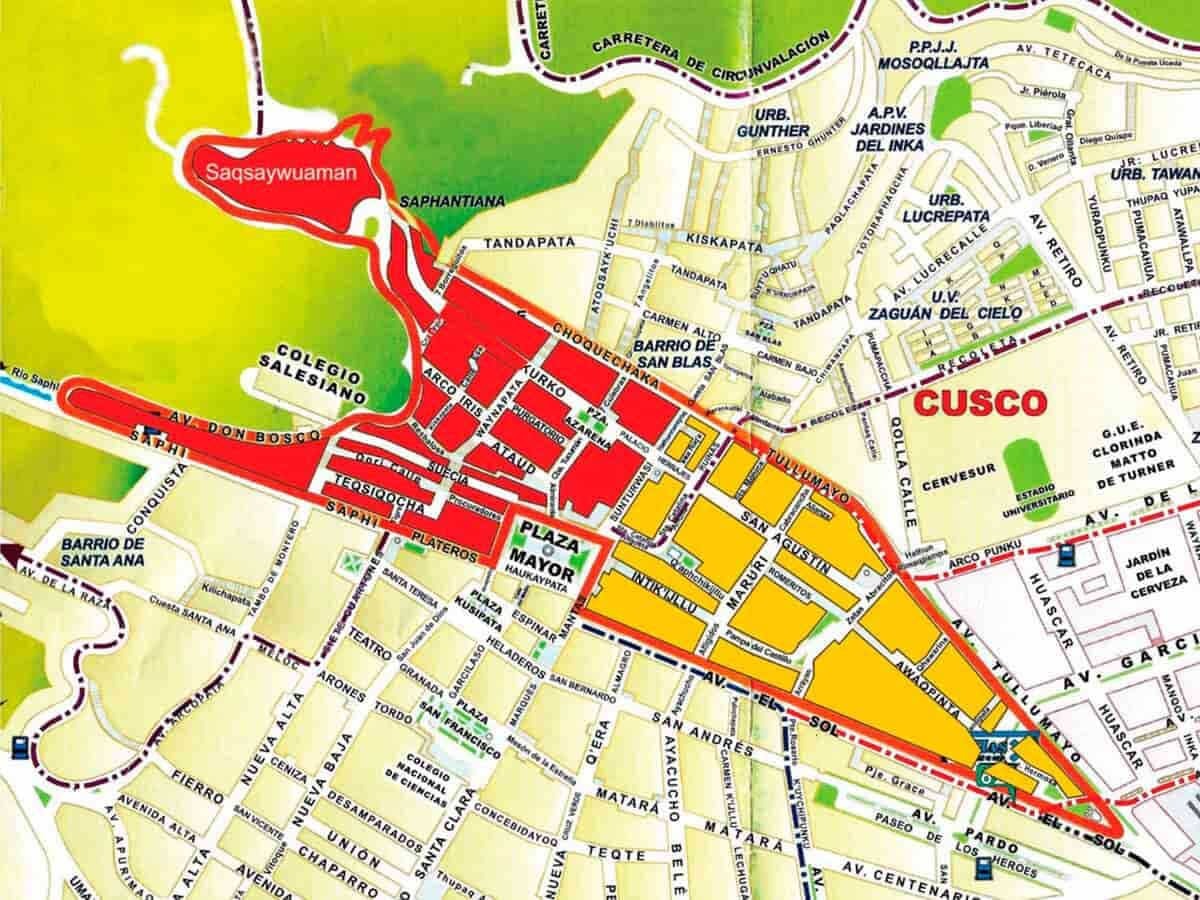
Location: Sacsayhuaman is an archaeological site located north of Cusco, passing through the Qolqanpata sector, in the current and traditional neighborhood of San Cristobal. The distance from the city center is only 2 kilometers, allowing quick access via a paved road.
- Weather and environmental conditions: Sacsayhuaman enjoys a dry and temperate climate, with an average temperature of 12 °C that invites exploration. But remember, there are two very different seasons:
The rainy season is from November to March. This is when the most rain falls, which makes the landscape look deep green.
The dry season (from April to October): During the day, it is warm, and the skies are clear. However, at night, it is usually much colder. - Hours and access: The archaeological complex is open from 7:00 am to 6:00 pm, giving visitors enough time to walk through the site. It is located 3,600 meters above sea level, so we recommend walking slowly to enjoy the pure Andean air without getting out of breath.
- Price and Tickets: Finally, to visit Sacsayhuaman, you must have the Cusco Tourist Ticket (BTC), either the general version (which includes more attractions) or the partial one. This document is your key to entering one of the most impressive Inca structures.
What does Sacsayhuaman mean?
Historian Victor Angles Vargas says that the word Sacsayhuaman comes from two Quechua words. "Sacsay" means "satiated," and "Waman" means "hawk." According to the historian, the halcon was a protective totem of the first Inca ruler, Manco Cápac.
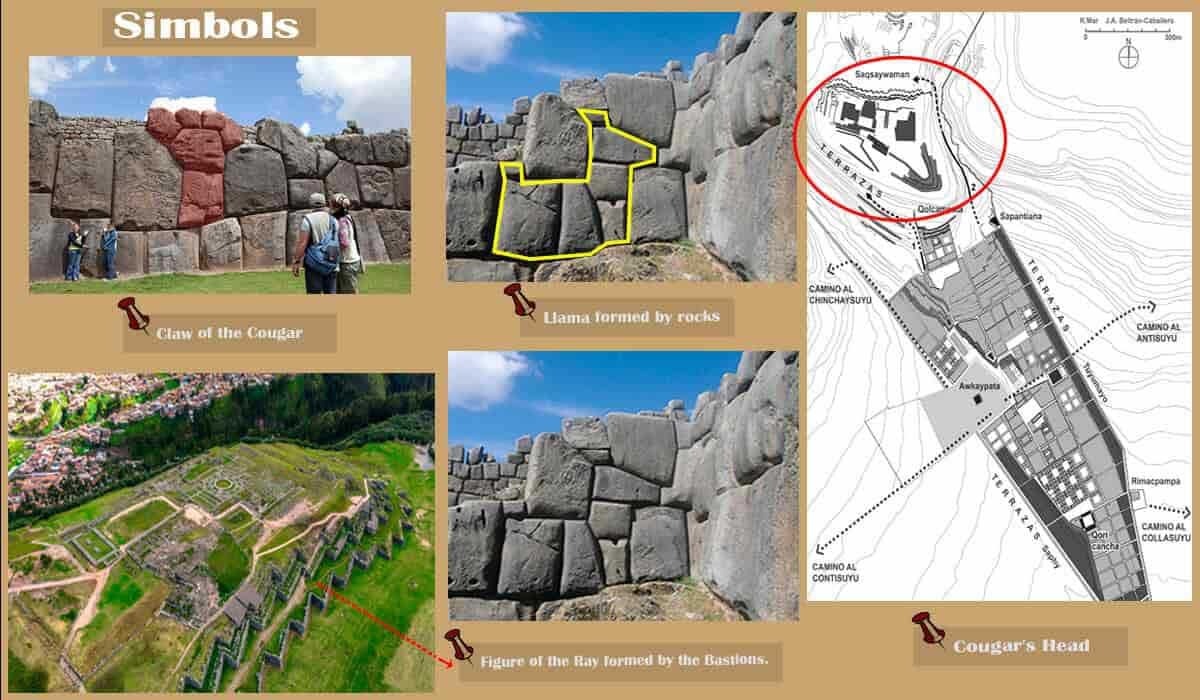
Another version of the meaning of Sacsayhuaman also requires a Quechua compound word: 'sacsa uma' (sacsa = speckled, uma = head). This is an acceptable theory because the city of Cusco has the same layout as a puma, which was considered sacred by the Incas and was seen as a deity that watched over them. Sacsayhuaman was the head of the puma.
Architecture of Sacsayhuaman
The building's construction is special and unique. Some of the stones are very big, which makes people ask a lot of questions, like: Why was Sacsayhuaman built? How could they move the huge blocks? I'm just making guesses.
 |
Sacsayhuaman Peru |
On the other hand, it's hard to understand how the Incas could cut stones so skillfully. They cut the stones so precisely that not even a leaf can enter them. This makes us wonder how they constructed these massive stones, carefully cutting and fitting them.
Throughout the archaeological complex, we see figures made out of stone and rock, entrances to underground tunnels (chicanas), and ritual sites. These sites show that people worshiped many gods from Inca mythology.
Sacsayhuamán was the most impressive architectural achievement of the Incas during their most successful period. It shows how great their culture was in different areas.
Here's how to get to Sacsayhuaman
After flying from the capital of Perú, Lima, you will arrive in Cusco. To reach the archaeological complex of Sacsayhuaman, you can take a city tour. Most of the travel agencies in Cusco offer this service, which includes a visit to the main attractions of the Inca capital.
From the Main Square of Cusco, you can take the Cusco Sightseeing Bus to the Cristo Blanco. You can also take a private taxi to the Inca fortress. This taxi only takes 15 minutes.
 |
Sacsayhuaman Cusco Peru |
You can also visit the Inca fortress of Sacsayhuaman on foot. Go up Suecia Street and turn right towards the church of San Cristóbal. Here, you will follow in the footsteps of the ancient Inca along the route between Cusco and Sacsayhuaman. The climb is steep, but it's worth it. It takes about 30 minutes from the center of Cusco. On the way, you'll see many stone buildings. They are carved and placed in a very informative way about the Inca in Cusco.
Tourist Activities in Sacsayhuaman
Sacsayhuaman and the Festival of the Sun, also known as the Inti Raymi, are two important Peruvian traditions.
The Inca Empire's main god was the sun. Because of this, the Inti Raymi, or Feast of the Sun, is celebrated on June 24 every year. This is the day when the sun is at its furthest point from the Earth (winter solstice). People gather at Sacsayhuaman to ask for the sun to return. They do this with sacrifices and a colorful celebration.
The Inti Raymi is a special event that has been held every year since 1944. It is a play that is performed in Quechua, an ancient language, and translated into Spanish. The play is performed in three important places: Coricancha, the Main Square, and Sacsayhuamán.
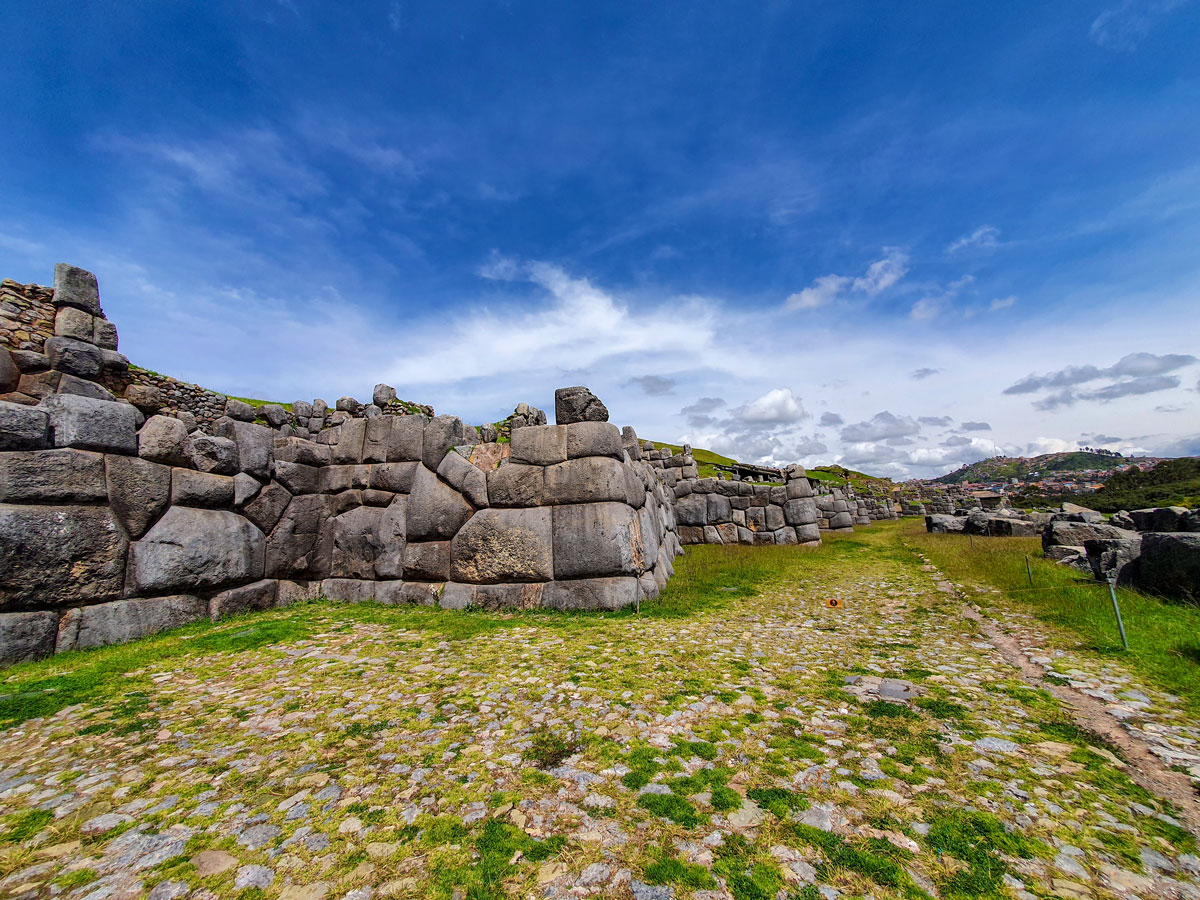 |
Sacsayhuaman Cusco |
Here are some nearby archaeological sites that you can visit:
-
Qenqo
It comes from the Quechua word for "labyrinth." Qenqo has a round amphitheater and stairs that wind up and down the rocks. Inside, there's a carefully designed altar where farmers performed their rituals. At the top of the rocky area, there's a series of seats, steps, and carved stairways. -
Tambomachay
It would have been an important religious symbol linked to water and the renewal of the earth. The site covers about half a hectare and showcases the advanced architectural and hydraulic skills of the Inca. -
Puca Pucara
The complex has many enclosures, interior plazas, aqueducts, watchtowers, and roads. It would have been a place where people could rest and stay. The Inca was said to have visited Tambomachay with a large group of people every time. This group stayed at Puka Pukara. It looks like a fortress.
Other Tours in Cusco:
The Inca Trail Tours are the most popular excursions in Cusco, Peru. Many people think they are among the best walks in the world.
- Salkantay Trek 5 Days
- Inca Quarry Trail 4 Days
- Machu Picchu 3 Day Hike
- 2 Day Inca Trail Tour
- 2 Day Inca Trail with camping
If you want to visit Machu Picchu, we suggest that you buy your ticket ahead of time. This will make sure you have a pleasant trip.
What to see in Sacsayhuaman?
Sacsayhuaman is in an elevated location, so it offers an amazing view of Cusco. You can see mountains like the Ausangate and Pachatusán. The Incas considered it sacred. The archaeological complex has many beautiful places. Most of these places have a lot of history and mysteries that are still unsolved.
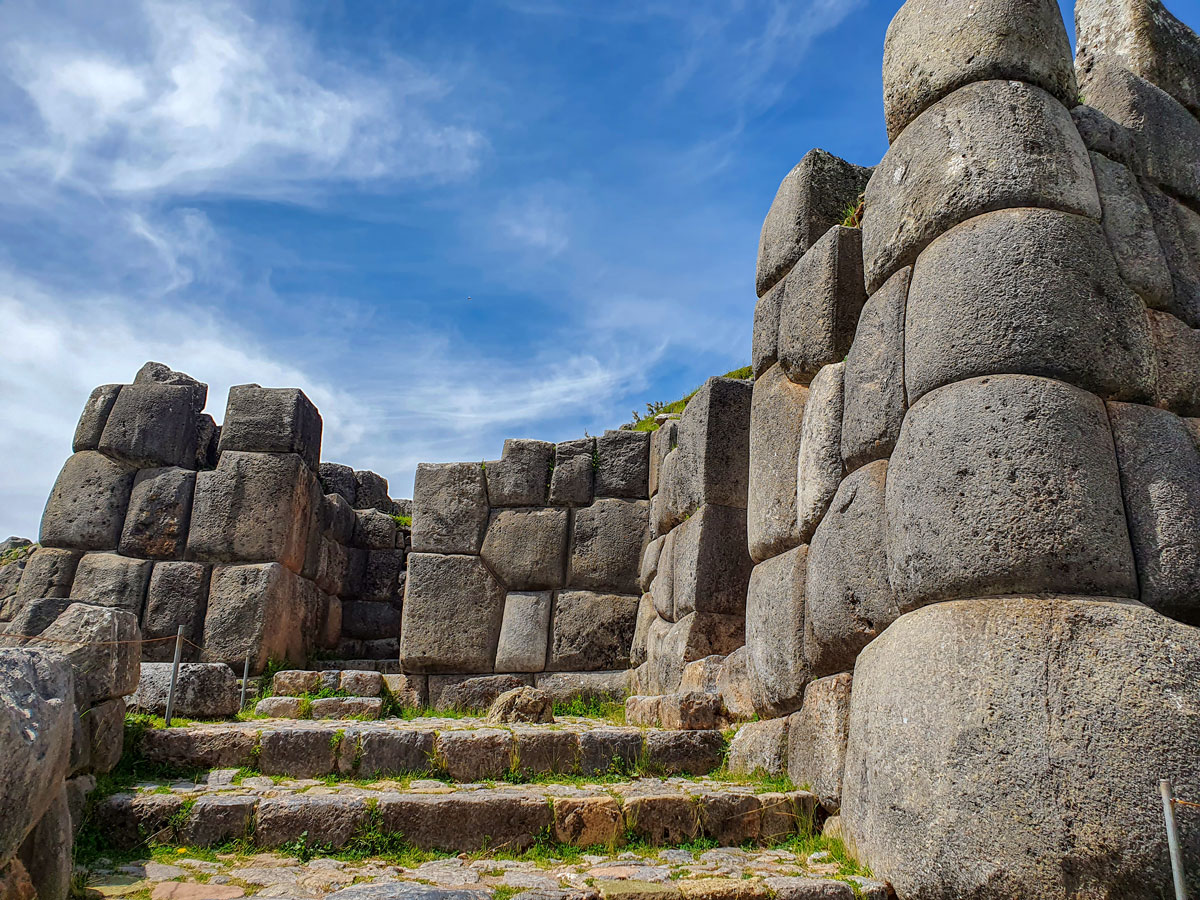 |
Cusco Sacsayhuaman |
The Towers
The towers are located on the Inca fortress called: Muyucmarca, Paucamarca and Sallaqmarca. It is known that there was a lot of water in this part of the Sacsayhuaman ruins. Even now, we can see the aqueducts in perfect condition.
-
Muyucmarca
It is also known as "La torre de Cahuide." It is a huge building (today there is only the base) with an important historical value. The Inca warrior Titu Cusi Huallpa (Cahuide) jumped from the highest part of Muyucmarca to avoid being captured by the Spanish during the Inca resistance in 1536. -
Paucamarca
The remains of this tower are east of the archaeological complex. According to the people who wrote about them, they were used to store water. Right now, it's still being dug up, and it might turn out to be a rectangle. -
Sallamarca
The remains of this tower are located in the center of Sacsayhuaman. It is connected to the other towers through tunnels. Today, only the foundations remain, as they were destroyed by the Spaniards during the conquest.
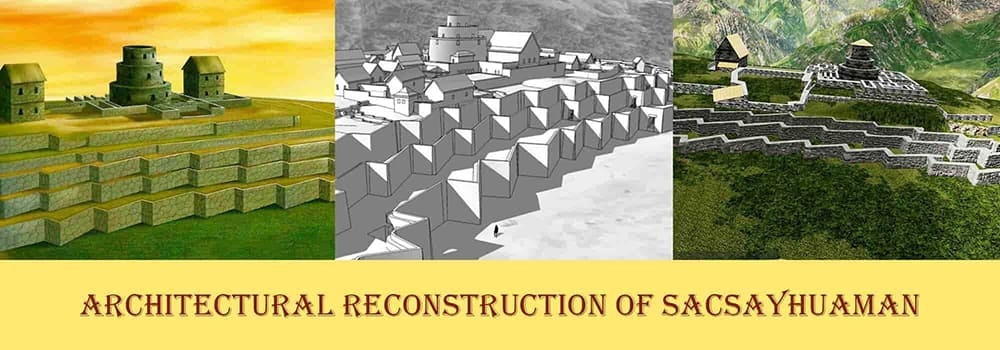
Group of Enclosures
These enclosures are supported on the hill a short distance from the turrets. They are located near the Main Square of Cusco. They are connected by trapezoidal doors.
The Walls (Los Baluartes)
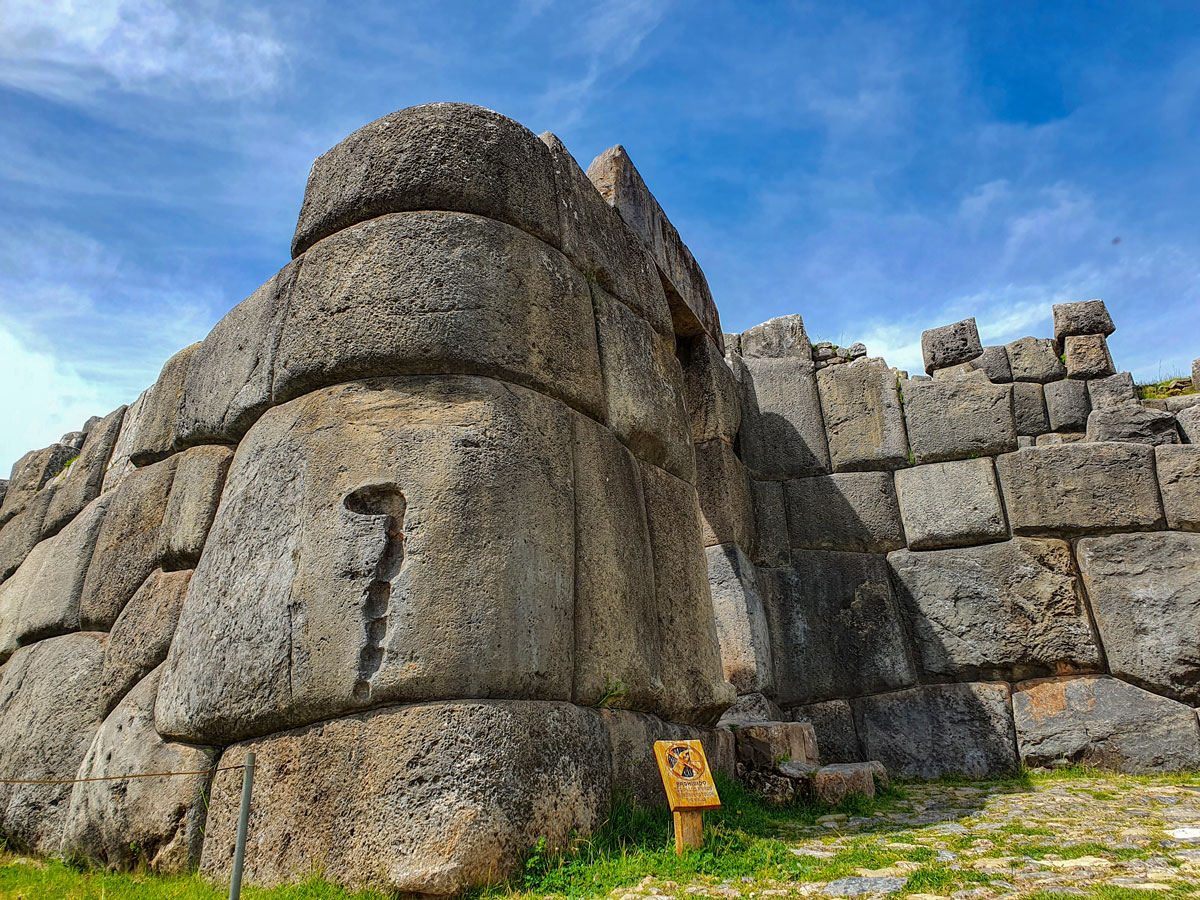
The walls are made of huge stone blocks that are 9 meters high, 5 meters wide, and 4 meters thick. The largest one is thought to weigh 125 tons. This raises the question: Who built these massive, carefully cut and fitted stones?
The giant rocks were put together perfectly, without any mortar. The main wall has three zigzag sections. The second and third sections overlap the first. The platforms are about 360 meters long on average, and they are connected by stairs and doors made of smooth, fine stone.
Historians have suggested that the zigzag design of 'The Wall' may have something to do with the temple. This temple was dedicated to 'illapa,' a lightning bolt god in the Quechua language and Inca mythology.
The doors
They are in the middle of the bastions. They have a trapezoidal shape and served as an entrance to the tower's area. Each door has its own name, as the Inca chronicler Garcilaso de la Vega wrote.
Ajawanapunku: This is the door where the chicha is kept. Chicha is an ancestral drink made from corn that was used in ceremonies and Inca rituals.
The "T'iopanku" is the salt door.
Wiracochapunku: Wiracocha Gate.
"Suchuna" (sloped cliff)
The sloped cliff are a natural formation of diorite, a type of rock formed from volcanic activity. Over time, it was shaped into an arched design as a slider. People come to visit, both locals and tourists.
The Inca throne
The Inca throne is a stone bench. They were polished perfectly and with great skill, making them seem like the throne of the Inca emperor.
"Chincanas" (Tunnels)
The small one is short and has become a distraction for visitors. To the north, there is a great one. According to oral traditions, many people tried to find the end of this tunnel without success. Some people were unable to leave. People think that this tunnel leads to the Coricancha (Temple of the Sun). Right now, you can't go into the tunnel.
According to geologist Dr. Carlos Kalafatovich, these tunnels, called "chincanas," are formed when groundwater seeps into the caves and erodes the rock around it. Its grandeur makes it one of the most surprising and mystical architectural expressions of Inca culture.

When is the best time to visit Tambomachay?
The best time to do this is during the dry season, which is from April to the end of September. In October, it starts raining, and you can see Machu Picchu covered by clouds. If you're traveling in June, we suggest you book the Inti Raymi 2026 Tour, which takes place on June 24th. You should also consider the Palcoyo Mountain Tour, which features an amazing rainbow mountain located in the Andes.
Additional data
According to radar images, Sacsayhuamán is connected to the Coricancha, Marcahuasi (Convent of Santa Catalina in Cuzco), the Inca Huiracocha temple (now the Cathedral of Cusco), the Huáscar Palace, the Manco Cápac temple in Colcampata, the current neighborhood of San Cristóbal, and Huamanmarca.
Many investigations show that the temples were built to align with the stars. This suggests that the Incas had more than just Venus as a guide for building them. It also suggests that they used the Sun, the Moon, the Southern Cross, and the Pleiades (a group of stars in the Taurus constellation) for guidance.


