
The Salkantay Trek to Machu Picchu has emerged as the premier alternative to the classic Inca Trail, offering adventurers a wilder and more immersive experience. Described by National Geographic as one of the world's best hikes, this route passes through some of the most stunning regions of the Andean cloud forest, dominated by the imposing Salkantay Mountain (6,271 m).
Unlike the traditional Inca Trail, this route provides dramatic geographical contrasts. Your journey will take you from rugged, glaciated peaks and turquoise lakes to lush, exotic jungles teeming with wildlife.
One of the major highlights of the Salkantay hike is visiting the ruins of Llactapata. This ancient site sits directly across the valley, offering a unique, distant view of the Machu Picchu citadel that most tourists never see. For those looking to avoid the crowds and embrace dramatic landscapes, the Salkantay Trek is undoubtedly the best way to experience the majesty of the Andes.
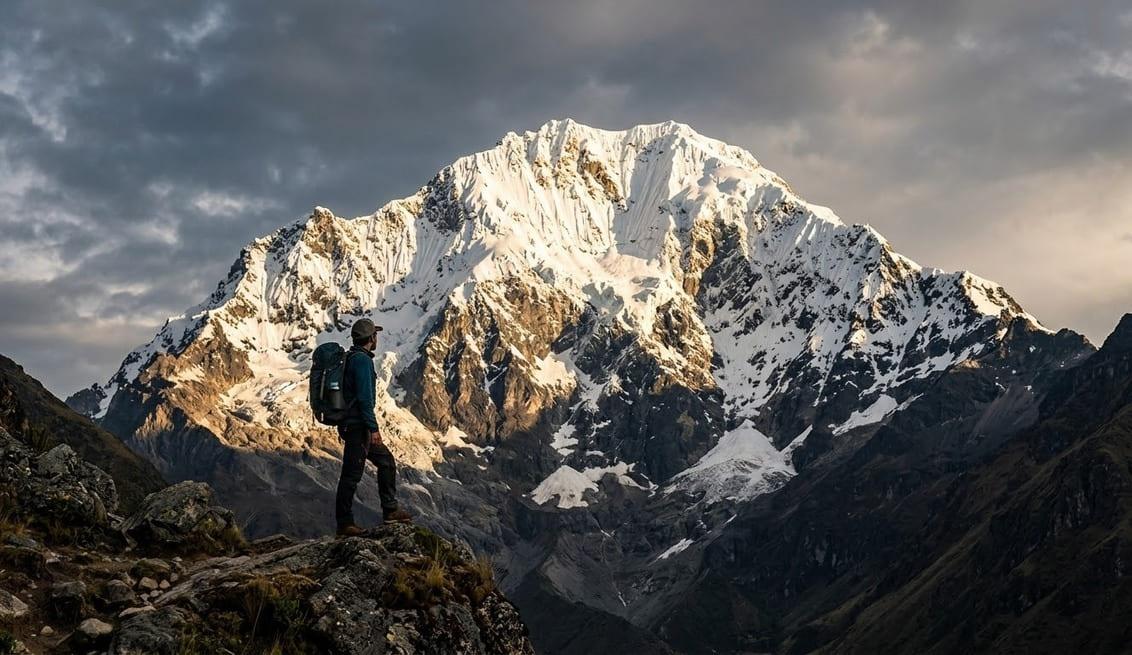
Salkantay Itinerary
The Salkantay hike to Machu Picchu begins with a three-hour drive west of Cusco. There is a technical stop in Mollepata for breakfast before the trek starts at Sayllapata or Challacancha, depending on the current logistics. The route hugs the towering western flank of the mountain and reaches Salkantay Pass, the highest point of the journey, at 4,630 m (15,190 ft), near the base of Salkantay Mountain. After ascending, the trail descends into the cloud forest towards the La Playa area, and then on to Santa Teresa. From there, hikers can either walk to Hidroelectrica to catch the train or enjoy the scenic hike alongside the tracks to Aguas Calientes, located at the foot of Machu Picchu.
The landscapes along the Salkantay Trail have received global recognition.
The Salkantay Trek in Peru (also known as the Salcantay Trek) remains on National Geographic Adventure Travel's list of the 25 best treks in the world. The section surrounding the Salkantay glacier offers breathtaking views of the high mountains, while the descent into the high jungle is visually spectacular yet accessible to those with average fitness levels. This is one of the few routes where you can start your day walking among glaciers and finish it surrounded by lush tropical vegetation.
Quality and Safety
Prices in the current Cusco market can vary considerably. The difference lies in sustainability and the quality of the service, so make sure you choose operators who can guarantee certified mountain equipment, altitude safety protocols, and a professional culinary team who can provide proper nutrition for the physical challenge. Remember: on a high-altitude route, you get what you pay for.
Available Route Options
You can currently choose from different options based on your availability and physical condition.
- 5 Days Salkantay hike to Machu Picchu: This is the classic version, which is the most recommended way to fully enjoy the landscape.
- 4 Day Salkantay hike to Machu Picchu: This is an intensive option for travellers who are in good physical shape and have limited time.
- Salkantay Trek Expedition: The new version features exclusive trail sections and environmentally friendly, low-impact campsites.
Before you go: the Salkantay hike to Machu Picchu.
- You can join this tour as part of an organised trip with Tierras Vivas Cusco. It is advisable to shop around and book in advance.
- If you have experience, it is perfectly possible to do this trek alone. You will need to spend at least one night at an altitude of 3,900 metres or above, so make sure you have good-quality camping equipment that can withstand freezing temperatures.
- Bring some water purification tablets. There are many streams, but also many animals. Some travellers drink from the streams without purifying the water, but it is always better to be on the safe side.
- Horses are included in the Salkantay Trek. You will start in Sayllapa and visit other villages along the way.
- The horses will carry all the camping equipment and food.
- This trek normally takes 4–5 days. Super-fit people can do it in three days.
- Tierras Vivas will pick you up from your hotel in Cusco, Mollepata or Soraypampa.
When to Go
The dry season is the best time to complete this trek. In Cusco, the dry season lasts from April to November and the wet season from December to March. The most popular months for the trek are June to September, due to summer holidays in Europe and the US. However, it is generally thought that May and October offer the best weather conditions. If you are travelling in June, we recommend booking the Inti Raymi 2026 Tour on 24 June, as well as hiking the Palcoyo Mountain Tour to see the incredible Rainbow Mountain in the Andes.
Salkantay Hike to Machu Picchu Itinerary
Salkantay Trekking
The trek usually starts in the towns of Mollepata or Soraypampa, located in the Apurimac Valley to the northwest of Cusco. This is about a three-hour drive from Cusco. Tierras Vivas can transport you from your hotel to the starting point of the Salkantay Trek.
The first day of the trek is not difficult; it involves a gentle ascent and mostly follows a road (with a couple of shops selling drinks and snacks en route). This allows you to acclimatise to the high altitude. An hour into the trek, you will catch your first glimpse of the snow-capped mountain! If you are finding the first day tough, let your guide know, as it will only get harder. Tierras Vivas provides horses for anyone who is having difficulty hiking.
Starting the Salkantay Trek to Machu Picchu
It is vital that you are prepared for the cold on the first night of this trek. The camp is located next to the snow-capped peak of Salkantay. On a clear night, you can see a sky full of stars. A good-quality sleeping bag is essential if you want a good night's sleep. Tierras Vivas provides a down-feather sleeping bag.
Hiking to Salkantay
Day two starts with a long uphill trek, so make sure you eat a big breakfast to give you extra energy in the morning! This day alone is more challenging than the regular trail. It is the steepest section of the trek, reaching 4,630 m (15,190 ft) in about 3 hours. However, do not let that deter you. Try to keep a steady pace — many people in their 60s and older have successfully completed this hike to Machu Picchu. Remember to take it easy on the pass, particularly if you haven't had much time to acclimatise. If you start to feel unwell at any point, slow down and inform your guide. There are some small shops in Chaullay and Collpapampa.
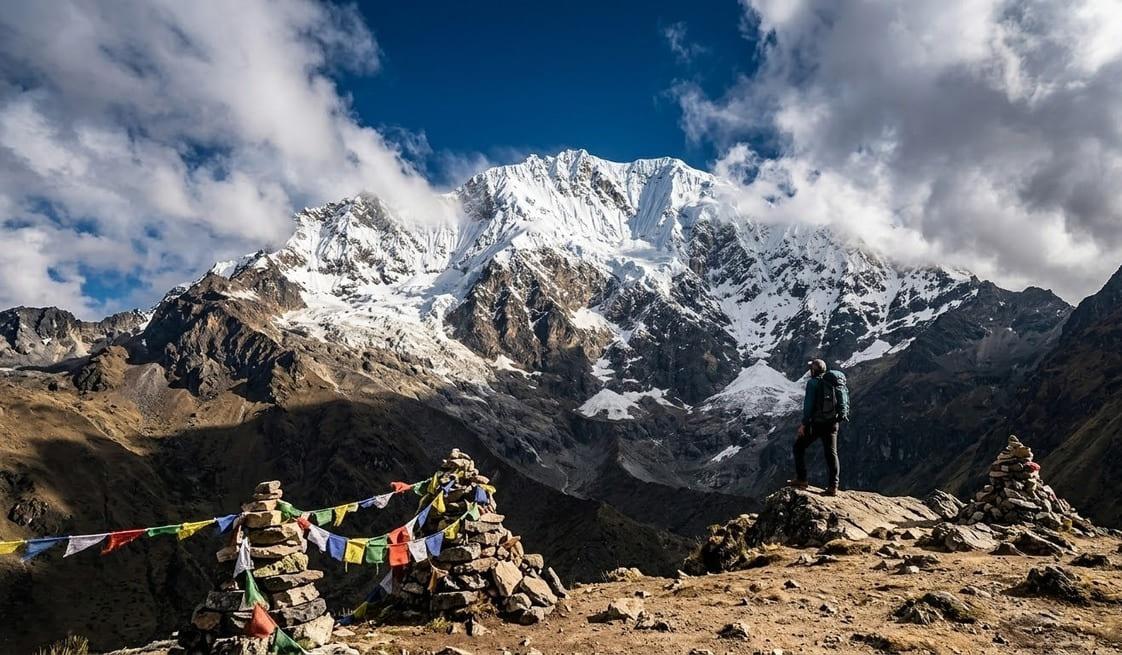
The glaciers at the summit are unbelievable. The scenery on this trek is the best you will find on any hike. The pass at 4,630 m (15,190 ft) is bitterly cold. Make sure you dress in layers as you will find yourself in a much warmer area at the end of the day. Don't forget your hat, gloves and a suitable jacket for the pass.
The trek for the next day is shorter than the day before, but it is still difficult depending on the weather. You will pass through the upper jungle region, crossing streams and passing waterfalls, and enjoy stunning views of the gorgeous valleys. From this point, you and your group can choose from two options.
Hiking to Llactapata
Llactapata - Inca Trail
The first option is to hike for two hours from La Playa to Aobamba, where you will spend the night. The next day, you will wake up early and continue the trek to Llactapata Mountain. You will climb for four hours to the highest point, where you will enjoy a guided tour of the Llactapata ruins and take in the views of Machu Picchu Mountain and the beautiful landscapes. After lunch at Hidroelectrica, you will walk up 45 minutes to the railway, before continuing the trek to Machu Picchu town for a further three hours. You will then spend the night there.
Santa Teresa Hot Spring
From La Playa, you can take a bus to Santa Teresa, where the thermal baths are located. After three days of trekking, the hot water feels lovely and soothing on your muscles. On day four, you can trek for around six hours to Aguas Calientes, the town of Machu Picchu. This trek follows a level path and is mostly on the road for the first three hours, then along the train tracks for the second half. As you follow the train tracks, you will get your first glimpse of Machu Picchu.
The second option includes zip-lining in Santa Teresa in the morning. The company will take you there and then drop you off at Hidroelectrica afterwards. You can then walk for three hours to Aguas Calientes, or take the train if you prefer.
On the final night, instead of camping, you get to stay in a hotel in Aguas Calientes. Tierras Vivas, the hotel where you will stay on the final night, is very comfortable, and the hot shower will feel great after all that trekking. You can even enjoy a nice meal in the restaurant.
Hiking to Machu Picchu
On the last day, you will finally get to visit Machu Picchu! You can either walk up the stairs for the final part of the hike or take the bus. Although it is rather arduous, most people find it more authentic to hike to the very end. You need to wake up at 4 am, walk from the town to the steps and then start climbing at around 5 am. Depending on your physical condition, the steps can get quite tiring after a while — it is quite a workout! You will probably see the bus pass you by on its way up to Machu Picchu, which may make you feel slightly envious.
Once you arrive, your tour guide will give you a tour of the ruins, after which you will have time to explore independently. You can visit the Sun Gate and the Inca Ridge, and take lots of photos of the Machu Picchu ruins.
Once you've finished, you can take the bus back to Aguas Calientes, enjoy a nice lunch and relax!
There are a number of different Salkantay Trek tours available. The classic tour lasts five days. A shorter four-day version is also available, as well as a longer seven-day adventure. Some tours end in Santa Teresa, which is a short walk from the hydroelectric plant train station. From there, it's a one-hour ride to Aguas Calientes.
What do you need to pack?
- Original passport (plus copies in case of loss)
- Original ISIC (International Student Identity Card) if applicable
- Travel insurance (plus copies in case of loss)
- Pocket money in Nuevos Soles
- A backpack
- A small rucksack
- Rain gear (a rain jacket and waterproof trousers or a rain poncho – these can be purchased in Cusco)
- Comfortable footwear – waterproof trekking shoes are recommended
- Sandals for greater comfort at campsites
- Warm clothes such as a jacket and fleece (thermal clothing is also recommended for cold nights while camping)
- A hat or cap to protect against sun, rain and cold
- Sun cream or sun block
- After-sun cream or moisturiser for face and body
- Insect repellent – the recommended minimum is 20% DEET (please note that there have been no reported cases of malaria)
- Camera and charger/batteries (please note that batteries are quickly consumed in cold conditions).
- Flashlight/headlamp and batteries.
- Handkerchiefs and toilet paper.
- Small towel and toiletries.
- Sufficient underwear.
- Swimsuit (for visiting the thermal baths in Aguas Calientes).
- Snacks (biscuits, energy bars, chocolate, raw fruit, muesli, etc.).
- Please note that we provide daily morning snacks and our meals are very substantial. The recommendation to take your own snacks applies only to customers who like a specific snack that might not be on our menu.
- We provide bottled water for the first morning, as well as a refillable water bottle.
- Optional extras: walking sticks, which you can also rent from us.
- Please note: we provide filtered, boiled water throughout the trek. However, if you wish to use water from streams along the trail, you will need to bring water purification tablets.
Other Hiking tours to Machu Picchu
There are many routes to Machu Picchu, but none like the famous Inca Trail, the most popular hiking route in the Americas. After flying from Lima, the capital of Peru, you will arrive in Cusco, where you will walk for four days along a path through forests and dense fog. You will climb ancient stone steps and discover the ruins of ancient fortifications and Inca cities, all the while enjoying majestic views.
- Salkantay Trek to Machu Picchu 5 days
- Hiking the Inca Trail to Machu Picchu 5 days
- Inca Quarry Trail 4 Days
- 2 Day Inca Trail Tour
- 2 Day Inca Trail with Camping
- 3 Day Inca Trail
- Vilcabamba Hike to Machu Picchu 6 days
- Choquequirao trek to Machu Picchu 9 days
- Ausangate trek 7 days
If you want to visit Machu Picchu, we recommend you to book your Machu Picchu Ticket in advance, so you will enjoy your Vacation in Machu Picchu without any problem.


