
The Mandor Waterfall is one of the most beautiful natural resources that can be found when visiting the Cusco region. This waterfall is located in the district of Machu Picchu, Urubamba province, and offers a different perspective from the machu picchu tours from cusco. It is a setting where the vegetation of the Peruvian Amazon meets the Andes mountain range.
The waterfall has a drop of thirty meters and its waters are known for being crystal clear. When visiting this place, you should consider that it is the habitat of important and endangered species, such as the spectacled bear, which is often seen in the area. Also, this natural environment perfectly complements the experience of those who have done the inca path Peru or alternative routes.
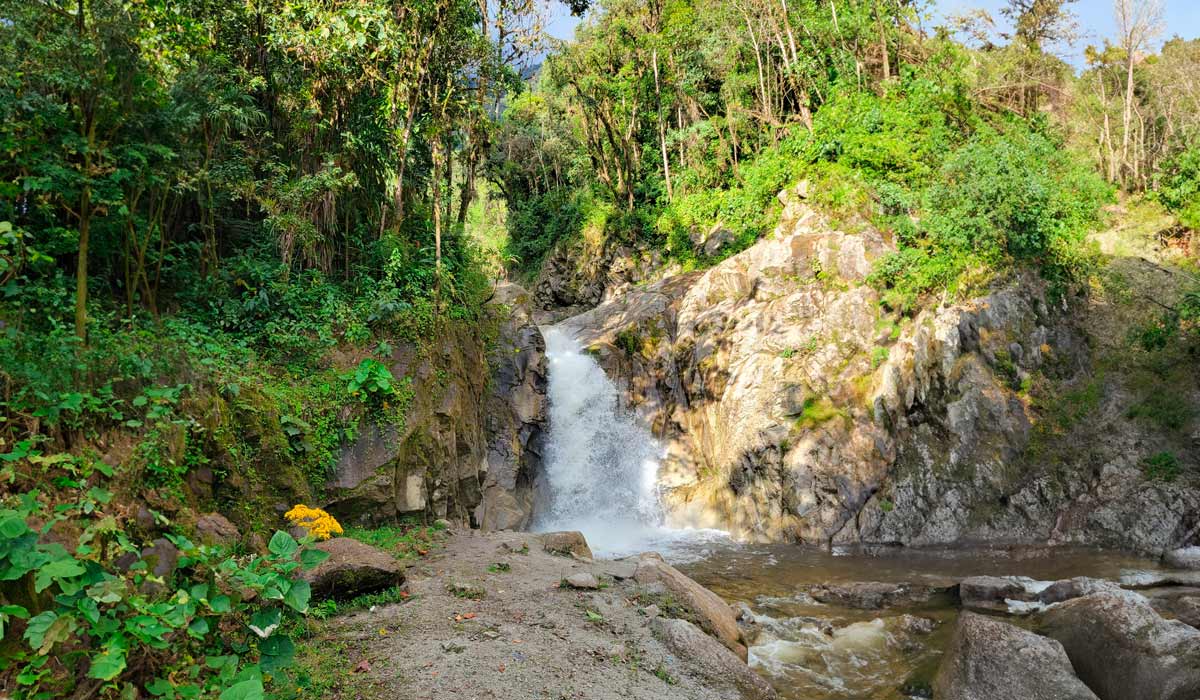
To access the Mandor Waterfalls, it is only necessary to walk about forty minutes from the town of Aguas Calientes following the train line. The entry fee is ten soles per person and the path has shaded areas and low temperatures, so it is recommended to bring proper clothing for the changing weather of these landscapes of Peru.
It is recommended to visit during the morning to make the most of the natural light. Access is simple and can be done independently or with a guide. It should be noted that there is no tourist infrastructure at the site, so the closest services are in the town of Machu Picchu.
Mandorpampa in Machu Picchu
Mandorpampa is a large plain located on the left bank of the Vilcanota River, at an altitude that ranges between 2,000 and 3,900 masl. This place covers part of the cloud forest of the Urubamba mountain range and is the territory that home the famous Mandor Waterfalls. In addition to its natural richness, it is a site of high archaeological value that is part of the landscapes of Peru.
Satellite photos have revealed foundations of Inca buildings in this area. The site was explored in 1987 by the National Institute of Culture (INC), finding remains of buildings that apparently belonged to an ancient town center. It is believed that this place functioned as a camp during the construction of the Inca City of Machu Picchu.
In Mandorpampa there is also a mysterious linear structure called "Cercopata," 1,075 meters long. Its structure is irregular, with sections reaching up to 7 meters in height. It was discovered in 1937 by archaeologist Heinrich Ubbelohde Doering and is pointed toward the snowy Yanantin mountain. It is speculated that it could be part of a giant geoglyph.
Location of Mandorpampa - Cusco
Mandor is an area located northeast of the Historic Sanctuary of Machu Picchu, at Km. 114 of the Cusco - Aguas Calientes (Machu Picchu Pueblo) railway line, 1 hour's walk from the town of Aguas Calientes, following the river bank Vilcanota through beautiful landscapes of the Amazon jungle.
- District: Vilcabamba
- Province: The Convention
- Department: Cusco - Peru
- South Latitude: 13 ° 14 ′ 45.1 "S
- West Longitude: 72 ° 58 ′ 58 "W
- Altitude: 3,863 m.s.n.m.
Historical facts
Before the scientific discovery of Machu Picchu, the peasant named Melchor Arteaga tells the American expeditionary Hiram Bingham, the existence of an ancient stone city in which important Inca buildings could be found, which he found on the heights of the Machu Picchu hill, and that the only way to get to this place was by climbing through areas covered with dense vegetation.
On July 23, 1911, Hiram Bingham reached the Urubamba valley through the vegetation of the Mandorpampa territory, so that on July 24, 1911 he arrived and rediscovered the Inca city of Machu Picchu.
Mandorpampa trek
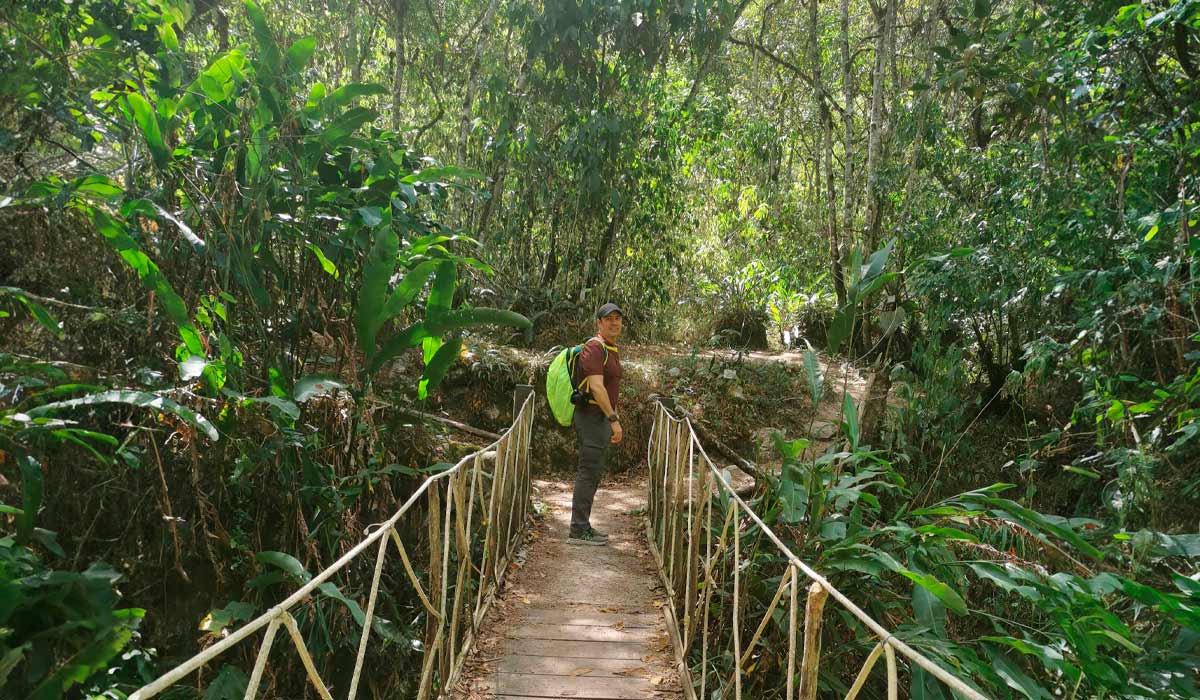
The hike through Mandorpampa allows you to appreciate the great diversity of flora and fauna that surrounds Machu Picchu. During the journey, you can see plant species like begonias, bromelias, ferns, bushes, and various native trees. Also notable are mushrooms of different colors and the fabulous orchids, many of them unique to the Peruvian Amazon.
The surroundings are inhabited by local birds like parrots, hummingbirds, and tanagers, whose songs accompany the traveler. Additionally, it is possible to see several of the more than 400 butterfly species that exist in the Historical Sanctuary. After approximately one hour of walking, you reach the Mandor gardens, a space that holds one of the best biological samples in the area. At the end of the path, you will have the chance to see the Mandor Waterfall, the high point of this route.
Mandor waterfall
It is a waterfall of approximately 30 meters in height, formed by a river of glacial origin whose crystal clear waters finally flow into the Urubamba River. The waterfall is surrounded by thick vegetation that serves as a critical habitat for many species of plants and animals native to the cloud forest.
It is important to consider that this area is private property, so access is regulated and requires the payment of an entry fee at the control booth at the start of the trail. The environment is kept in an excellent state of conservation, allowing the visitor to enjoy a natural setting that is little changed and very different from the more crowded areas of the sanctuary.

Other Famous Tours in Cusco
There are many routes taking you to Machu Picchu. But none is like the Inca Trail Tours - the most famous pedestrian path of the Americas! After flying from the capital of Peru - Lima, you arrive in Cusco to walk for 4 days following a trail through forests and dense fog, millenary stone steps while discovering the ruins of ancient fortifications and Inca towns. All the time, you might enjoy majestic views. You can pick from the following options:
- Salkantay Trek to Machu Picchu 5 Days
- Hiking the Inca Trail to Machu Picchu 5 Days
- Inca Quarry Trail 4 Days
- 2 Day Inca Trail Tour
- 2 Day Inca Trail with Camping
- 3 Day Inca Trail
- Vilcabamba Hike to Machu Picchu 6 Days
- Choquequirao Trek to Machu Picchu 9 Days
- Ausangate Trek 7 Days
If you like to visit Machu Picchu, we recommend you to book your Machu Picchu Ticket in advance. In this way, you will enjoy your Vacation in Machu Picchu without any problem.


