

In the heights of Cusco, four Quechua communities from the Quehue district, in the Canas province, gather to renew the Q'eswachaka bridge, the last construction of this type that survives from the ancient Inca empire. Made entirely with plant fiber ropes, the bridge crosses the Apurimac river just as it did more than 500 years ago, using the same techniques as their ancestors.
About 1,000 villagers from the communities of Hunchiri, Chaupibanda, Choccayhua and Ccollana Quehue participate every year in this reconstruction. What makes this ritual unique is the use of ancestral materials and techniques: no steel, no modern machinery, only the hands of the community and the knowledge passed down from generation to generation.
The work starts weeks before the assembly. In the heights, q'oya is collected, a strong straw that will serve as the base and handrail of the structure. Braiding these fibers leaves visible marks on the skin of the weavers, proof of the roughness of the material and, at the same time, of the strength that the finished bridge reaches: according to the local villagers, it can support the weight of 15 llamas and their shepherd.
More than an engineering work, Q'eswachaka is an act of brotherhood: each woven rope connects not only the two shores of the Apurimac, but also the present of these communities with their identity and their history. Next, we tell you where this bridge is located, how its reconstruction is carried out every year, when is the best date to visit it and how you can be part of this unique experience in the Andes.
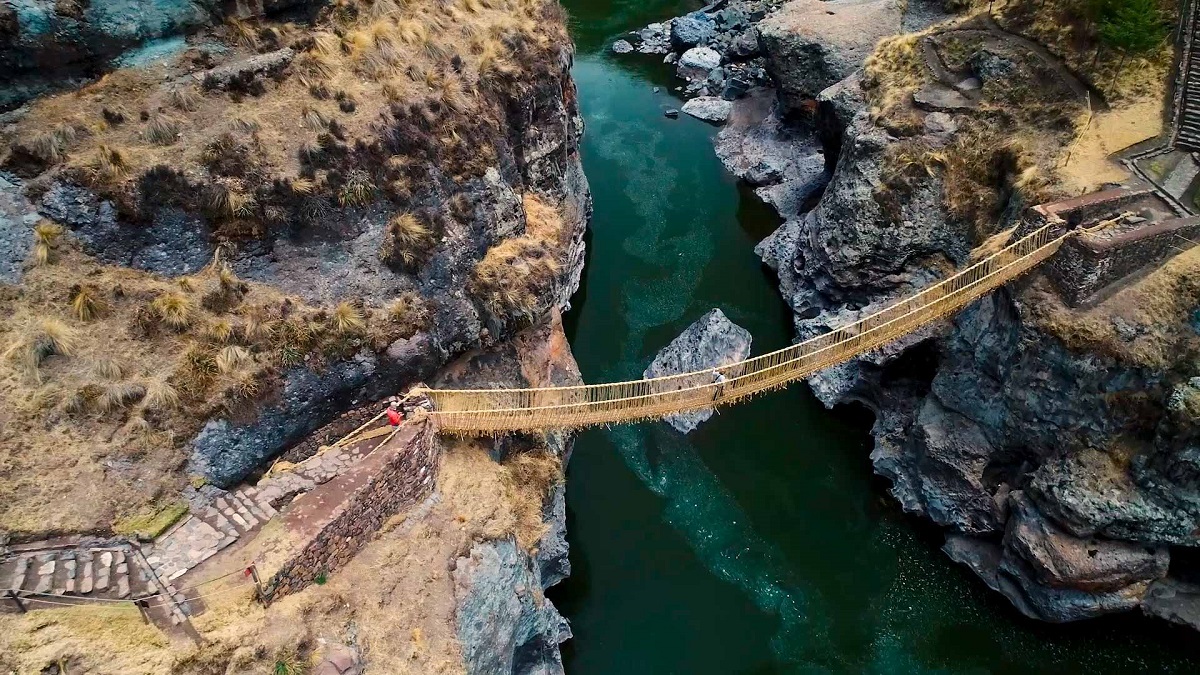
What is the Q'eswachaka bridge?
The Q'eswachaka bridge is the last hanging bridge of Inca origin that remains in use and is rebuilt following the traditional method with which it was built more than five centuries ago. Its name comes from Quechua: q'eswa means "rope" and chaka means "bridge", a literal translation of what this structure really is.
Unlike other Inca remains that today are stone ruins, Q'eswachaka is still a working bridge. Every year, when the plant fibers wear out from use and weather, the communities of Quehue take it completely apart and weave a new one from scratch, in the same place and with the same design. It is, in other words, a bridge that never stops being the same, even though literally none of its original ropes survive from one year to the next.
It was part of the Qhapaq Ñan, the large network of roads that connected the Tahuantinsuyo, the Inca empire. During colonial times, this type of hanging bridge was preferred over stone bridges for a practical reason: its ability to resist earthquakes was greater, something that the Inca engineers had already understood centuries before modern seismology existed.
Where is the Q'eswachaka bridge located?
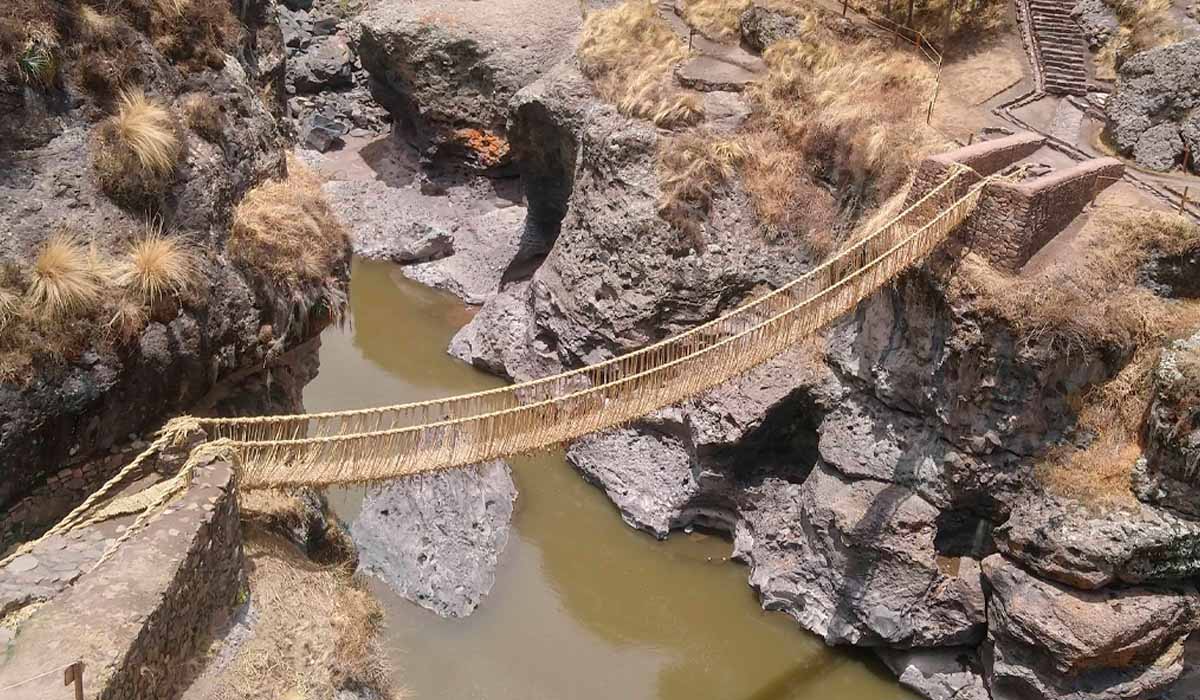
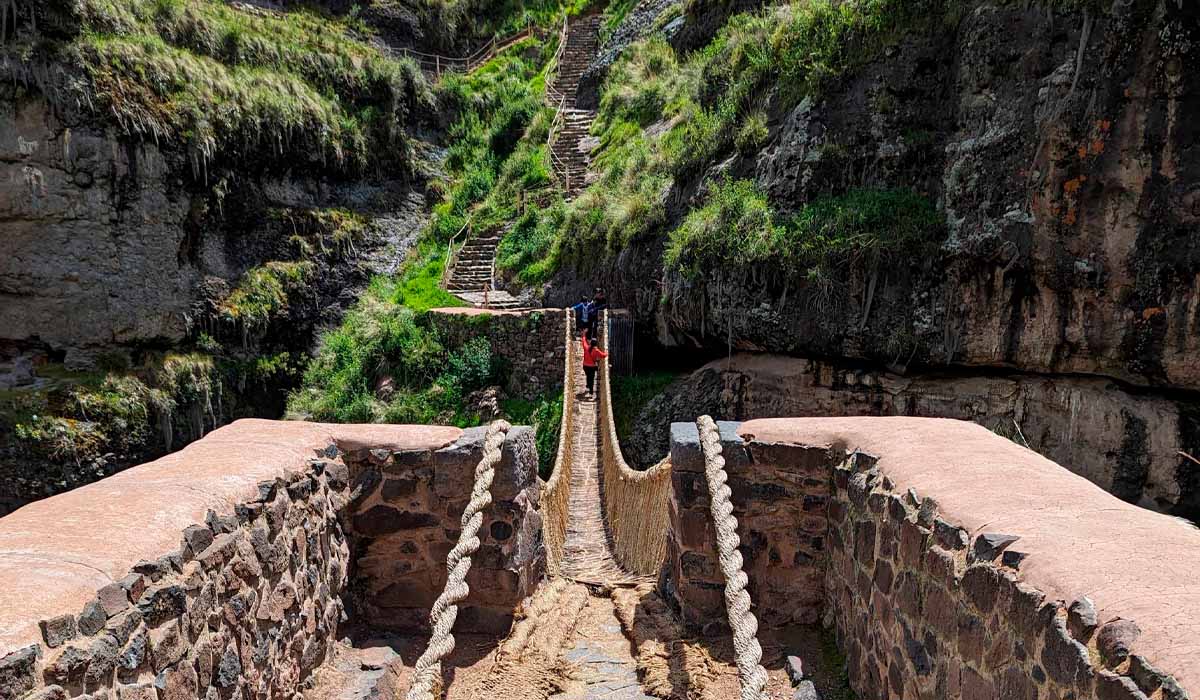
The Q'eswachaka bridge crosses the Apurimac river in the Quehue district, Canas province, at 3,700 meters above sea level. It is part of the old road system (the Qhapaq Ñan) and is an example of Inca engineering applied to a high-altitude environment: it is about 28 meters long and 1.20 meters wide, and it is anchored to large stone blocks located on both sides of the canyon.
It is located 110 km southeast of the city of Cusco. The route combines a paved road and a final dirt track section, so the travel time varies depending on the starting point and the type of transport:
| Route | Distance | Approximate time |
|---|---|---|
| Cusco → Combapata | ~100 km | 1 h 30 min by car |
| Combapata → Q'eswachaka Bridge | 31 km | 45 min by car |
| Cusco → Q'eswachaka Bridge (direct, private tour) | 110 km | 3 h by car |
| Quehue → Q'eswachaka Bridge (local transport) | Short route | ~15 min |
If you travel by public transport, the route is: Cusco → Combapata → Yanaoca → Quehue. When you arrive in Quehue, you will find local transport that will take you to the bridge in about 15 extra minutes. This option is cheaper, but also slower and involves several vehicle changes, something to consider if you travel during the festival days, when the number of visitors is higher.
History and meaning of the Inca bridge
The tradition of weaving bridges with plant fiber is older than the Incas, but it was during the Tahuantinsuyo when this technique reached its highest development. The Spanish chroniclers who arrived in the Andean territory described these structures with amazement: they were able to cross deep canyons where building a stone bridge was almost impossible, and their flexibility allowed them to resist both the weight of people and pack animals and the frequent earthquakes in the region.
In its greatest time, the network of hanging bridges connected key points of the Qhapaq Ñan over thousands of kilometers, allowing the movement of chasquis (messengers), armies and caravans of llamas loaded with products between the different ecological zones of the empire. Many of these bridges were destroyed during the Spanish conquest as a military strategy to stop the advance of the troops, among them the Q'eswachaka itself, which had to be rebuilt after this event.
What makes Q'eswachaka different from any other Inca remain is not only that it has survived, but that it is still alive thanks to a community commitment. For more than 500 years, the communities of Huinchiri, Chaupibanda, Choccayhua and Ccollana Quehue have taken on the renewal of the bridge as a collective duty, passed down orally from fathers to sons, without a single documented year of abandonment.
This commitment responds to something deeper than the maintenance of a useful structure. For the communities of Canas, weaving the bridge is a way to honor the apus (sacred mountains) and the Pachamama, to strengthen the ties between the four participating communities, and to keep an identity that does not depend on museums or documents, but on the repeated practice year after year.
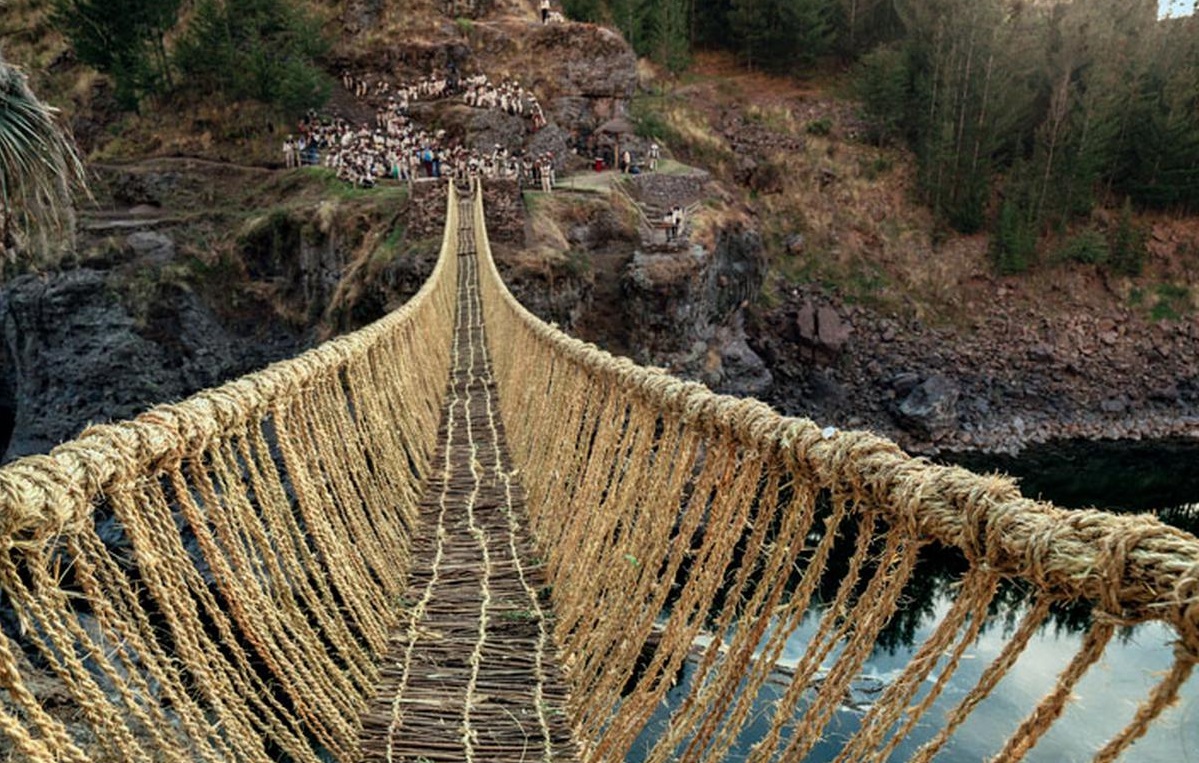
How is the Q'eswachaka bridge rebuilt?
The rebuilding of the Q'eswachaka bridge is a community process that repeats every year, following exactly the same steps that the Canas communities have practiced for more than five centuries.
The previous work: the gathering of the q'oya
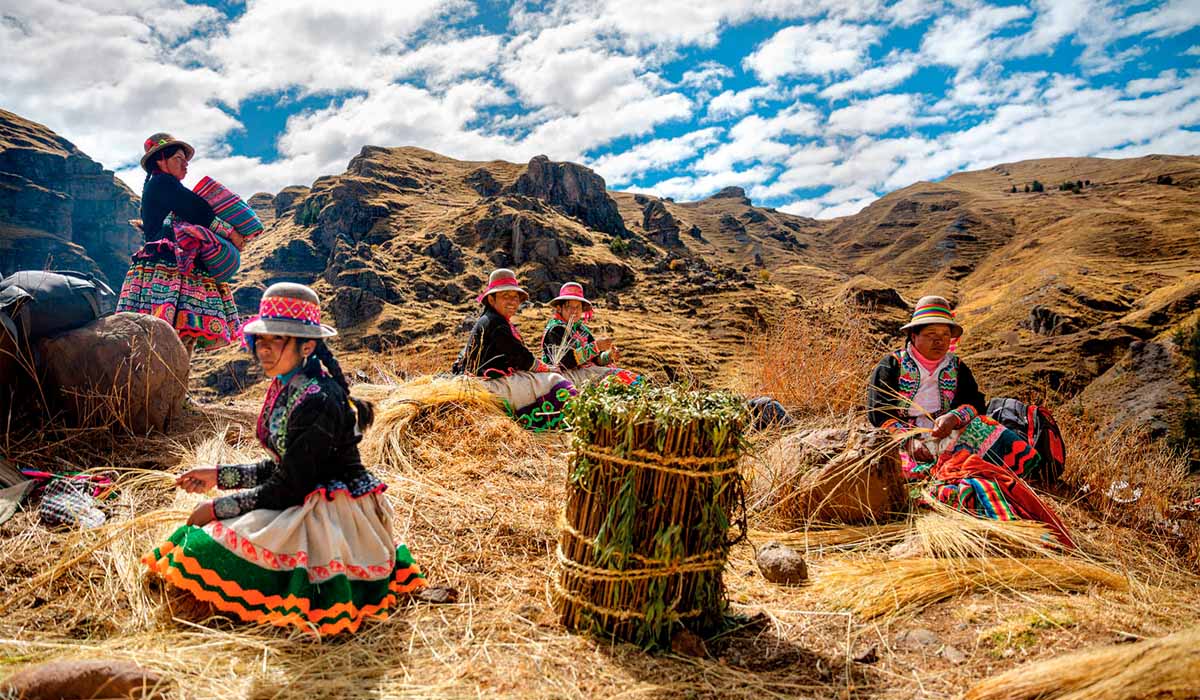
Weeks before the assembly, each family takes on the duty to weave a rope of 40 arm lengths (about 70 meters) made with q'oya or chillihua, a wild straw that grows in the high and wet areas of the puna. This duty is done under the mink'a system, a form of unpaid group work very common in the Andes.
The gathering day starts with the chewing of the coca leaf among the community members, before leaving to the heights in search of the pasture. Once the straw is harvested, it is moved to the homes, where the whole family takes part in its preparation and braiding for several days. The most delicate part, the fine braiding of the ichu that will form the main ropes of the bridge, is done only by the women, under the watch of the chakaruwak or traditional expert.
The three days of rebuilding
During the second week of June, about a thousand people from the four communities of Quehue gather next to the old bridge. The rebuilding takes three full days:
-
Day 1 — Ceremony and cutting of the old bridge
Before starting any work, the paqo (Andean priest) leads a ritual offering table to the Pachamama and the apus, asking for permission and protection for those who will take part in the work. This ceremony is repeated every day of the rebuilding. A community member then crosses the canyon carrying a guide rope that will be used to move the materials from one shore to another. Right after, the old bridge is cut, falling to the Apurimac river, 15 meters below.
-
Day 2 — Weaving of the main ropes
The community members start to braid the small ropes brought by each family until they get ropes of different thicknesses: the ones that will hold the base, the handrail and the side rails of the bridge. At the same time, a mat of branches is woven that will later be spread over the floor of the bridge.
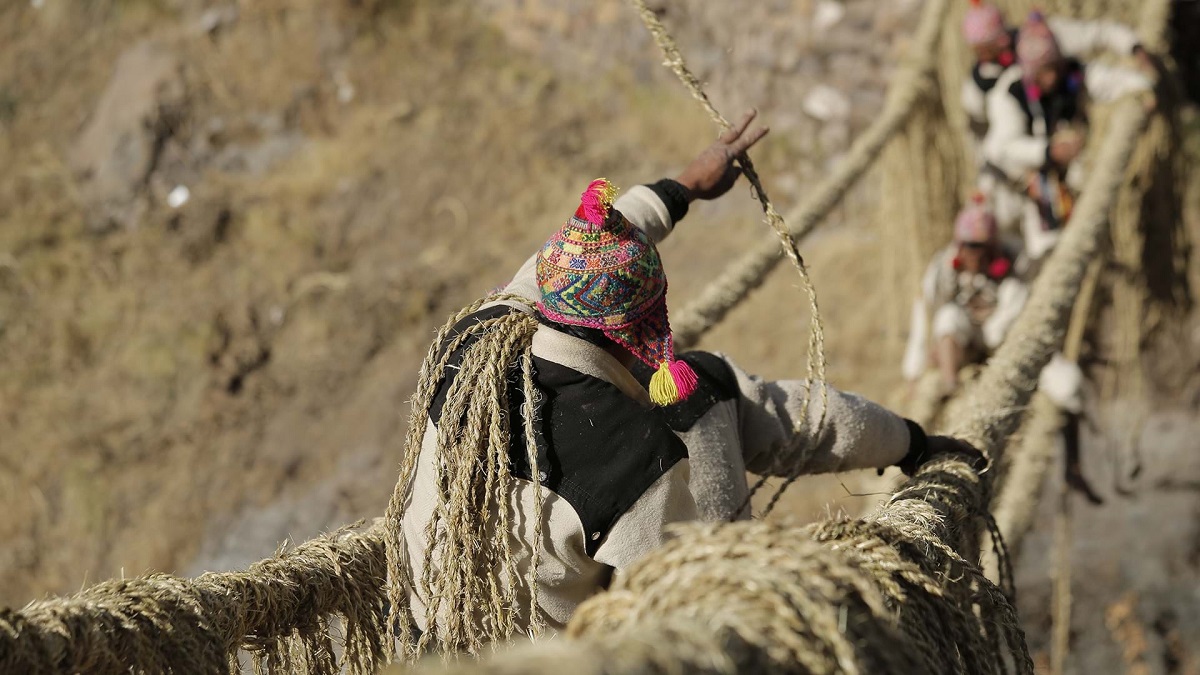
-
Day 3 — Final assembly
The two chakaruwaq, the traditional master builders, move forward weaving the bridge each from an opposite shore of the river. When both meet in the center, the work is finished. The finished bridge measures about 28 meters long by 1.20 meters wide, and it is secured to the same stone anchors that are used year after year, two on each side of the canyon.
The keepers of the technique
Even though the four communities of Quehue take part equally in the rebuilding, a leading role is given to the Huinchiri community, the closest one to the bridge and where the chakaruwaq and the paqo traditionally come from. Currently, Victoriano Arizapana Huayhua, Eleuterio Callo Tapia and Jorge Ccallo are the chakaruwaq who have led the work during the last two decades, carriers of a knowledge that is passed down in an oral and practical way, without manuals or plans.
When is the Q'eswachaka festival celebrated?
The reconstruction of the Q'eswachaka bridge is done every year during the month of June, matching the dry season in the Andes. Even though the exact date can change a little from one year to another, the main day of the celebration (the opening of the finished bridge) traditionally falls on the second Sunday of June.
The complete process follows this usual structure:
- Days before: The families of the four communities weave and prepare the q'oya ropes in their homes.
- 3 days of reconstruction: The community members gather next to the bridge to cut the old structure and weave the new one, following the process described in the previous section.
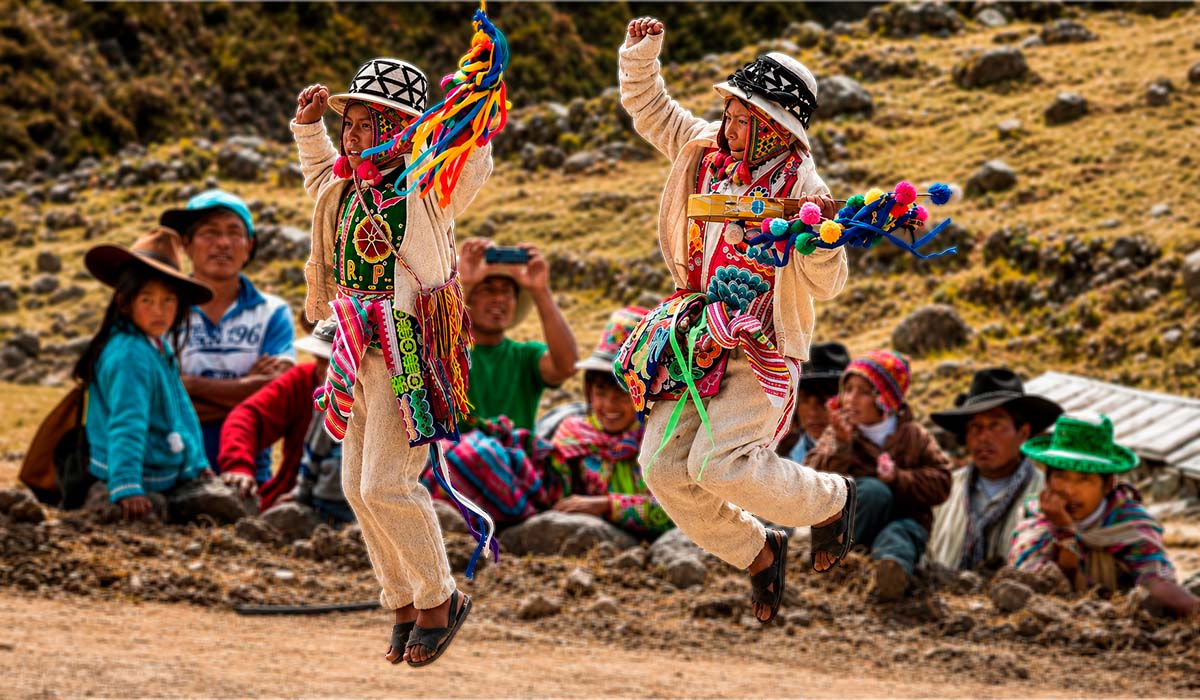
- Closing day: The Cultural and Folk Festival is celebrated, with typical dances, Andean music and the first crossing of the newly finished bridge.
For your trip to Q'eswachaka in 2027, we recommend you to keep in mind the following:
- The date is usually confirmed a few weeks before the event, since it depends on the coordination between the farming communities and the District Municipality of Quehue.
- In previous years, weather or logistic factors have caused last-minute changes in the calendar, so, if your trip depends on matching the festival, it is recommended to confirm the exact dates a few weeks before your arrival in Cusco.
- If you prefer to avoid any doubt about the date, the Q'eswachaka bridge can also be visited the rest of the year during the dry season (April to September), although without the reconstruction activity and the festival atmosphere.
Tour itinerary to the Q'eswachaka bridge
This 2 day itinerary by Tierras Vivas is made specifically for the festival week, when you can watch the bridge reconstruction process and its closing celebration. If you visit Q'eswachaka at another time of the year, you will find a one-day option at the end of this section.
Day 1
We leave Cusco at 6:00 a.m. towards Q'eswachaka. On the way we will make a stop to see the famous four lakes near Cusco, and another short stop near the town of Yanaoca to have breakfast. Around 11:00 a.m. we will arrive at the Q'eswachaka bridge.
There you will be able to see dozens of community members working actively in the bridge reconstruction, weaving the q'oya ropes and moving forward with the structure. The paqos (Andean priests) will do the ancestral ceremony of payment to the earth, where offerings are given to the Pachamama with the goal of asking for protection for those who participate in the work.
We will have lunch near the bridge and then we will return to the town of Yanaoca to have dinner and spend the night in a hostel.
Day 2
We will have a traditional breakfast early in the morning and we will return to the bridge, which by that time will already be finished. You will have the chance to watch the closing celebration, which includes traditional ceremonies, typical Peruvian dances and live Andean music. Our return to Cusco is scheduled for about 7:00 p.m.
One-day visit (outside the festival week)
If you travel to Cusco on a different date than the festival, you can still visit the Q'eswachaka bridge on a one-day tour. In this case you will not see the reconstruction process or the folk celebration, but you will be able to:
- Cross the bridge and look closely at the weaving technique with plant fiber, already in its finished version.
- Enjoy the landscape of the Apurimac canyon without the crowd of visitors typical of the festival week.
- Combine the visit with the four high Andean lakes and other points of interest on the route from Cusco.
This one day trip usually leaves Cusco very early in the morning and returns at night on the same day, without the need to spend the night in Yanaoca.
When is the best time to visit the Q'eswachaka bridge?
The best season to visit Q'eswachaka is the dry season, which goes from April to the end of September. During these months the weather is more stable, the access roads are in better condition and the chances of rain are very low, which is especially important in this area, since the final part of the road to the bridge includes a dirt road.
Starting in October, the rainy season begins, which lasts until March. If you travel in these months, not only does access to Q'eswachaka get complicated, but you also run the risk of finding Machu Picchu covered in clouds, so in general it is not the most recommended time window to explore the Cusco region.
Inside the dry season, June stands out as the ideal month if your main interest is to see the rebuilding of the bridge and its folk festival, since this is when this ancient tradition takes place. If your trip does not depend on matching these dates, any month between April and September will allow you to visit the already finished bridge, with good weather and fewer visitors.
Take advantage of your trip in June: If your schedule matches this month, we recommend combining your visit to Q'eswachaka with the Inti Raymi, the great sun festival that is celebrated in Cusco, and with a walk to the Palcoyo Mountain, the alternative Rainbow Mountain located in the Andes, close to this same area.
What to bring and practical recommendations
The Q'eswachaka bridge is located at 3,700 meters above sea level, in a rural area far from the city. Although the visit is not a hard physical challenge, it is a good idea to prepare properly for the Andean weather and the lack of services in the area.
Clothes and equipment
|
| Health and altitude If you have just arrived in Cusco (3,400 meters above sea level), we recommend spending at least one or two days getting used to the altitude before this tour, since Q'eswachaka is at a similar or higher altitude. Also, stay hydrated during the whole trip and avoid drinking alcohol the day before the trip. If you have any previous medical condition, especially heart or breathing issues, check with your doctor before traveling to high altitude areas. |
| Food and cash There are no tourist restaurants near the bridge. During the festival week you will find some local food stands, but outside those dates it is better to bring your own snacks and water. On the other hand, it is important to bring cash in soles; because there are no ATMs or places that accept cards in the area. |
Respect for the community
|
Other tips
|
Frequently asked questions about the Q'eswachaka bridge
- Can you cross the Q'eswachaka bridge?
Yes, visitors can cross the bridge walking. It is a safe experience, although due to its natural swaying it is not recommended for people with severe vertigo or mobility problems. - Is it necessary to be in good physical shape to visit Q'eswachaka?
A high fitness level is not required. The visit involves a short walk from the parking spot to the bridge, over uneven ground. The main factor to consider is the altitude (3,700 meters above sea level), not the physical effort. - Can you visit the bridge outside of the festival date?
Yes. The bridge stands all year round, so you can visit it at any time during the dry season (April to July, and September) without needing to match the reconstruction festival. - Are there restaurants or services near the bridge?
There are no tourist restaurants in the area. During the festival week you will find local food stands, but outside of those dates we recommend bringing your own food and water. - How long does the Q'eswachaka tour take?
During the festival week, the tour takes 2 days and 1 night, spending the night in Yanaoca. Outside of those dates, there is a one-day option that leaves and returns to Cusco on the same day. - Is a special permit needed to visit Q'eswachaka?
An individual permit is not required like in the classic Inca Trail. Access to the bridge is free, although during the festival week it is recommended to arrange the tour early due to high demand. - What is the best time of the year to see the bridge reconstruction?
June, when the Quehue communities carry out the annual reconstruction and the closing folk festival. - Is Q'eswachaka suitable for children and older people?
Yes, in general it is an easy visit for the whole family. It is recommended to take precautions related to altitude and make sure children stay accompanied while crossing the bridge.
Other tours to add to your adventure
There are many famous routes in Cusco, but none like the Inca Trail, the most famous walking route in America. After flying from the capital of Peru, Lima, you will arrive in Cusco to walk for several days through forests and thick fog, stone stairs and ruins of ancient Inca fortresses and cities, enjoying beautiful views at all times. Among the best options are:
- Salkantay Trek to Machu Picchu (5 days)
- Inca Trail to Machu Picchu (4 days)
- Short Inca Trail (2 days)
- Short Inca Trail with Camping (2 days)
- Choquequirao Trek to Machu Picchu (9 days)
- Ausangate Trek (7 days)
If you also plan to visit Machu Picchu, we recommend booking your Machu Picchu ticket early, so you can enjoy your vacation in Machu Picchu without any problems.


