
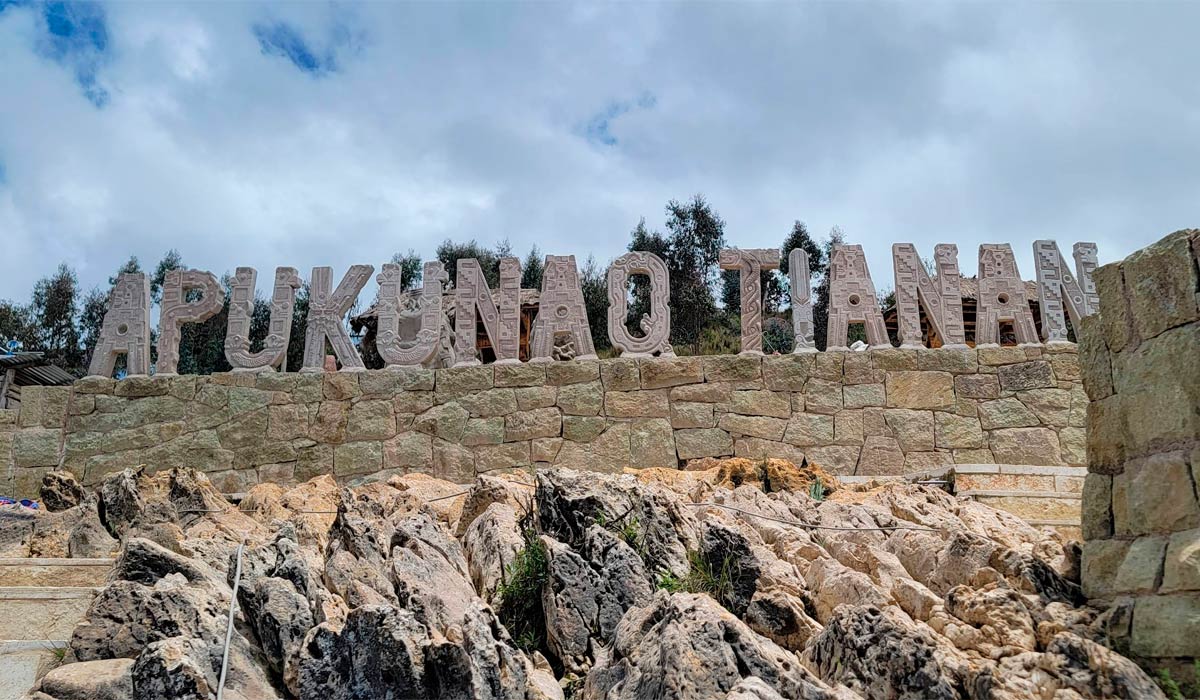
Apukunaq Tianan, which in Quechua means "Dwelling of the Gods", is an artistic and cultural complex located in the Peruvian highlands, a short distance from the city of Cusco. The site, recently created, has become a notable tourist attraction; it consists of a group of monumental sculptures carved in stone by the Cusco artist Michel de Titán Monteagudo Mejía.
The works are known for their scale, with monoliths that measure between 4 and 8 meters in height. The theme of the sculptures focuses on the Inca and Andean worldview, representing key ancestral deities and symbols, such as the Pachamama (Mother Earth), the Puma, and three-dimensional ceremonial doors. This cultural project seeks to keep the iconography of the region alive and offer a space for artistic appreciation in the open air.
The complex is easily accessible from the city and offers an alternative to traditional archaeological sites. It is a destination that fits perfectly into a explore Peru tour that seeks contemporary cultural experiences. This guide will provide the essential information on how to visit Apukunaq Tianan, detailing its exact location, opening hours, entrance cost, and the best method to reach this cultural space.
Location and distance:
It is located 8 kilometers northeast of the city of Cusco — at 3850 meters above sea level; It is part of the Sencca sector of the Poroy district, just 40 minutes by public transport and 20 minutes by taxi from the historic center of Cusco.
What does Apukunaq Tianan mean?
The original name of this contemporary artistic monument comes from the second most spoken language in Peru: Quechua or Runa Simi, that is to say "Apukunaq Tianan" means "The Abode of the Gods".
What to see?
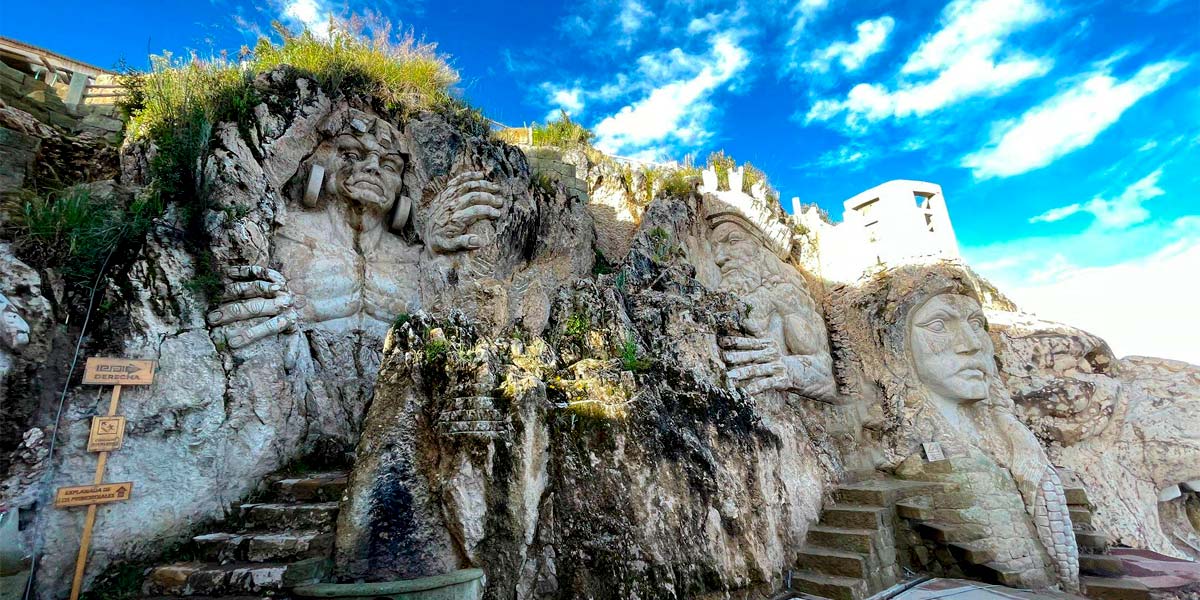
Once you arrive at this place you will have the joy of observing several sculptures carved in stone and the vast majority are representations of the Gods and mythical characters of the Inca culture; Below we mention and explain each of the sculptures in greater detail:
- La Pachamama: This sculpture that represents Mother Earth, is a huge face that seems to emerge from the bowels of the mountain, this figure also welcomes all visitors.
- The Puma: Without a doubt, this sculpture impresses every visitor, the Puma was the sacred animal of the Inca period and even for many scholars of Inca history, this feline is part of the mystical traditions of Andean man today.
- The three-dimensional door: The representations of three-dimensional doors are the order of the day worldwide and in Cusco our artist Michel de Titan Monteagudo Mejía portrayed one almost 3 meters high and on it we have the representation of the Sun and exactly in the central part del Sol we can appreciate the face of an Inca emperor who wears a crown of three sacred leaves of Coca leaf.
- El Mirador: From this point we have a spectacular panoramic view of the entire beautiful landscape of this area.
How was the Apukunaq Tianan born?
The Apukunaq Tianan, was born thanks to a Cusco project in which it was proposed to keep the tradition of stone carving alive. This house shows its visitors a set of representative sculptures of the Pachamama, water, the cosmos, the deities, the runa (man), among others.
During its elaboration, some traditional and important rituals were carried out in order to show respect to the deities, also some legends and myths were born that help with the curiosity of knowing this interesting place.
What was the procedure to perform this job?
Since the time of the Incas, the people of Cusco have practiced different methods of interfamily collective work, whose objective was to benefit the ayllu. This working method is currently being practiced in various provinces of the Cusco region.
For the construction of the Apukunaq Tianan, the Ayni method is applied, a family reciprocal work system between the members of the ayllu, destined for agricultural work and house construction. In simple words, it's something like, I give you this now and you give me back when I need it.
Thanks to the practice of Ayni, we can now see great results made by our ancestors.
Let's talk about the myth of the dwelling of the gods
The people arrived and were taken face to face with these sculptures of approximately 10 meters in height, they are really impressed, with such a work of art made by the hand of man. And as is natural for us, human beings ask themselves questions that are answered thanks to contact with nature.
It should be noted that this construction was carried out on virgin land and that during this construction some of the people who worked, point out that the mystical beings called and known as mukis or goblins, made their appearance and also claimed to be part of this new tourist attraction in the Cusco. Therefore, it remains to carry out some representative works of the owners of this virgin land located near the well-known Arch of Titica Tica, we refer once again to the Mukis or elves.

Frequently Asked Questions
-
Why is it recommended to visit the Apunaq Tianan?
The Apunaq Tianan, is the perfect place to spend a family day, with friends, with the boyfriend or with ourselves, because once we are at the top, we can see part of the city adorned with beautiful green hills, with an incredible blue sky, decorated with white clouds, which make this the perfect place to think and reflect. -
What is the best time to visit this contemporary attraction?
The climate of Cusco is relatively temperate with quite sunny days and cold nights. In general, the Cusco region enjoys two well-marked seasons a year and these are: The dry season that goes from April to October and the rainy season that goes from November to March.
It is also important to mention that in the rainy season the weather is very changeable, the weather conditions can change from a super sunny day to a day with torrential rain in a matter of minutes. The average annual temperature ranges between 13ºC and 15ºC.
In short, we recommend you visit this modern attraction in the dry season so that a good experience is 100% guaranteed. -
How to get to the Abode of the Gods?
1st option: Economic
Take a public and/or collective transport of the Expreso Santiago company, you can board it three blocks from the Plaza de Armas of the city of Cusco, exactly at the Puente Rosario bus stop, in front of the courtyard of the Qoricancha temple; the cost of public transport is 1 Sol.
This section of the trip will take you by local bus about 30 minutes, then proceed to get off at the final stop of this company and then take the service of a collective taxi (15 minutes or, failing that, take a walk of approximately 40 minutes). . The price of the collective taxi is 2 Soles and the private taxi is 10 Soles approx.
2nd option: By bike
We recommend you to take a taxi-station (big taxi) from the historical center of Cusco to the Tica Tica Arch, the price is approx 20 Soles, then you can start riding a bicycle on your own, just ask any local about the route to continue. -
What to wear?
→ Sunscreen
→ Hat
→ Sunglasses
→ A bottle of water
→ Nuts or Snacks
→ Rain Poncho
→ Cash
Best Tours in Cusco
Many are the routes that take you to Machu Picchu, but none is like the Inca Trail Tours, the most famous pedestrian path in the Americas. After flying from the capital of Perú, Lima, you will arrive in Cusco to walk for four days along a path through forests and dense fog, millenary stone steps and discovering the ruins of ancient fortifications and Inca cities, and all the time enjoying majestic views.
- Salkantay Trek to Machu Picchu 5 days
- Hiking the Inca Trail to Machu Picchu 5 days
- Inca Quarry Trail 4 Days
- 2 Day Inca Trail Tour
- 2 Day Inca Trail with Camping
- 3 Day Inca Trail
- Vilcabamba Hike to Machu Picchu 6 days
- Choquequirao trek to Machu Picchu 9 days
- Ausangate trek 7 days
If you want to visit Machu Picchu, we recommend you to book your Machu Picchu Ticket in advance, so you will enjoy your Vacation in Machu Picchu without any problem.


