
The district of Pisac Peru is a strategic point of the Sacred Valley of the Incas, historically serving as the gateway to this agricultural and ceremonial corridor. It is famous for its double attraction: the imposing Inca fortress that overlooks the valley from the top of the mountain and the vibrant traditional market that is held in the colonial town.
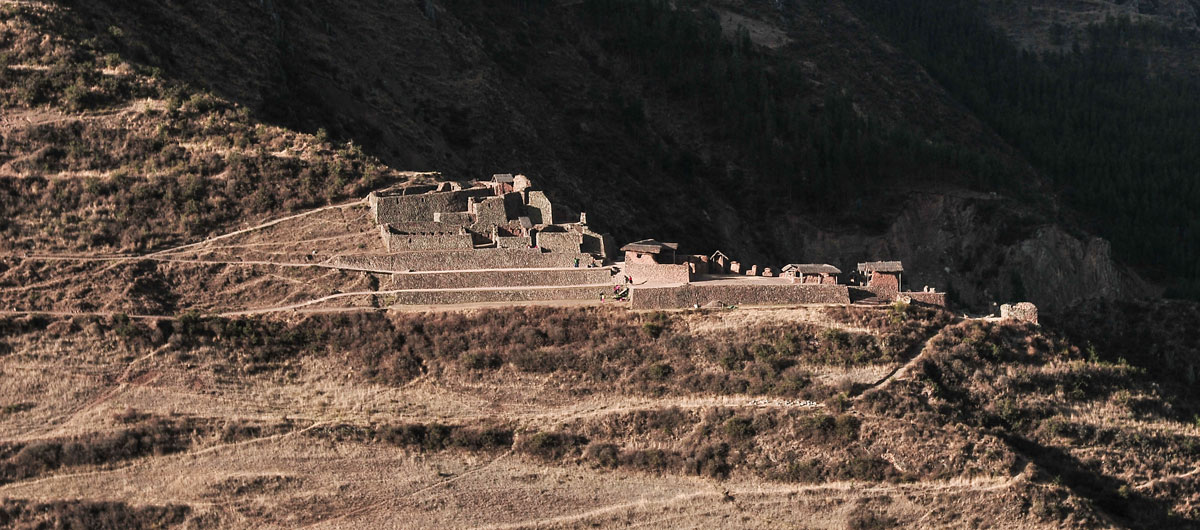
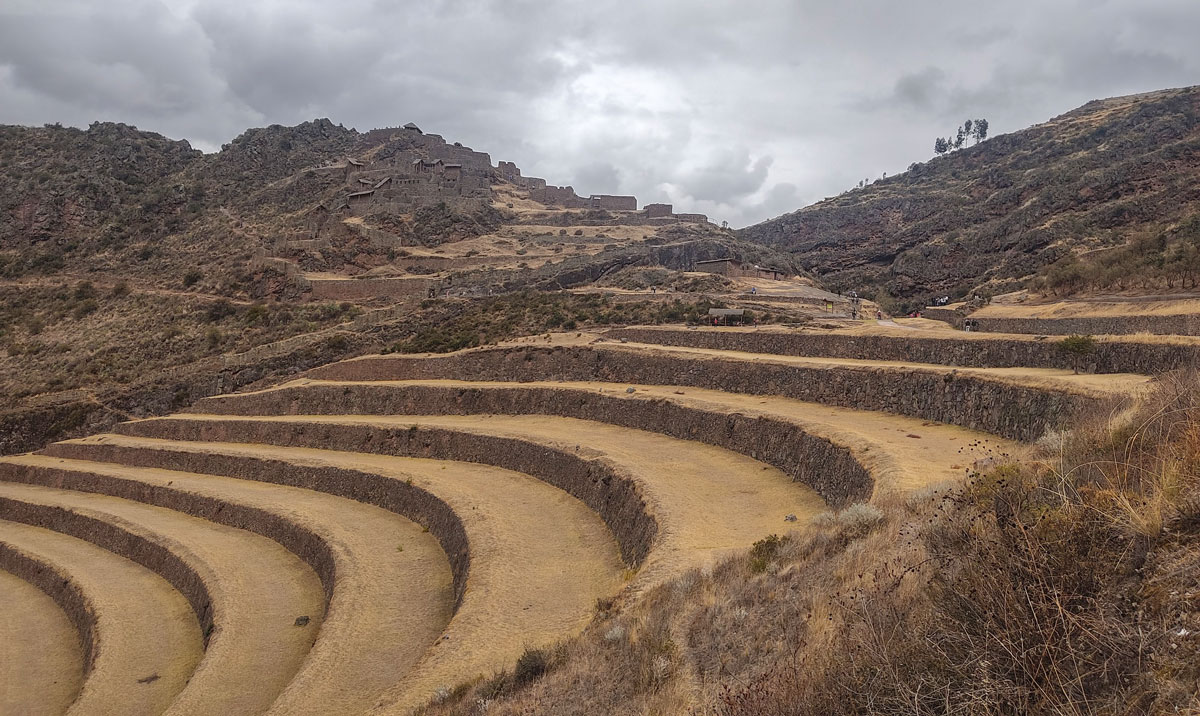
The archaeological complex, informally known as the Inca ruins of Pisac, is one of the most extensive and best preserved in the region. It is known for its impressive system of andenes (agricultural terraces) that spread across the hillsides, in addition to a ceremonial sector with temples and residential areas. Its design is a direct proof of the sophisticated Inca engineering used to adapt agriculture to the topography of the highlands.
For the traveler, the visit to Pisac is essential to understand the size of the Sacred Valley. Also, the town is surrounded by beautiful mountains and there are many things to do in Pisac, such as enjoying nature, its square, and its church. This guide will provide the essential information for exploring both the fortress on the mountain and the town.
Where is Pisac – Peru?
Maybe you are asking where is Pisac Peru? Well, the Pisac Village is located at the eastern end of the Sacred Valley of the Incas. The Pisac ruins is one of the best Inca archaeological complexes in Peru. They are located on the road along the side of the mountain, just behind the town.
Historical Review of Pisac in Cusco Peru
The Vilcanota river basin, where Pisac is located, has been a vital corridor since ancient times. Studies show that the first settlers in the area were groups of hunter-gatherers who settled about 5,000 years ago. Evidence of this occupation (such as rock paintings and remains of hunting tools) has been found in nearby caves like Chahuaytire. Over time, these groups developed an early agriculture of Andean tubers and the domestication of camelids, which laid the foundation for later cultural development.
Inca Period: Architecture and Strategic Organization
Pisac was incorporated into the Tahuantinsuyo at the start of the imperial period, serving as a strategic center in the northeast of Cusco. The Archaeological Park (which covers 4 km²) was designed to show the complex Inca sociopolitical organization, with a functional division between the Anansaya (upper) and Urinsaya (lower) sectors.
- Function: It was an administrative, military, and agricultural center.
- Engineering: The site is proof of Inca engineering in agriculture, with a vast and complex system of agricultural terraces (andenes) that cover the entire Pata Pata area and an advanced irrigation system. The terraces in the lower part, near the Chunqumayo creek (Qoskanapata), possibly functioned as botanical laboratories.
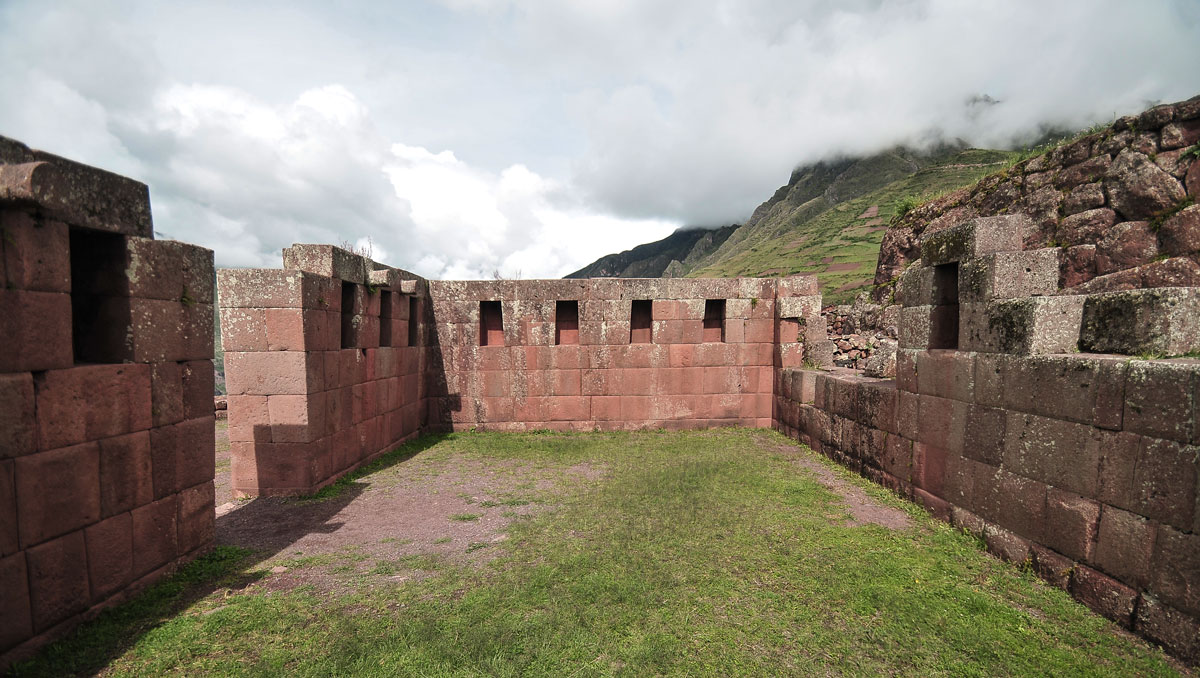
- Acropolis: The Apu Inti Huatana sector (the Acropolis) at the top of the mountain contains elite structures, including the Temple of the Sun and the Sacred Rock, which show the fine Inca stonework. Other key sectors include Amaru Punku (the 'Serpent Portal') and Antanamarca (the ancient 'Inca Cemetery').
Colonial Era and Modern Legacy
After the Spanish conquest, the Inca population was relocated by Viceroy Toledo to indigenous settlements (reducciones indígenas) at the foot of Inti Huatana hill. The current town of Pisac appeared in this Pata Pata area. Although much of Inca history was suppressed, the people's legacy of resistance showed itself in events like the rebellion of the chief (cacique) Don Bernardo Tampo Huacso Pumayali in 1777. Today, the town still keeps colonial buildings like the chapel and the historic large houses (casonas), and this blending of legacies remains the base of its rich cultural and artisanal tradition.
Elevation of Pisac Peru
The colorful town of Pisac in Cusco Peru is located 33 km from the City of Cusco and the elevation of Pisac Peru is almost 2,972 meters above sea level (9,751ft). The elevation of Pisac ruins in Perú is 3,300 meters above sea level
Weather in Pisac Peru
During the year two seasons are observed: in winter (from April to September) the temperatures oscillate between 2 ° and 20 ° C with a magnificent blue sky during the day and drop in temperature at night, in summer (from October to March) there are constant rains and the temperature varies between 7 ° and 21 ° C. Pisac is part of the Sacred Valley of the Incas, so the weather in Pisac Peru is usually temperate during most of the year, with some ups and downs during certain periods.
During the course of the year, the temperature generally varies from -0 ° C to 18 ° C and rarely drops below -3 ° C or rises above 21 ° C.
The best time of year to visit the Pisac Village
The best times of year to visit the Pisac Village is from the beginning of May to the beginning of June and from mid-July to the end of September, with the best weather in Pisac Peru during the last week of August.
Things to do in Pisac
Pisac is a destination in the Sacred Valley of the Incas and has established itself as the gateway to the Andean corridor, which causes visitors to dedicate time to exploring its tourist attractions before continuing their trip. Among the activities that can be done in Pisac include the visit to several tourist attractions:
The town of Pisac
The town of Pisac is surrounded by beautiful mountains. There are a lot of things to do in Pisac town, like enjoy nature as well as its plaza and church.
Pisac Market in Cusco Peru
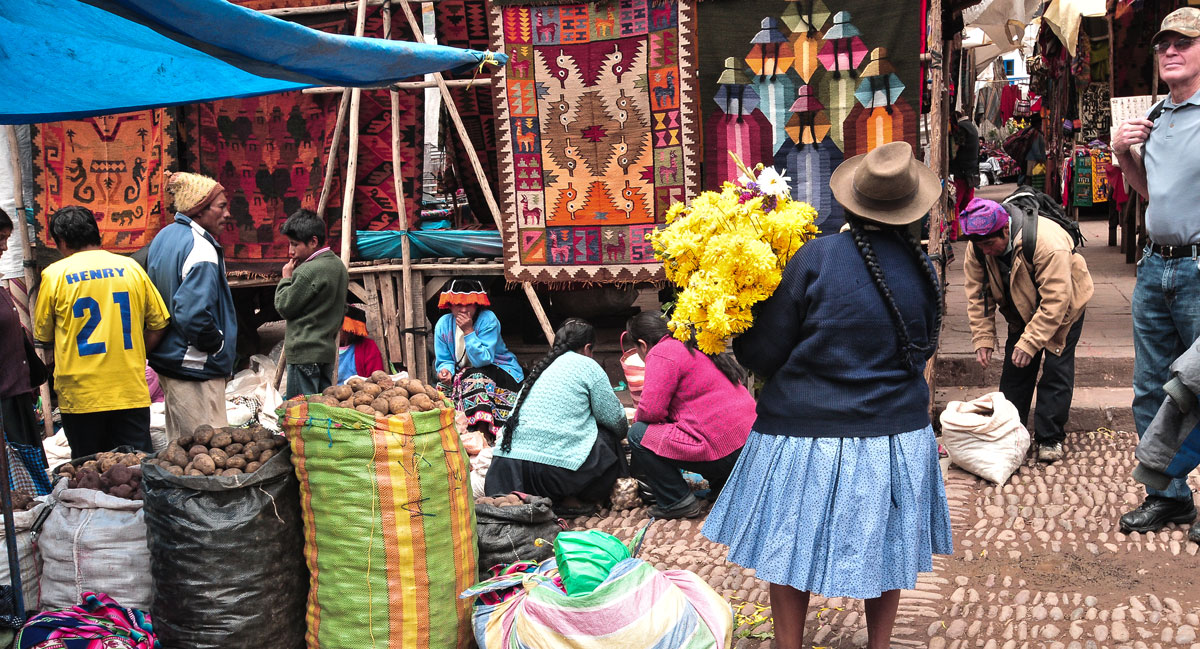
The traditional Pisac market in Cusco Peru was a very important commercial place centuries ago. Today, it is crowded by tourists, especially on Sundays.
The colorful Pisac market in Cusco Peru offers handicrafts, textiles, ceramics, and jewelry. You can't miss the textiles; Look for women from the Andean communities who sell their unique fabrics made from natural plants.
The fabrics of the Amaru and Chaihuatiri communities are especially fine and recognized worldwide, worthy collectibles. Písac is known for its hand-painted ceramics: plates, ashtrays, tea sets, and chess sets. Many local people still paint the intricate geometric Inca figures in their family workshops. You will find these works of art also in wood, to prevent them from breaking.
The opening days of Pisac market are sundays, and also this is the most festive day, since the inhabitants of the high Andean communities go down to the town with their traditional clothes to sell or exchange their precious agricultural products. The varayoc (authorities) of the ayllus (communities) walk through the town with their ponchos blowing their pututos, which gives the Sunday holiday a distinctive touch.
Apu Runawana Weavers Association
Amaru is one of the 13 indigenous communities in Písac and is home to the Apu Runawana Weavers Association, made up of a group of indigenous people who consciously preserve and practice their traditional lifestyle and values. Experience this culture up close and learn about the importance of weaving and agriculture for Andean calendar celebrations. The community also offers a hike to the Sacred Lakes - an unforgettable hike in the Andes for experienced explorers at altitude.
The Pisac Archaeological Site
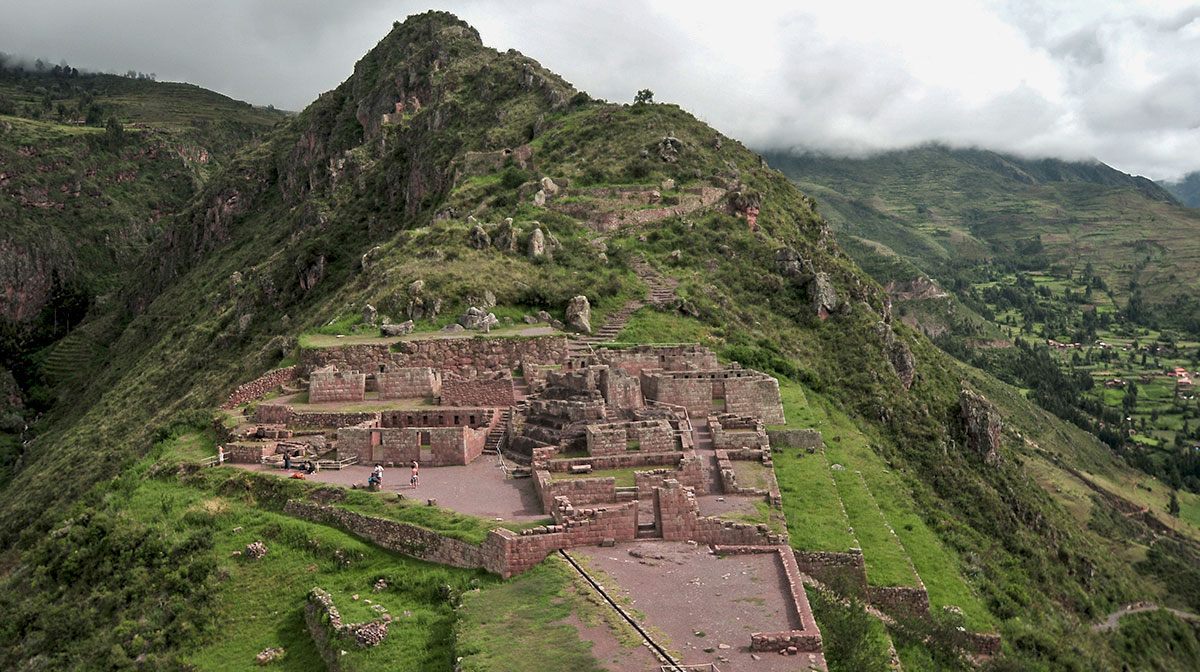
The most attractive tourist attraction in Pisac. It has Inca remains as important as Machu Picchu as the Temple of the Sun.
At the Pisac Archaeological Site, science, agriculture and ceremonies were developed, all these activities intertwined with the reality of everyday life. The archaeological site also served as a ceremonial center to celebrate and honor these cosmic moments.
Stonework is considered one of the finest in the valley and is admired for the architectural skills of its construction. It has the largest pre-Columbian cemetery in the Americas: 11 miles of slopes with approximately 400,000 traditional graves. Unfortunately, most of the graves were looted.
In the Pisac Archaeological Site, in addition to overlapping terraces, you will find ceremonial baths, a residential settlement and the largest Inca cemetery (the oldest in South America).
Down the mountain, you will find the temple complex exquisitely carved from granite. There are ceremonial altars, water wells and the beautiful Inca Temple of the Sun.
These are the Archaeological Sites of Pisac:
-
Acchapata Group of Platforms
Just 200 meters up from the town square of Pisac Inca Ruins a beautiful set of platforms rises. This group is made up of 40 platforms forming a kind of triangle with a vertex downwards, that is, the smallest platform is the first one that the visitor can see when he begins to ascend. -
Torreones or Pucaras
In the Pisac Inca Ruins we can count more than twenty towers and they are of two types: the towers and the watchtowers; the former are conical enclosures associated with construction water channels with well-carved and assembled parts, these look like pulpits attached to the mountain. The watchtowers are beautiful elevations, with a conical tendency, they are not enclosures, their texture is solid and their interior has a compact mass and their portion is a flat surface. In total there are more than 20 towers. Some are attached to the mountain. The rest are compact mass elevations. The most important in its location is Qoriwayrachina. -
Intiwatana neighborhood
It is the central neighborhood, home to temples and palaces, with a higher architectural quality, greater beauty in its walls, the venues are larger in relation to those of other neighborhoods. It has 3 levels to gain aesthetics and comfort, they modulated the buildings directed towards the main valley. In this place we can find: The central enclosure, the Intiwatana, the altar carved out in a volcanic gap, groupings of liturgical sources, alleys and courtyards. -
Tianayuc neighborhood
It is known as Tianayuc which translates to “having a seat” since in the interior patio there is a kind of sofa for two people, with a backrest and elbow pads made of stone. This neighborhood is small, with rooms whose doors open onto a central courtyard, plus an almost destroyed tower that dominates much of the K’itamayu gorge. -
K’allaQ’asa neighborhood
It is the largest of the neighborhoods of the Pisac Inca Ruins, built on the top of the mountain the highest altitude of all the enclosures, its enclosures move on a sloping plane descending to the North. It has many rooms, steep slopes, turrets, a short tunnel 3 meters long; this neighborhood has impressive ravines on its sides. -
Pisaq’a neighborhood
It is on the Chongo gorge, two hundred meters away from the Intiwatana neighborhood and at a lower height. This neighborhood was built by lowering the original level of the ground to modulate a plain. The plan of this neighborhood is semicircular obeying the shape of the mountain, this set consists of 23 rooms built with amazing order. -
QanchisRaqay neighborhood
This neighborhood has many constructions, the houses are made of medium and small stones, the plan of the set is inclined, reaching the slope where the Chongo stream is. The entire neighborhood is like a sentinel controlling the northeast side of the city of Pisac.

The main festivities in Pisac Village
1. Festivities and Celebrations (Ritual Calendar)
The main annual celebration in the town of Pisac is the festivity in honor of the Virgin of Carmen. This celebration lasts for four days and mixes religious solemnity with Andean folk dances and local customs.
- Central Day and Procession: The main day includes a solemn mass and the procession of the Virgin of Carmen, where the surrounding communities show their devotion.
- Folk Activities: The festival is known for the parade and contest of various dance groups. The first day traditionally includes the burning of fireworks (castillos) and a horse race.
- Farewell (Cacharpari): The festival ends with the Cacharpari (farewell), where traditional food is shared among all participants.
Other ancient customs that appear in the festive calendar include the Carnivals, which symbolize the fertility of the earth and the ritual routes for recognizing the border lines between communities (known as "festive borders").
2. Local Gastronomy and Handicrafts
Pisac's gastronomy is rich and forms an essential part of the visitor experience, especially in the Sunday market and traditional fairs. The local cuisine offers a variety of typical Andean and colonial dishes:
- Typical Dishes: The chiri uchú (festive cold dish), cuy asado (roasted guinea pig), capchi de habas, and soltero (salad) stand out.
- Bakery: The making of wheat or chuta bread, baked in the colonial oven of San Francisco, is a main economic and artisanal activity of the town.
- Drinks: You can taste traditional Andean drinks like chicha and frutillada.
Handicrafts are another key economic activity, practiced since ancient times. Pisac market is known worldwide for the sale of ceramics, textiles, and silverware. Communities like Chahuaytire are especially known for keeping the weaving techniques and iconography inherited from their ancestors intact, being a living testament to the Inca textile legacy.
3. Dramatic Manifestations and Rites
The popular festivities of Pisac keep ritual dances that represent historical or mythical stories, such as:
- El Maqtwarkuy: A dance that, according to tradition, represents the execution of a peasant.
- El Pampanakuy: Represents the ceremonial burial of community leaders or notable people.
- El Occa Tarpuy: The final dance, which marks the closing of the festival and celebrates the start of planting or fertility.
How to get to Pisac Village?
Pisac Village is 1 hour from the city of Cusco by road (34 kilometers). It is reached by the road that leads to Sacsayhuamán. Public transport buses are taken on Puputi street in the Historic Center of Cusco.
How to visit Pisac?
You can visit Pisac in 3 ways:
- Hiring the services of a tour to the Sacred Valley of the Incas, which includes admission to the ruins of Pisac.
- Buying the Tourist Ticket of Cusco in its offices located in the AV. El Sol. I can buy the full ticket or a partial one.
- Buying the ticket at the door of the same archaeological site of Pisac.
Tour to the Sacred Valley of the Incas
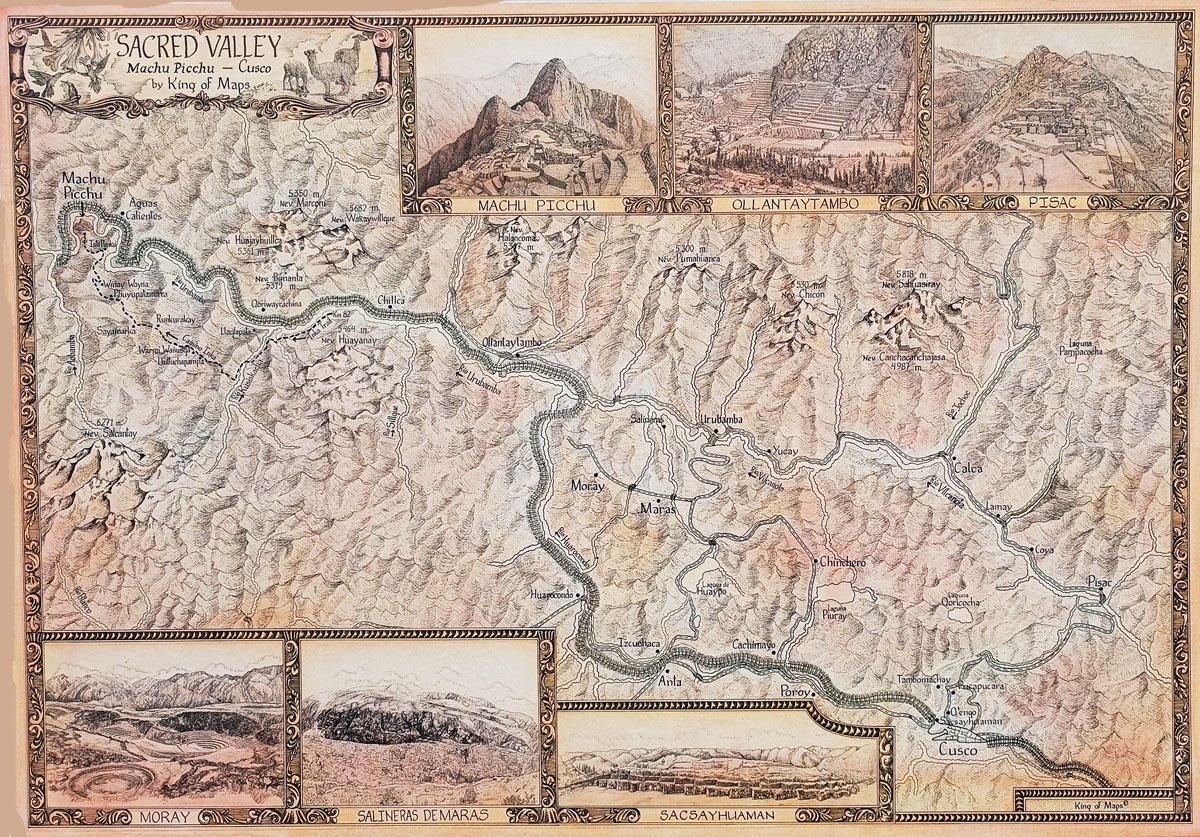
Known to the Incas as Willcamayu, the beautiful Sacred Valley of the Incas stretches from the town of Pisac to Ollantaytambo, along the Urubamba River. The ancient Inca settlements in these cities are presented as checkpoints, before entering the "Inca trail" that leads to the sacred city: Machu Picchu.
The Sacred Valley Tour is a markedly traditional route, where the visitor will meet Quechua-speaking residents, in typical costumes, working in their fields in an artisanal way, passing through villages built in colonial times and through ancient settlements Inca. It will visit markets, temples and city squares. It is important to note that the Sacred Valley of the Incas is made up of Pisac, Urubamba, Ollantaytambo, Chinchero, Maras, Moray and Yucay.
Tour on your own
It can be reached through an agency on a tour of the entire Sacred Valley. You can also use the public transport that goes to Urubamba that leaves every 15 minutes, you must get off the bridge and from there you must go to the back of the Pisac temple in a walk of more or less an hour.
- By taxi: it is the most comfortable and fastest way to get there, but also the most expensive.
- By local bus: it is the slowest method of getting there because depending on which you take, it will make many stops.
- By van or van: it is little more expensive than the local bus but much faster and we believe that the best option for value for money (4-5 soles)
If you go by bus or van from Cuzco, it will let you just past the metal bridge that gives access to Pisac, near the taxi rank.
How much does the entrance to Pisac cost?
The Cusco Tourist Ticket is the cheapest way to visit Pisac because it also includes many other archaeological sites:
- General tourist ticket: S /. 130.
- Partial tourist ticket: S /. 70.
What are the hours of operation in Pisac?
From 7 a.m. until 6 pm. He attends every day of the week. The cost of admission is included in the Tourist Ticket.
When is the best time to go to Pisac?
The dry season (April to October) is the best time to visit Pisac. During those months there is less chance of rain making the excursion easier. It is recommended to make the visit in the early hours of the morning.
Tips for visiting Pisac
- Bring a bottle of water before and during the walk.
- It is recommended to use hiking shoes. That way you will avoid twists and accidents.
- Bring a rain poncho with you. It is not known when the river precipitation will occur.
- The day is hot so it is advisable to wear a hat, sunscreen and sunglasses.
- The best way to understand Pisac is with the company of a tour guide. Tours include this service. Another option is to hire one at the entrance door.
Where to sleep in Pisac?
Despite its small size, there are some accommodations. However, we, for the comfort of not having to move luggage, believe that it is better to make a day trip with a start and end in Cuzco.
Best Tours in Peru
Many are the routes that take you to Machu Picchu, but none is like the Inca Trail Tours, the most famous pedestrian path in the Americas. After flying from the capital of Perú, Lima, you will arrive in Cusco to walk for four days along a path through forests and dense fog, millenary stone steps and discovering the ruins of ancient fortifications and Inca cities, and all the time enjoying majestic views.
- Peru Adventure Holidays
- Enigmatic Peru
- Peru Full of Adventures
- Peru Luxury Travel
- Peruvian Highlands
- Discover Peru
Inca Trail, Machu Picchu and more
- Salcantay Trek Peru to Machu Picchu 5 days
- Palcoyo Mountain Tour
- Cusco to Manu Tour
- Humantay Lake Day Trip
- Huchuy Qosqo Day Hike
- Llactapata Inca Trail to Machu Picchu
- Apurimac River Rafting
- Vilcabamba Trek to Machu Picchu
- Inti Raymi and Machu Picchu Tour
If you want to visit Machu Picchu, we recommend you to book your Machu Picchu Ticket in advance, so you will enjoy your Vacation in Machu Picchu without any problem.


