
In summer, the Palomino Islands become the main nature tourist destination located near Lima, where thousands of people want to travel and discover this protected natural area that holds the largest colony of sea lions in the country. The complete experience takes half a day: it starts at Plaza Grau, in Callao, from where you sail to the islands to see sea lions, Humboldt penguins, and various guano birds.
Located just 30 minutes by land from Lima to the departure dock in Callao, the Palomino Islands attract the attention of all travelers who arrive in the constitutional province of Callao to observe one of the largest colonies of sea lions in Peru and a great variety of guano birds on the Cavinzas islands and the Palomino islets (the boat ride to the islands takes an additional time of about 1 hour and 30 minutes, as detailed later).
This magical and beautiful place is ideal to visit during the current summer season. The protected area is part of the National System of Islands, Islets, and Guano Points Reserves, known by its initials as RNSIIPG, which from Piura to Moquegua houses 22 islands and 11 guano points along the Peruvian coast.
Next, we tell you everything you need to know to plan your visit: where exactly the Palomino Islands are located, what animal species you can find during the tour (from sea lions to Humboldt penguins), the activities that can be done in the area, and how the experience of the excursion to the Palomino Islands is step by step, including prices, duration, and practical tips before starting this adventure.
Where are Palomino Islands located?
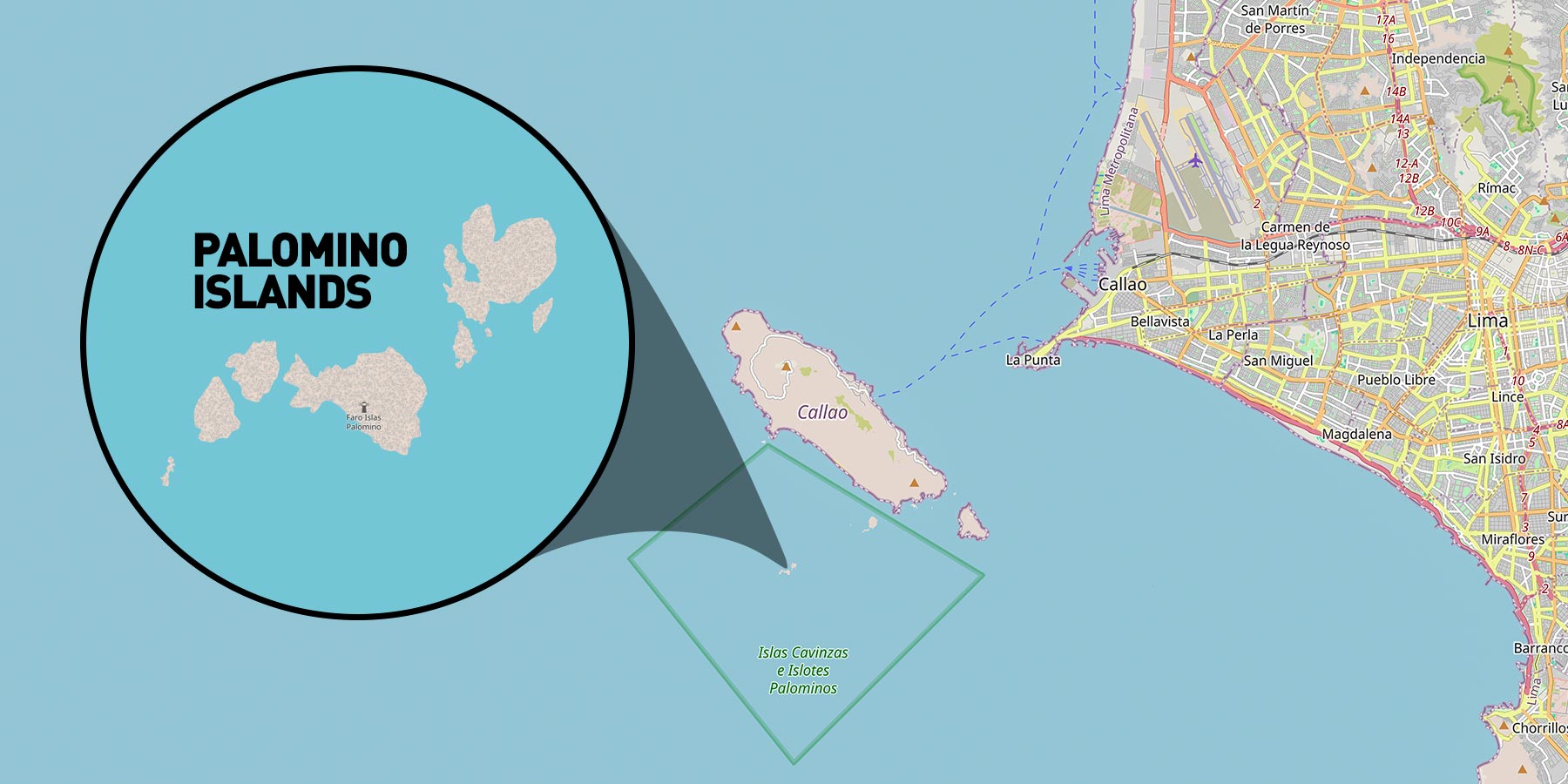
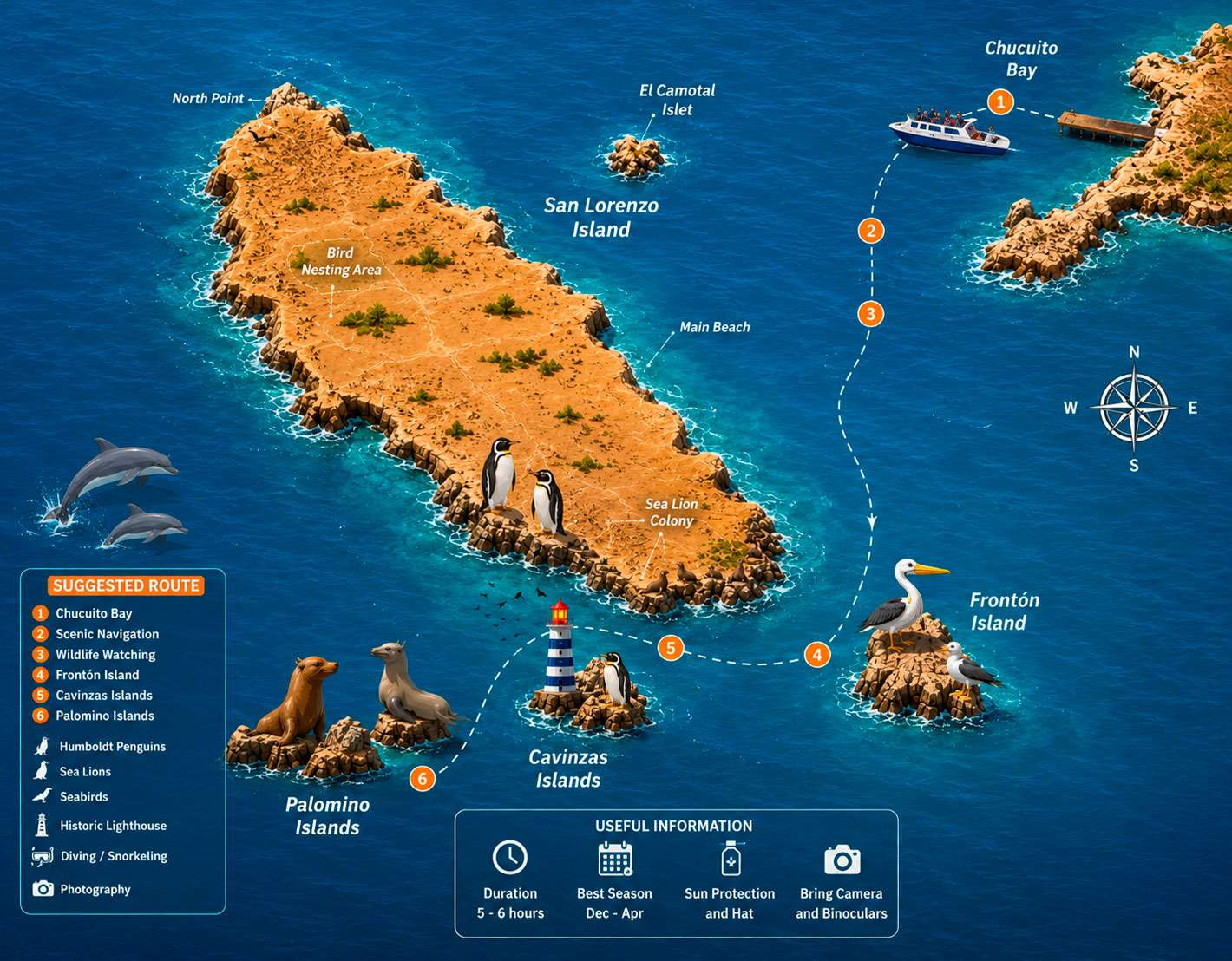
The Palomino Islands are located 18 kilometers from the port of Callao (in the La Punta district), off the central coast of Peru. Their closeness to the coast is no accident: these islands are washed by the Humboldt Current, a cold, nutrient-rich current that crosses the Pacific Ocean and explains the abundance of marine life in the area, from schools of fish to the sea lions and guano birds that live there. During the boat ride, San Lorenzo Island (the largest on the Peruvian coast) serves as a mandatory visual reference, since you sail around it before reaching the Palomino islets.
On the map below you can accurately locate the area and, at the same time, identify the departure dock in Callao, which usually matches the meeting point given by most tour operators before starting the trip.
What are the Palomino Islands?
The National Service of Protected Natural Areas (Sernanp) of the State explained that the islands are formed by small islets located 6 miles from the port of Callao and west of San Lorenzo Island.
Geologically, the Palomino Islands are rocky outcrops of volcanic origin, formed millions of years ago by the tectonic activity of the Peruvian coast, which gives them that steep profile bare of vegetation that is seen from the boat. This same dryness, far from being a limitation, is key for the wildlife: since there are no land predators or vegetation that makes access difficult, the rocks become an ideal shelter for sea lions and guano birds to form their colonies. Added to this is the biological wealth of the sea, where the cold Humboldt Current meets warmer waters from the north, creating an area of high marine productivity that attracts schools of fish and, with them, the animals that feed on them, from sea lions to Humboldt penguins and a variety of guano birds.
Animals on the Palomino Islands
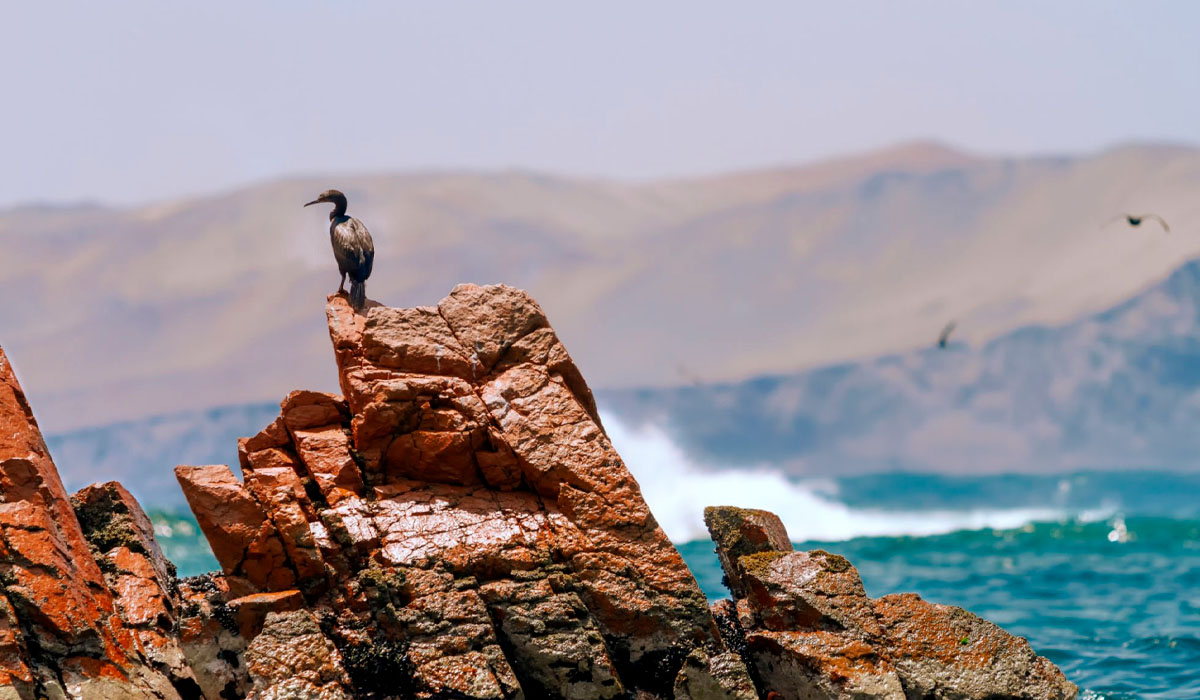
The Palomino Islands, located off the coast of Lima, are amazing not only for their rock formations and ocean views, but also for the unique wildlife that lives there. This small natural paradise is a true shelter for wildlife in the Peruvian Pacific.
Humboldt Penguins
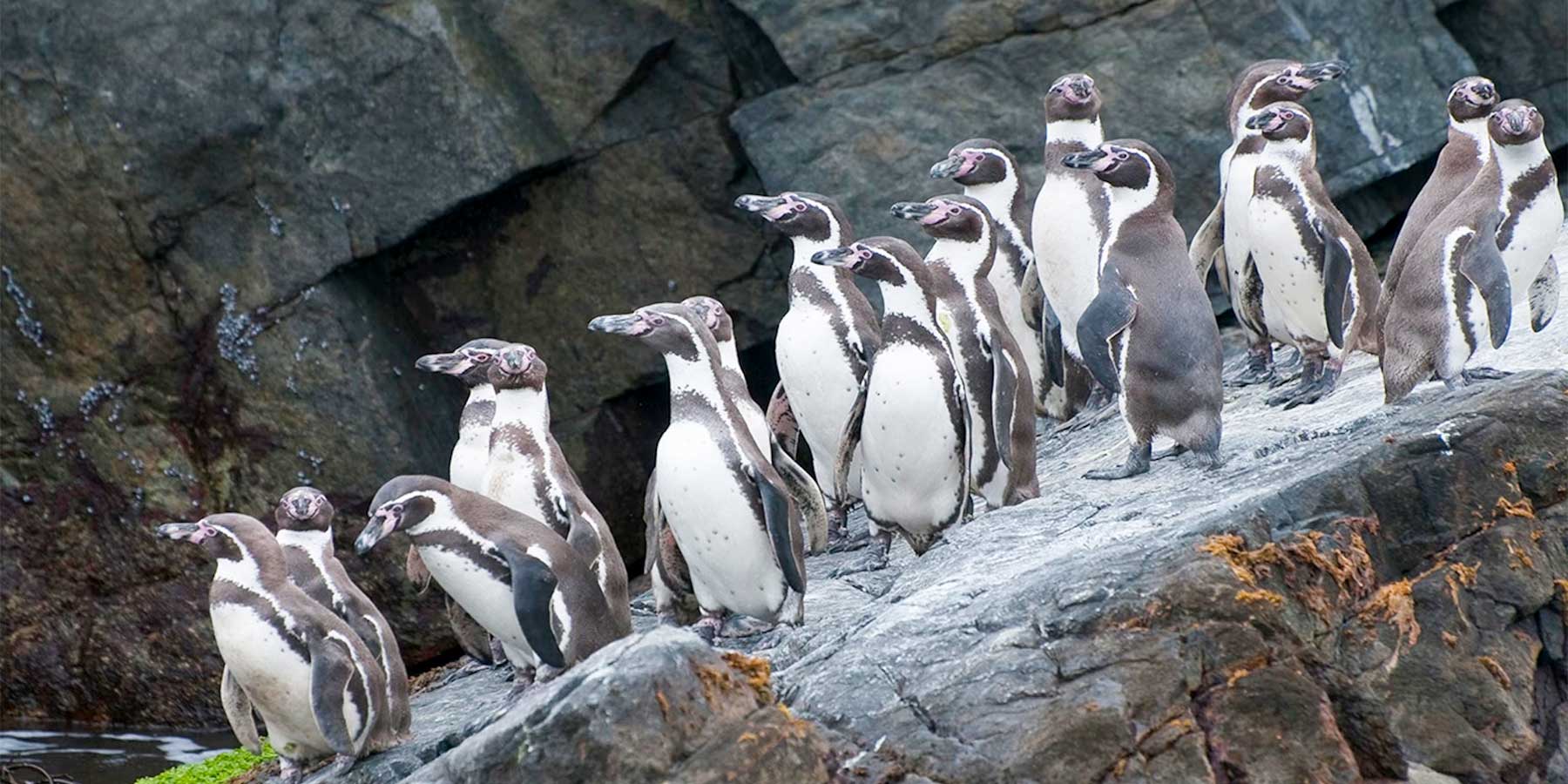
Although they are not as many as other animals, Humboldt penguins are adorable sea creatures that can be seen in the Palomino Islands. This type of penguin, which lives in the cold waters of the Humboldt current, is listed as vulnerable by the International Union for Conservation of Nature (IUCN), due to the loss of its habitat and overfishing. The global number is worrying: it is estimated that there are around 23,800 adult individuals left in the wild throughout their entire distribution area, between Peru and Chile, a population that continues to decrease.
For this reason, seeing them in their natural environment is a special experience that is appreciated even more. Their black and white feathers, their medium size, and their clumsy walk on the rocks make them endearing. They can often be seen resting in the sun or going in and out of the sea with surprising speed. They are excellent swimmers and use their wings as flippers to move quickly underwater in search of small fish, their main food.
The best time to observe them is usually early in the morning or late in the afternoon, when there is more activity in their groups. Their presence also shows that the area is in good health, since they need specific conditions to live well.
Underwater Life
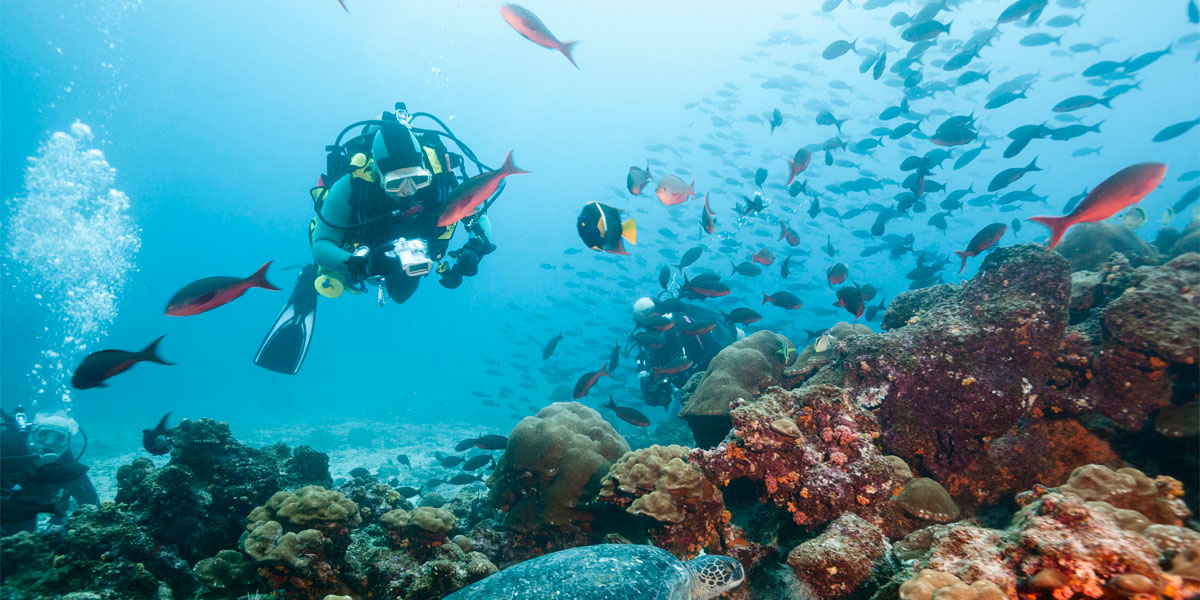
The waters that surround the Palomino Islands are cold, rich in oxygen and nutrients thanks to the Humboldt current. This allows a great variety of sea creatures to live there, although they are not always seen, forming a vital ecosystem.
Underwater, you can find groups of fish like anchovies, silversides, and mackerels, which are the base of the marine food chain. There are also mollusks, crustaceans, starfish, sea urchins, and soft corals that cover the rocky bottom, creating a colorful and vibrant landscape. During the boat ride to the islands, it is common to spot common and dusky dolphins, which often playfully approach the boats, jumping over the waves.
For those who practice scuba diving or snorkeling in the allowed areas, the visibility of the water is usually around 3 to 6 meters, depending on the season and the waves, enough to appreciate a good part of this ecosystem in action, although conditions can vary from one day to another.
Sea lions
Once in the Palomino Islands, it is possible to appreciate the great attraction of the place: the hundreds of sea lions. In total there are more than eight thousand, which usually fish in the morning and use the afternoon to sleep. Sea lions like the cold waters of the Pacific Ocean.
As in any wild colony, life follows its natural course: there is an area of the island known as "The Cemetery", where old or injured individuals retreat to die in peace, and high above fly the vultures, scavenging birds that play their role in this cycle. It is a reminder that this is a wild ecosystem, not a zoo, and of the importance of observing the animals with respect and distance.
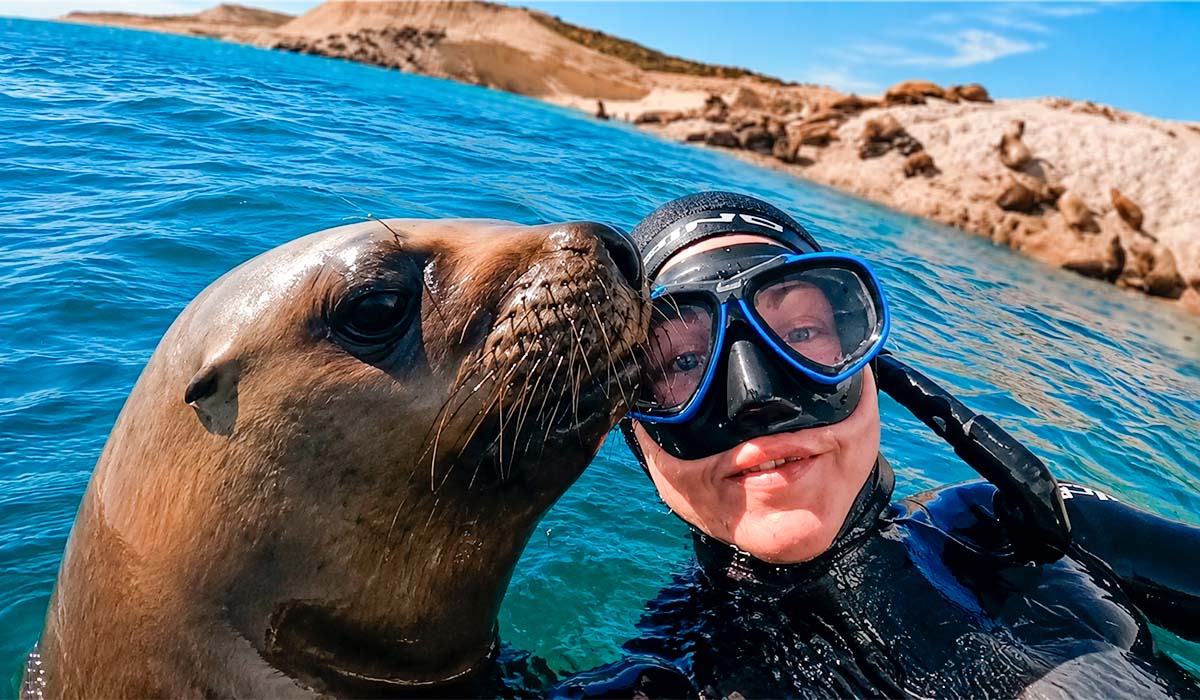
At the end of the visit, those who wish can swim with the sea lions. For this adventure, it is necessary to know how to swim and have a special suit to better withstand the cold waters of Callao. The tours include everything necessary to do it safely. The time in the water is about 20 minutes.
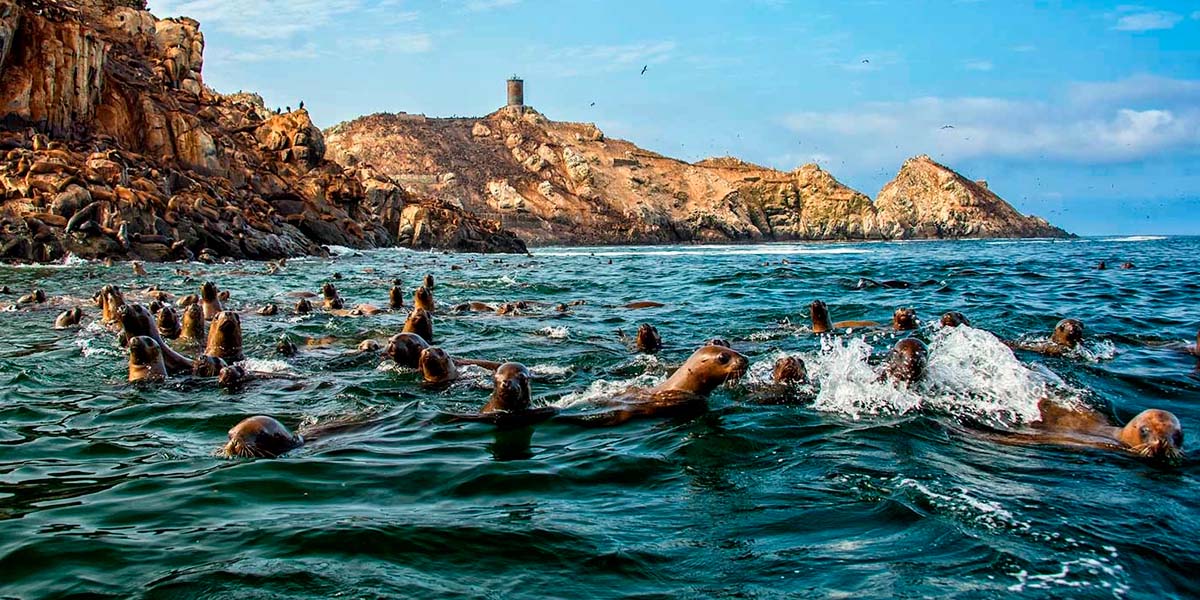
The birds of the Palomino Islands
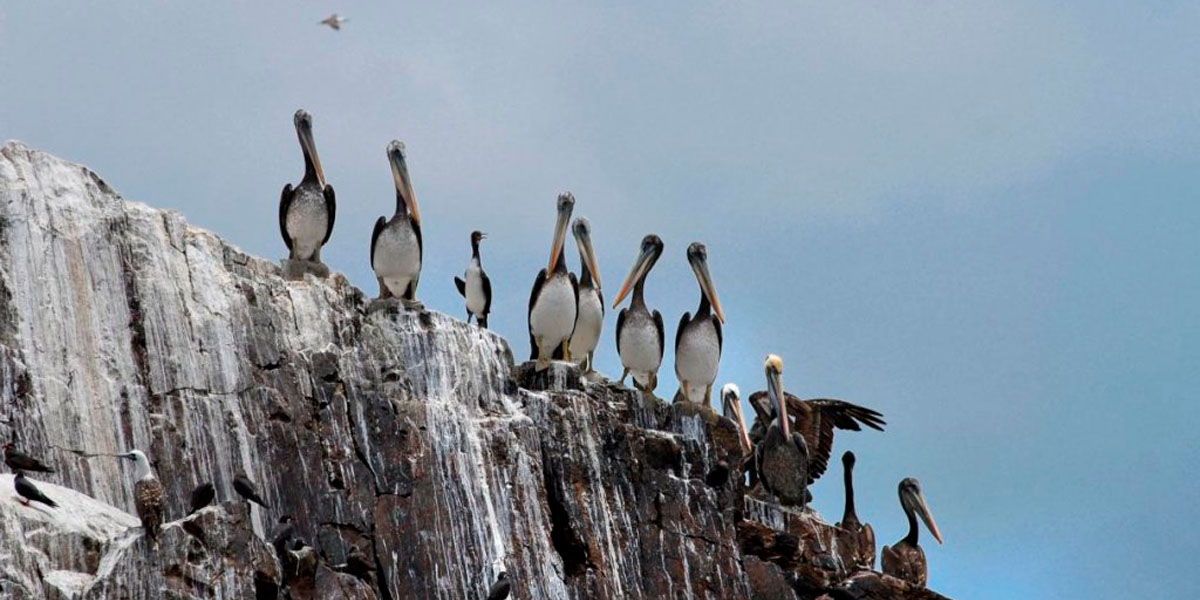
The Palomino Islands are inhabited by various species of birds attracted by the fish and the scarce human presence. The seagulls, guanays, Inca terns, pelicans, elegant terns, and Peruvian boobies stand out.
At the end of the 19th century, the proliferation of guano produced by these birds caused an economic boom known as the "guano era". This product was used as fertilizer in agriculture until the fall in prices and the poor management of the Peruvian State caused the decline of the business.
It should be noted that the Humboldt penguin, although biologically it is also a bird, was already described in detail in the previous section for being one of the great main characters of the islands.
What activities can I do on the Palomino Islands?
-
Swim with sea lions
The Palomino islands shelter an incredible colony of sea lions that have gotten used to human presence. One of the most exciting activities is swimming near them in their natural habitat, but with supervision and proper equipment, you can go into their waters and share an unforgettable moment while you watch them play, communicate with each other, or simply rest on the rocks. Most operators include this activity in the base price of the tour, along with the necessary wetsuit and life jacket. -
Observation of marine wildlife and birds
From the authorized boats, visitors can get close to the groups of sea lions, Humboldt penguins, and guano birds without needing to get into the water, ideal for those who prefer to enjoy the tour from the deck. If you want to know in detail what species you are going to find and their characteristics, you can check the section "Animals in the Palomino Islands" above. -
Water sports
The waters that surround the islands are perfect for activities like snorkeling and scuba diving. These sports allow you to explore the underwater ecosystems up close, observe colorful fish, soft corals, and other marine creatures in a clean and natural environment. Unlike swimming with sea lions, snorkeling and scuba diving are usually offered as extra activities with a separate cost, since they require extra gear and time that not all operators include by default; it is a good idea to check this directly with the chosen agency. -
The Boat Trip
The boat (or yacht) trip offers a huge marine landscape that gradually moves away from the port of Callao. During the 18 kilometers that the trip lasts, you can observe a series of islands and islets, among which stand out: Camotal (also known as the Peruvian Atlantis), San Lorenzo island (which worked as a military fort), El Fronton island (which served as a prison), and the Cavinzas islands (where you can see the beautiful Humboldt penguins).
Tour to the Palomino Islands
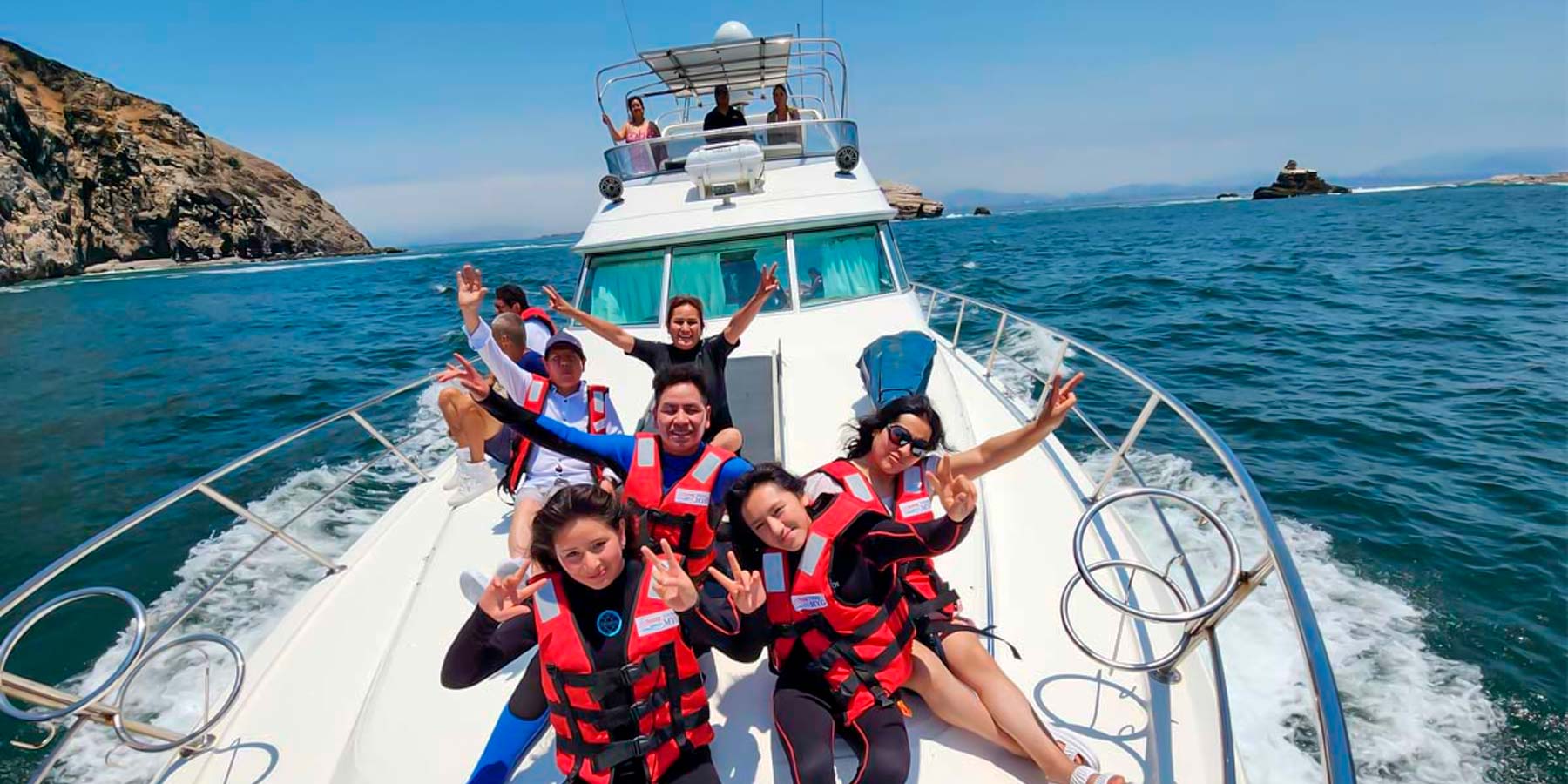
This exciting tour through the islands near Lima begins at the Darsena Pier (Plaza Grau) or at the Nautical Club Pier (Marina Club), where you will board a boat to start a relaxing trip through the Pacific Ocean. During the first part of the tour, you will pass by Chucuito, La Punta, El Camotal, San Lorenzo Island, and El Fronton, each with its own history and unique views of the coast.
The tour continues to the Cavinzas Islands, known for their rich marine life. There, you can observe Humboldt penguins and various guano birds, like boobies and guanays, in their natural habitat.
After a while, the boat arrives at the Palomino Islands, where you can see a large colony of sea lions. In designated areas, and always keeping a safe distance (at least 30 meters from the islands), visitors can jump into the water and swim near these playful animals, one of the favorite activities of many day trips from Lima.
This experience, offered by some of the best tours in Lima Peru, lasts between 2.5 and 4 hours, depending on the type of boat and the sea conditions. It is an excellent option for those looking to enjoy nature and explore a different side of Lima.
Tickets
The entrance price to this protected natural area is S/.11 for adults and S/.5 for children under 16 years old, a fee that is paid separately and that most operators do not include in the tour price.
The cost of the complete boat tour, which does include the ride, the guide, and the wetsuit to swim with the sea lions, varies a lot depending on the operator and the type of boat: from about S/.70-120 (between US$ 20 and 35) in basic rides without swimming, to S/.150-250 (between US$ 40 and 70) in tours that include the complete experience of swimming with sea lions, hotel pickup, and snacks on board.
Recommendations
- Bring water, a hat, sunscreen, sunglasses and a windbreaker.
- Respect the instructions of the guide or park ranger and the signs.
- The use of a life jacket is mandatory.
- Avoid making loud noises and do not touch or feed the sea lions.
- Do not throw trash into the sea and put it in proper places when you reach land.
- The boat trip can cause dizziness to those who are not used to the rocking of the sea; it is recommended not to travel after having breakfast or lunch, as this can cause nausea or headaches during the tour.
How to get to the Palomino Islands?
The starting point is Plaza Grau (also known as the Darsena dock), although some tour operators leave from the Marina Club of Callao, an alternative dock located in the same port area. The difference between both points does not affect the tour experience itself (both sail the same route to the islands).
You can get there by public transport or by taxi from downtown Lima, which takes about 1 hour of travel. If you travel from districts like Miraflores or San Isidro, the taxi or ride app usually costs between US$ 5 and US$ 10, and the trip takes between 30 and 45 minutes depending on traffic.
If you arrive directly from the Jorge Chavez international airport, you are in luck: the terminal is located within the same province of Callao, just 9 minutes by taxi from the port (between US$ 10 and US$ 14), which makes the Palomino Islands an excellent first activity when landing in Lima or an interesting stop before taking your departure flight.
At the Plaza Grau dock there are boats that offer tours to the Palomino Islands. The boat trip takes 1 hour and 30 minutes. The return trip follows the same route as the way there.
Other islands of Callao
During the boat ride to the Palomino Islands, the route goes along four other islands of the Callao archipelago, each with its own history. It is not possible to get off on any of them (the visit is always done from the boat, looking at their shape and listening to the guide's explanations), but their presence adds a fascinating historical layer to the tour.
- El Camotal Island
This small islet was used as sweet potato farming land (hence its name). It is said that more than ten thousand people worked there until an earthquake in October 1746, and the following tsunami, sank the islet. About eight hundred people died in this tragedy. Today it can only be seen in summer (during low tide). It is just 10 minutes from the Callao port. It is also known as the "Peruvian Atlantis". - San Lorenzo Island
Moving forward, this island, the largest on the Peruvian coast, covers an area of 1648 hectares. From pre-Inca times, it was used as a graveyard. The island had a great importance throughout the history of Peru: pirates and corsairs who wanted to attack Lima set up their base of operations there, as well as the Spanish who attacked the famous Real Felipe fortress. In 1835, it was explored by Charles Darwin. In 1906, the archaeologist Max Uhle did excavations on it. Currently, it serves as a base for the Peruvian Navy. - El Fronton Island
Next on the route, this small island is famous for housing the prison of the same name, where the most dangerous criminals in the country were locked up. In 1986, a riot organized by the prisoners of the Shining Path movement resulted in the death of 118 inmates, many of them unofficially, an event that is still being investigated today. Currently, the island is abandoned, and its silent and empty shape contrasts with the wildlife seen on the rest of the tour: as soon as El Fronton is left behind, the landscape is filled with birds and movement again at the next stop, the Cavinza island. - Cavinza Island
Finally, this small group of islands and islets covers an area of 7.58 hectares. The important wildlife that lives there has made it a protected site by the Peruvian State. Bird species stand out, such as the guanay, the Peruvian booby, the pelican, the Inca tern, the red-legged cormorant, the vulture, and, above all, the Humboldt penguin. Just like in the Palomino Islands, boats with tourists arrive at its shores wanting to enjoy its amazing marine life.
Frequently asked questions about the Palomino Islands
- How much does the tour to the Palomino Islands cost?
The price varies depending on the operator and if it includes the activity of swimming with sea lions or not. Basic boat rides, without swimming, usually cost between S/.70 and S/.120 (about US$ 20-35), while complete tours with swimming, wetsuits, and transfer from the hotel are around S/.150 and S/.250 (US$ 40-70). Additionally, you add the entrance fee to the protected natural area, of S/.11 for adults and S/.5 for children, which most operators charge separately. - Is it safe to swim with sea lions?
Yes, as long as it is done with an operator approved by Sernanp. The tours include a life jacket, a wetsuit, and the watch of a guide or lifeguard in the water. Furthermore, the Palomino sea lions are used to human presence and do not have natural predators in the area, which lowers the risk of aggressive behaviors, although they are still wild animals: you must not touch them, chase them, or make loud noises near them. - What is the best time of the year to visit the Palomino Islands?
The Lima summer (December to April) offers better weather, a calmer sea, and greater visibility. Between May and September, the tour keeps working normally, but the winter fog lowers visibility and drops temperatures. Therefore, you can check the previous section for more detail on the differences between both seasons. - Do I need to book in advance?
Yes, it is recommended to book at least 24 to 48 hours in advance, especially in high season (summer and weekends), since the spots on each boat are limited and departures depend on availability and the weather conditions of the day. - Can I see penguins on the Palomino Islands tour?
Yes, the Humboldt penguins are part of the wildlife seen during the tour, mainly on the Cavinza island, although their presence depends on the season and natural factors like the availability of food. It is not a 100% guaranteed sighting, but it is very common during most of the year.

Combine your visit to the Palomino Islands with the best of Lima
If your trip to Peru starts or ends in Lima, the Palomino Islands are an excellent way to make the most of the day before flying to Cusco. Consequently, the boat tour to swim with the sea lions is usually done in the morning, which leaves the afternoon free to keep exploring the capital.
- A good option is to go to the Magic Water Circuit, in the Reserve Park, where the lit fountains offer a show unlike any other walk in the city.
- You can also spend a few hours walking around Barranco, the bohemian neighborhood of Lima, known for its colorful architecture, its murals, and its artistic vibe, ideal for walking slowly and having a drink in one of its cafes.
And if you prefer to end the day with sea views, Miraflores is the perfect area, with its boardwalk, its parks facing the Pacific Ocean, and a wide food offer to try Peruvian food before continuing your trip to Cusco and the Inca Trail.
Best Tours in Peru
Many are the routes that take you to Machu Picchu, but none is like the Inca Trail Tours, the most famous pedestrian path in the Americas. After flying from the capital of Perú, Lima, you will arrive in Cusco to walk for four days along a path through forests and dense fog, millenary stone steps and discovering the ruins of ancient fortifications and Inca cities, and all the time enjoying majestic views.
Inca Trail, Machu Picchu and more
- Salcantay Trek Peru to Machu Picchu 5 days
- Palcoyo Mountain Tour
- Cusco to Manu Tour
- Humantay Lake Day Trip
- Inti Raymi and Machu Picchu Tour
If you want to visit Machu Picchu, we recommend you to book your Machu Picchu Ticket in advance, so you will enjoy your Vacation in Machu Picchu without any problem.


