
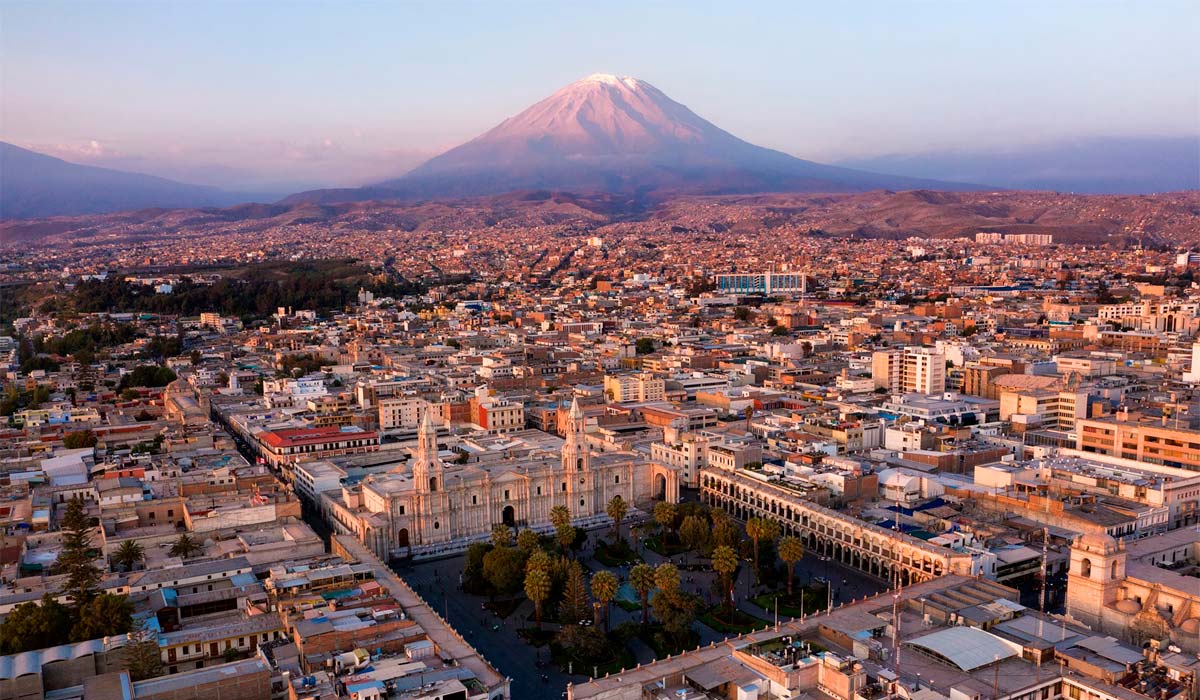
When a person arrives for the first time in the city of Arequipa, their sight and admiration are captured by the Chachani, Misti, and Pichu Pichu volcanoes. These huge massifs rise in the north, northeast, and east sectors of the city, sheltering more than a million people who have chosen the Chili River valley as the ideal place to settle. These volcanoes are part of the most iconic landscapes of Peru photographed by travelers.
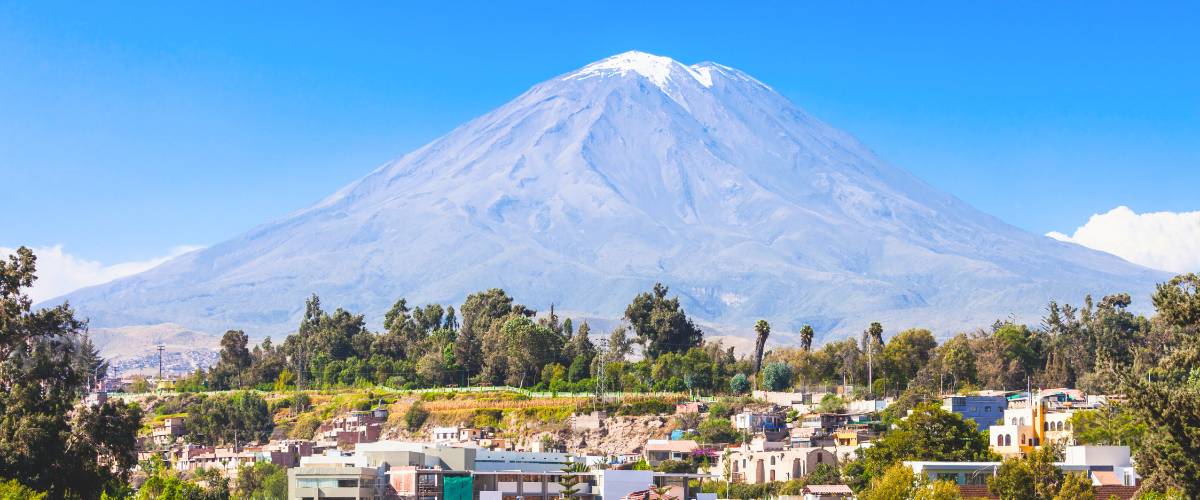
Of these volcanoes, one attracts the most attention: the Misti. Whether because of its symmetrical cone shape or its imposing and challenging height, the Misti is, without a doubt, the most well-known volcano in the country. Its presence dominates the horizon of the "White City" and places it as one of the best destinations in Peru to contemplate nature and the volcanic geography of the Andes.
Location of the Misti Volcano
The Misti volcano (242900N, 8196400S, 5820 masl) is located on the western edge of the Western Cordillera of the Andes, bordering to the southeast with the extinct Pichu Pichu stratovolcano, to the northwest with the Chachani volcanic complex, to the east with the puna plateau and to the west with the tectonic basin of Arequipa, where the city of the same name is located.
The crater of the Misti volcano is 18 km from the center of the city of Arequipa in Peru and the difference in altitude between the city and the top of the volcano is around 3.5 km.
A young volcano with important historical eruptive activity
El Misti is approximately 112,000 years old. It is a stratovolcano formed by the successive accumulation of lava flows and pyroclastic sequences. In the last 50,000 years, the Misti has registered at least 12 volcanic eruptions, whose expelled products have been deposited in large part in the area now occupied by the city of Arequipa.
One of these eruptions, which occurred 2000 years ago, has been classified as one of the most important in southern Peru. This eruption reached a Volcanic Explosivity Index of 5, on a scale that goes from 0 to 8. The products emitted in this eruption were deposited mainly in the southwestern sector of the volcano, where the city of Arequipa is located today. This great eruption also produced pyroclastic flows that flowed through ravines in the northeastern, southwestern, and western sectors of the Misti.
The last eruptive process of the Misti volcano was recorded in the fifteenth century, at the time of the Inca Pachacutec. This eruption, according to historical chronicles and the study of ash deposits and other volcanic products, would have been characterized by moderate explosive activity, accompanied by the emission of volcanic ash.
A volcano of high risk for the population
In the 2017 population census carried out by the National Institute of Statistics and Informatics, there are more than approximately 1,080,635 people living in the province of Arequipa. This includes only the districts that border directly with the Misti volcano, such as Alto Selva Alegre, Miraflores, Mariano Melgar, Paucarpata, and Chiguata.
It is precisely this proximity of the population and the presence of energy, hydraulic and transportation infrastructure that make the Misti be considered a high-risk volcano. “Because Misti is an active volcano, it has a long eruptive life ahead of it. A future eruption could generate significant impacts in the city of Arequipa”, says Dr. Marco Rivera, scientific researcher at the Geophysical Institute of Peru (IGP).
A volcano of constant seismic and fumarol activity
Daily, in the Misti volcano, between 40 and 60 earthquakes occur that are imperceptible to the population of Arequipa. The IGP, through the National Volcanological Center (CENVUL), has been monitoring the Misti permanently and in real time since 2005 through a geophysical network made up of 6 seismometers, 1 GPS station and 2 scientific cameras.
"Today we know what the base level of the Misti's activity is, which will allow us to identify possible anomalies or changes in its dynamic behavior in order to warn of a future reactivation," says Eng. José Del Carpio, CENVUL coordinator.
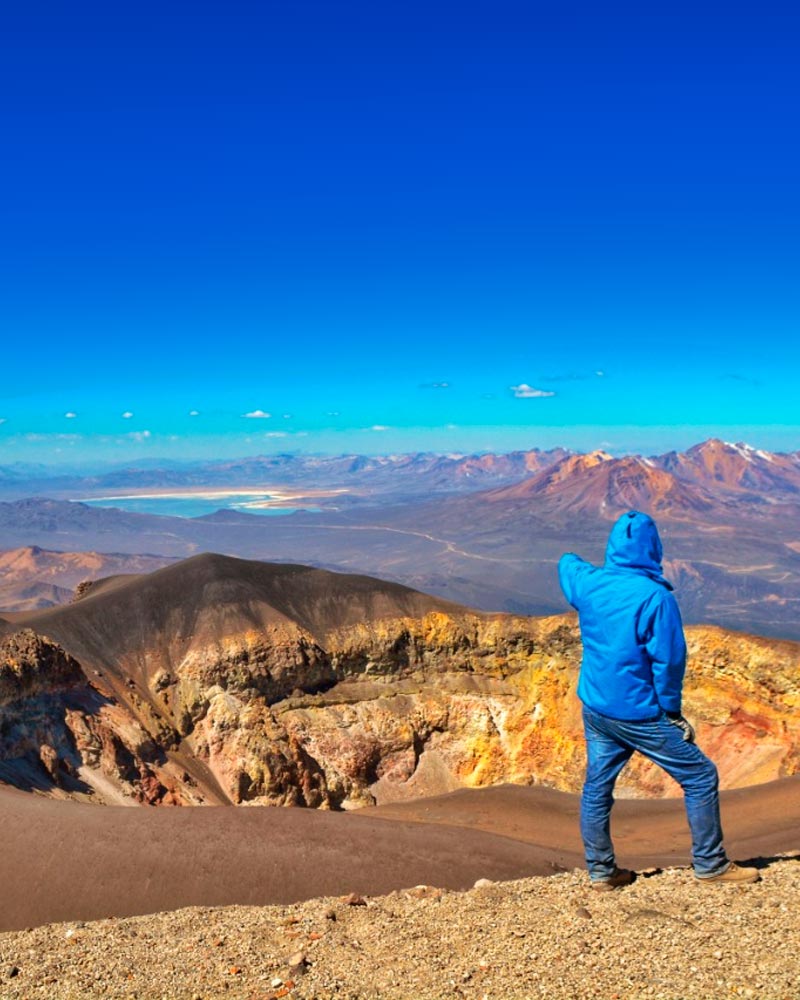
In addition to seismicity, one aspect that also shows that Misti is an active volcano is the sporadic emission of fumaroles from the crater. Many people from Arequipa observe these emissions that sometimes exceed the top of the volcano and are visible from the city of Arequipa. "The fumarolic emissions of Misti are mostly water vapor produced by the evaporation of meteoric water that is close to the crater and is heated by the influence of the volcanic system", explains Dr. Rivera.
 |
 |
The Misti Volcano, eternal viewpoint of Arequipa
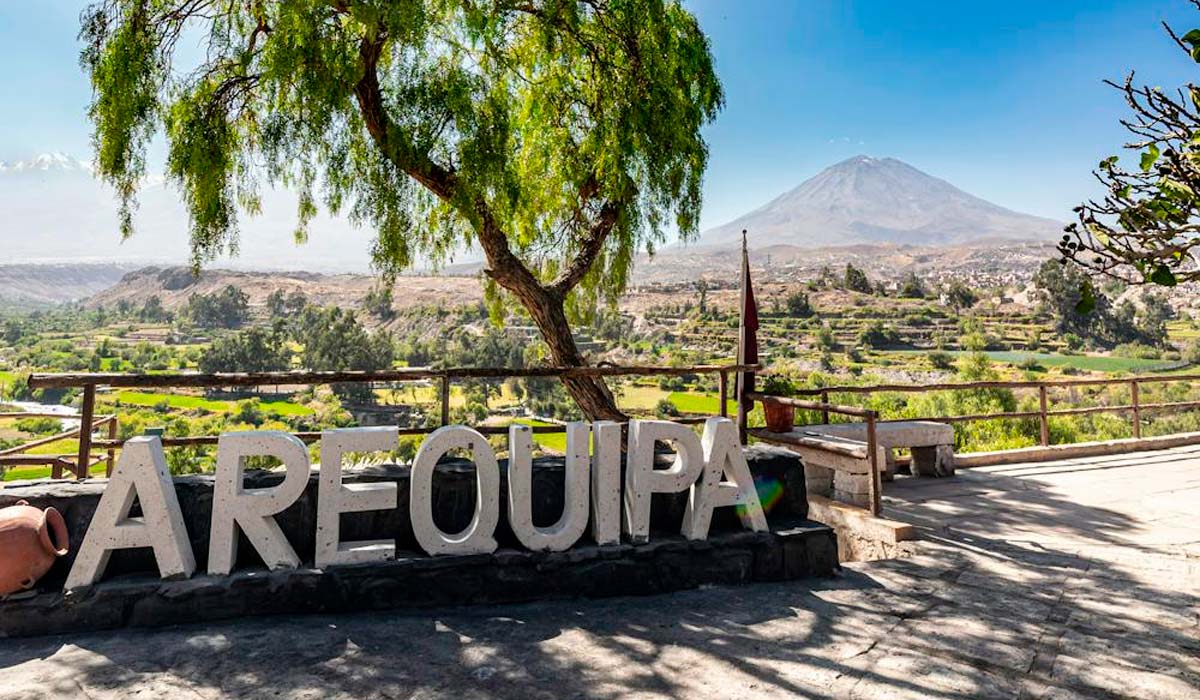
Majestic and elegant, the Misti volcano dominates the landscape of Arequipa with its imposing presence. This natural wonder, whose summit reaches 5,820 meters above sea level, is a fundamental part of the elevation of Arequipa Peru and the unique character of the city.
The Misti is the most emblematic of the arequipa volcanoes, accompanied by Chachani and Pichu Pichu. Its almost perfect conical figure not only beautifies the city, but also forms an essential part of its cultural and architectural identity. From its slopes, sillar is extracted, a white volcanic stone that gave Arequipa its nickname of "White City".
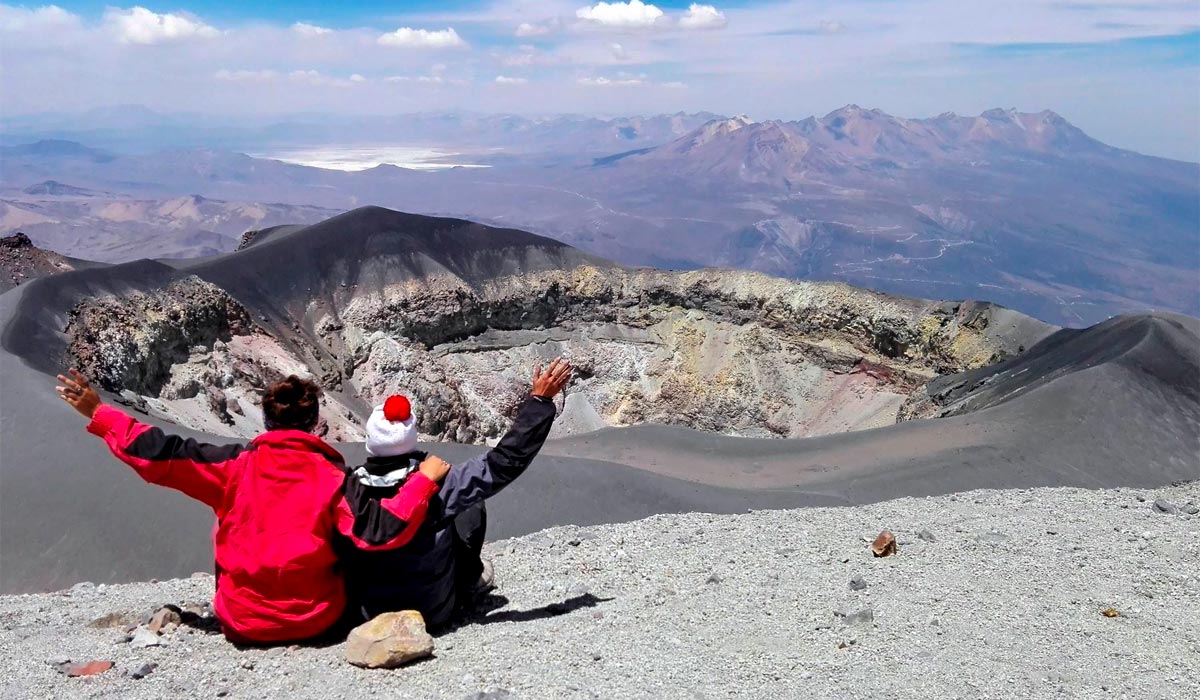
Those who decide to travel to Arequipa find themselves with the possibility of exploring the Misti, either by hiking towards its crater or contemplating it from urban viewpoints. The experience is demanding, but the reward is unmatched: panoramic views of the countryside and close contact with one of the most iconic formations of southern Peru.
For anyone planning a Arequipa trip, the Misti is a fundamental stop. Its presence not only frames the horizon, but also narrates the history of ancient rituals, stone by stone, and embodies the very essence of the Arequipa spirit: resilient, strong, and deeply linked to its volcanic land.
How to get to Misti Volcano?
Tours to the Misti volcano generally depart from the Plaza de Armas in Arequipa, although some may go directly through your hotel. They generally last two days, depending on the type of route taken and the height of the ascent.
How to get to the starting point?
Most expeditions to the imposing Misti volcano start from the city of Arequipa. Subsequently, a road trip is undertaken to the starting point of the trekking, generally aboard suitable vehicles for difficult terrain, ideal for traveling along the rural roads that lead to the foothills of the volcano.
- Transfer duration: between 1 and 2 hours, depending on the selected route and terrain conditions.
- Type of road: dirt roads in good condition, passable all year round, especially during the dry season.
Main ascent routes to Misti
Chiguata Route
This route starts from the town of Chiguata, located about 30 km from Arequipa and at an altitude of 2,970 meters above sea level. It can be easily reached by private transport. From here, the walk to the base camp begins, where hikers usually spend the night before starting the final ascent at dawn towards the summit of Misti, located at 5,825 meters above sea level. Chiguata offers a unique cultural experience: panoramic views of agricultural terraces and traditional constructions made with stone and mud that beautify the landscape.
Aguada Blanca Route
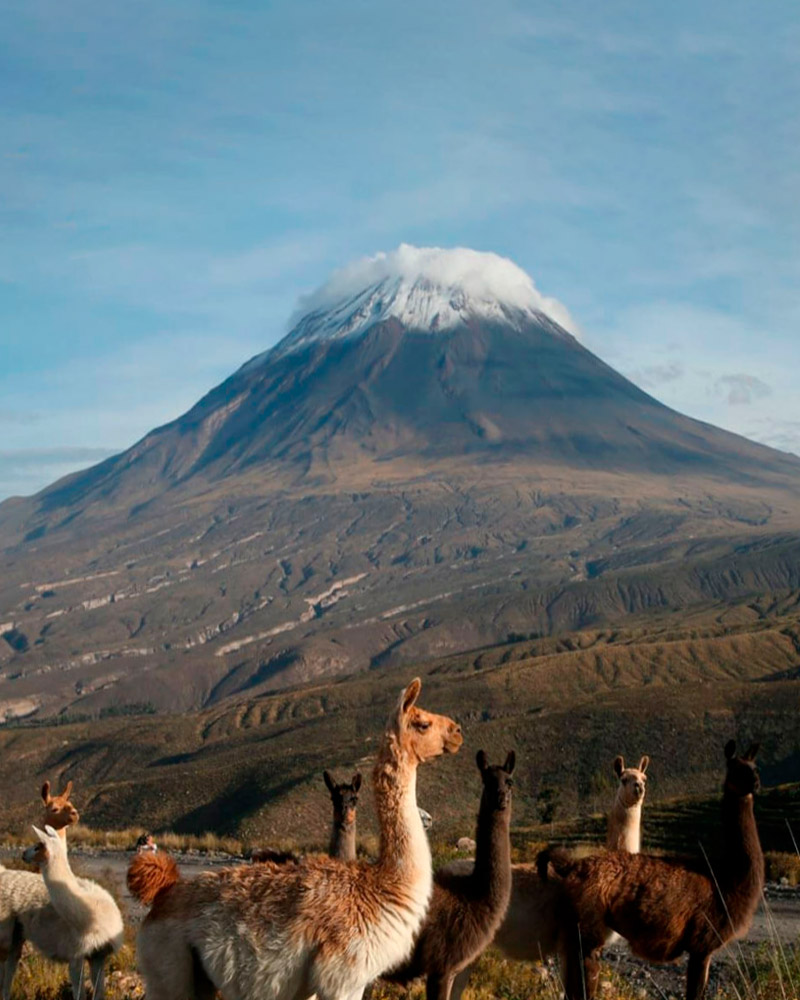
This alternative crosses the Salinas and Aguada Blanca National Reserve, home to abundant Andean fauna, where it is possible to observe birds such as the Andean condor. The tour begins with a trip of approximately 3 hours from Arequipa, following the Cabrerías road until reaching 4,000 meters above sea level, and then continuing to the foothills of the volcano. From this point, the ascent to Misti begins; furthermore, this trek is more demanding than the Chiguata one, as the slope is steeper, and it can take around 8 hours to reach the summit.
What should I consider?
Tours to the Misti volcano, in general, are open to all adult audiences, but certain precautions must be taken. As you will be ascending at high altitude, people with heart problems or altitude sickness are not allowed to ascend, and there are also certain age and minimum weight restrictions. It is recommended to also consult the type of guide that the tour will have and the luggage that must be carried.

Best Tours in Peru
Many are the routes that take you to Machu Picchu, but none is like the Inca Trail Tours, the most famous pedestrian path in the Americas. After flying from the capital of Perú, Lima, you will arrive in Cusco to walk for four days along a path through forests and dense fog, millenary stone steps and discovering the ruins of ancient fortifications and Inca cities, and all the time enjoying majestic views.
- Peru Adventure Holidays
- Enigmatic Peru
- Peru Full of Adventures
- Peru Luxury Travel
- Peruvian Highlands
- Discover Peru
Inca Trail, Machu Picchu and more
- Salcantay Trek Peru to Machu Picchu 5 days
- Palcoyo Mountain Tour
- Cusco to Manu Tour
- Humantay Lake Day Trip
- Huchuy Qosqo Day Hike
- Llactapata Inca Trail to Machu Picchu
- Apurimac River Rafting
- Vilcabamba Trek to Machu Picchu
- Inti Raymi and Machu Picchu Tour
If you want to visit Machu Picchu, we recommend you to book your Machu Picchu Ticket in advance, so you will enjoy your Vacation in Machu Picchu without any problem.


