Peru Honeymoon Package: 7 Days with Night at Machu Picchu
Peru Honeymoon: 7 Days from Lima to Machu Picchu
7-day Peru honeymoon: Lima, Cusco and a night in Machu Picchu. Private guides, luxury hotels, entrance fees included. From USD 2,500. Book now.
Description
This 7-day Peru honeymoon is built around a simple idea: start where Peru starts, and finish where the Inca Empire reached its peak. You arrive in Lima — a city of Pacific cliffs, centuries-old colonial squares, and one of the most serious food scenes in South America — before flying up into the Andes to begin the second chapter.
Cusco is your base for three days. The ancient Inca capital and its surrounding valley hold more archaeology per square kilometre than almost anywhere on earth — the salt terraces of Maras, the circular experimental fields of Moray, the cliff-top ruins of Pisac, the fortress of Ollantaytambo where the Inca held the Spanish at bay in 1537. All of it visited privately, at a pace that lets the place actually sink in.
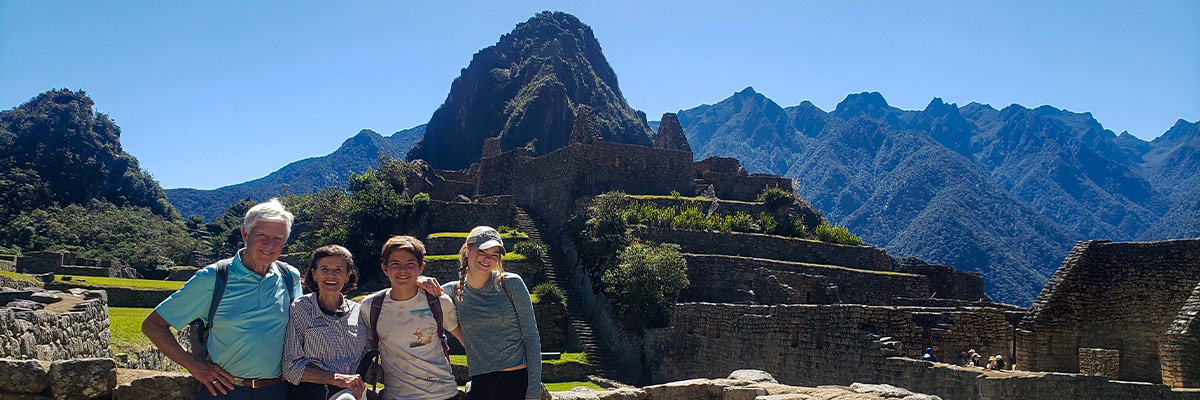
Then, the reason most people come to Peru in the first place. The Vistadome train takes you down through the cloud forest to Aguas Calientes, where you spend a night within walking distance of the citadel entrance. At dawn the next morning, you are inside Machu Picchu before the crowds arrive — a private guide, two and a half hours through the Intihuatana stone, the Temple of the Sun, and the agricultural terraces, then the rest of the morning to explore on your own terms.
Throughout: private transfers, bilingual guides, luxury hotels in the historic centres of Lima and Cusco, the Boleto Turístico covering Cusco's main archaeological sites, and all Machu Picchu entry tickets included. From USD 2,500 per couple.
Days: 7
Max People : 10
All year
Min Age : 10+
Pickup : Airport
Language:
Departure & Return Location
Jorge Chavez International Airport (Lima)
Bedroom
2 Bedrooms
Departure Time
3 Hours Before Flight Time
Return Time
3 Hours Before Flight Time
Price Includes
Air Fares
3 Nights Hotel Accomodation
Tour Guide
Entrance Fees
Departure & Return Location
Guide Service Fee
Driver Service Fee
Any Private Expenses
Room Service Fees
What to Expect
Quick Itinerary
Day 01: Lima — First Night in the City of Kings
Day 02: Cusco — Fly Up into the Andes
Day 03: Sacred Valley of the Incas — Pisac, Ollantaytambo & Chinchero
Day 04: Aguas Calientes — Gateway to Machu Picchu
Day 05: Machu Picchu — Inside the Citadel
Day 06: Cusco — A Free Day Among Museums
Day 07: Departure — Cusco to Lima to Home
Itinerary Details
Day 01: Lima — First Night in the City of Kings
Your Peru honeymoon begins at Jorge Chávez International Airport, where a Tierras Vivas representative waits at arrivals holding a sign with your names. From there, a private transfer takes you directly to Miraflores — the most refined neighbourhood in Lima, sitting on the cliffs above the Pacific — and to your hotel for the night.
You are staying at the Belmond Miraflores Park, a five-star property with uninterrupted views of the ocean from most rooms. It is one of the best-positioned hotels in the city: the Malecón walkway is directly below, the district's restaurants are within walking distance, and the noise of central Lima stays comfortably away.
Today has no scheduled activities. Arrive, unpack, and let the city come to you at whatever pace feels right after the flight.
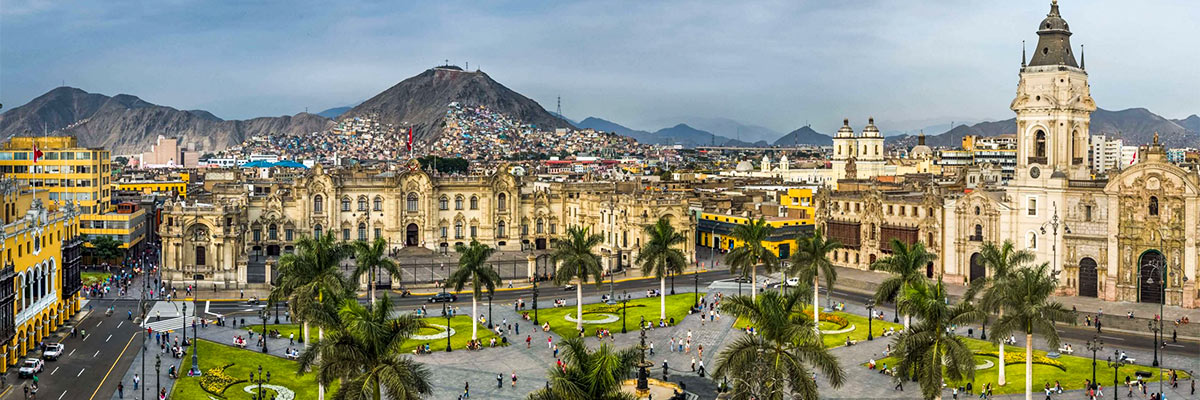
Lima was founded by Francisco Pizarro on January 6th, 1535 — the Feast of the Epiphany — which is how it earned its colonial name: the City of Kings. If the afternoon energy is there, the Plaza Mayor is fifteen minutes by taxi: the Government Palace, the Metropolitan Cathedral, and the Archbishop's Palace form one of the most intact colonial squares in South America. The stone facades are worth looking at closely.
Beyond the historic centre, Miraflores and the neighbouring district of Barranco offer a different Lima — cliff-top parks over the Pacific, the Larco Museum with its pre-Columbian gold collection, and a dining scene built around ceviche, tiradito, and leche de tigre that has made Lima one of the most talked-about food cities in the world. None of it requires a plan. Walk until something stops you.
Tomorrow you fly to Cusco. The Andes begin.
Day 02: Cusco — Fly Up into the Andes
Private transfer from your Lima hotel to Jorge Chávez International Airport for the morning flight to Cusco. A Tierras Vivas representative will be waiting at arrivals to take you directly to your hotel. Today is a free day — and at 3,399 metres above sea level, a free day is exactly what your body needs.
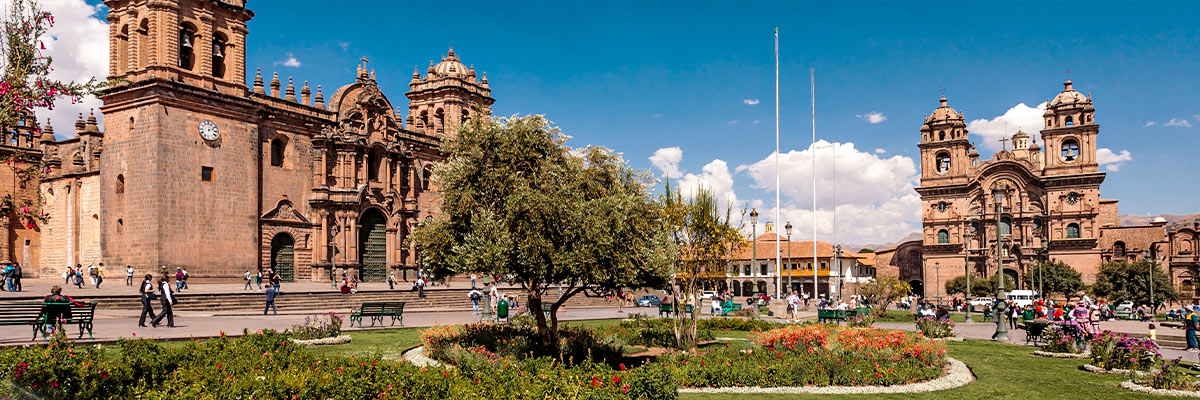
Cusco was the administrative and spiritual capital of the Tawantinsuyu — the Inca Empire at its height — and the Spanish built their colonial city directly on top of it rather than clearing it. The result is a place where baroque churches rise from Inca foundations and 15th-century stone walls line streets that have been continuously inhabited for six centuries. Walk without a plan. The Plaza de Armas is the natural starting point: the Cathedral, begun in 1559 and completed a hundred years later, holds the largest collection of colonial art in the city, including a vault containing the remains of Inca historian Garcilaso de la Vega. The Iglesia de la Compañía next door and La Merced a few blocks west are worth the detour.
For those with energy to spare, the hills around Cusco offer options: white-water rafting on the Urubamba River, horseback riding past the ruins of Sacsayhuamán, Q'enqo, Tambomachay, and Puca Pucara, or cycling down toward Maras and Moray through the valley. All optional, all available on request.
Tomorrow the Sacred Valley opens up.
Day 03: Sacred Valley of the Incas — Pisac, Ollantaytambo & Chinchero
Private car picks you up at the hotel for a full day in the Sacred Valley of the Incas. The valley floor sits some 300 metres below Cusco — enough of a drop to feel warmer, breathe easier, and understand why the Inca chose this corridor as the agricultural heart of their empire. The Urubamba River runs the length of it, flanked by terraced hillsides and snow-capped ridges on both sides.
First stop: Pisac. The archaeological site climbs the hillside above the town in a series of ceremonial and agricultural terraces, with views over the entire valley from the top. Your guide walks you through the main sectors before descending into the town, where the artisan market fills the central plaza and surrounding streets — handwoven textiles, silver jewellery, carved gourds, and ceramic work made by local producers. Worth slowing down for.
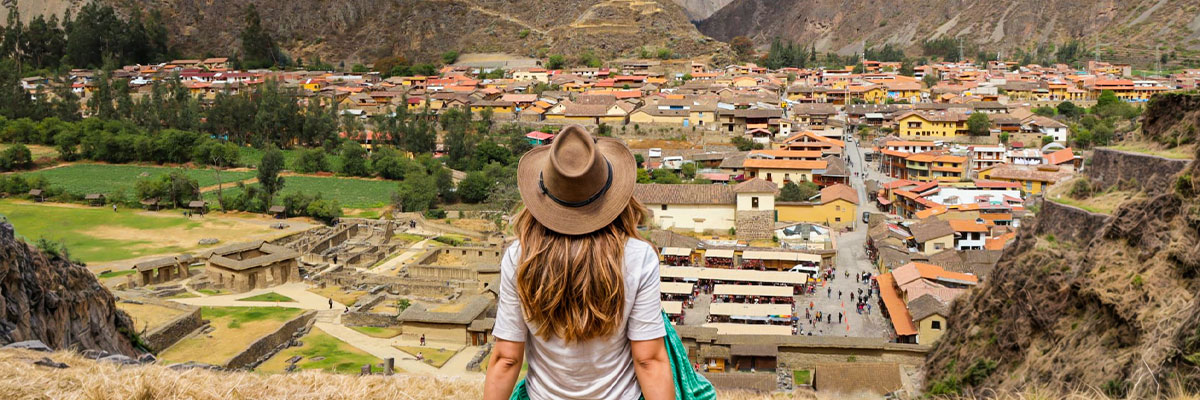
Lunch in Urubamba, the valley's main town, before continuing to Ollantaytambo in the afternoon. This is the best-preserved example of Inca urban planning in existence — a living town where the original 15th-century street grid is still in daily use. The fortress above it rises in near-vertical defensive terraces that held Hernando Pizarro's forces at bay in 1537, one of the few military retreats of the entire Spanish conquest.
On the return to Urubamba, a final stop at Chinchero — a hilltop village at 3,762 metres where Inca palace walls support a 17th-century colonial church, and where the women's weaving cooperative still produces hand-dyed textiles using techniques that predate the Spanish arrival. The fabrics — alpaca and wool, in colours extracted from plants and minerals — are among the finest you will find in the region and make a genuinely personal gift to bring home.
You spend the night in the Sacred Valley. Tomorrow, the train to Machu Picchu.
Day 04: Aguas Calientes — Gateway to Machu Picchu
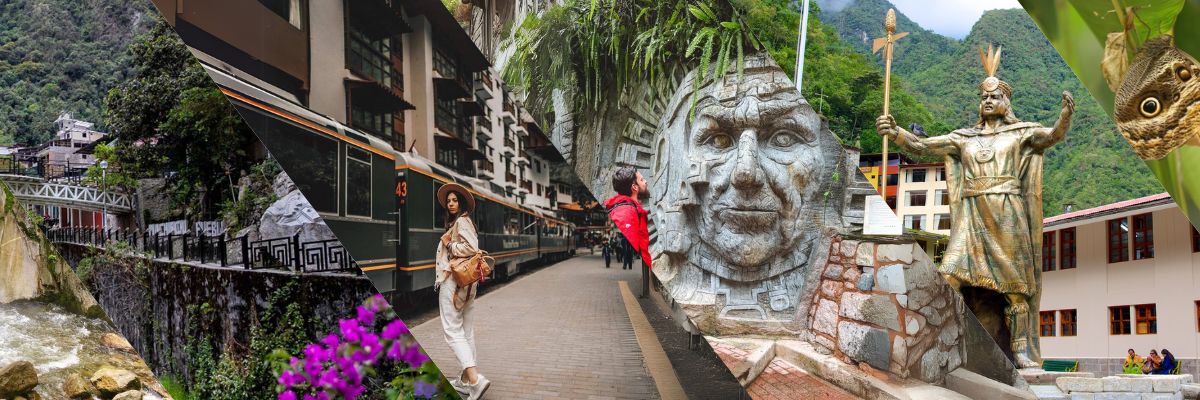
Private car to Ollantaytambo station, about 20 minutes from your hotel in the Sacred Valley. From there, the Vistadome panoramic train follows the Urubamba River downstream for 90 minutes through the cloud forest canyon — the walls of rock closing in, the vegetation thickening — before arriving in Aguas Calientes, the small town at the foot of the citadel.
A Tierras Vivas representative meets you at the station. The rest of the day is yours: the thermal baths a short walk from the centre, a 45-minute return trail to the waterfall, or simply a long lunch by the river. Tonight, sleep early — tomorrow starts before dawn.
Machu Picchu sits 122 km from Cusco in the Urubamba Valley, built into a ridge specifically chosen for its isolation from potential threats. Since the site's rediscovery in 1911 by American researcher Hiram Bingham, archaeologists have debated its exact purpose — though most agree it functioned as a religious and astronomical centre as much as a royal residence.
The citadel divides into two sectors: agricultural terraces and aqueducts to the south, and the urban core — temples, workshops, and ceremonial plazas — to the north. Two routes lead here: the train you just took, or the four-day Inca Trail, part of the vast Qhapaq Ñan road network the Inca built across the Andes.
Tomorrow, your private guide leads you through it all.
Day 05: Machu Picchu — Inside the Citadel
Early start, before the morning light reaches the valley. The bus climbs from Aguas Calientes through switchbacks of cloud forest, and the gates open at dawn — which is exactly when you want to arrive. The mist usually still sits over the lower terraces at that hour, and the citadel reveals itself gradually as you walk in.
Your private guide leads a two-and-a-half-hour tour through Machu Picchu: the Temple of the Condor, the Sacred Rock, the ceremonial baths known as the Ritual Fountains, the Intihuatana stone, and the Temple of the Sun. Two and a half hours covers the essentials, but the site is large enough that you will want more time — and you have it, since the rest of the morning is yours to explore independently.
Huayna Picchu
A steep hour-long climb to the peak that frames every photograph of the citadel. The view from the top puts the entire complex into perspective — small, precise, and improbably placed.
Machu Picchu Mountain
Longer and less vertical, reaching a higher elevation with wider views over the valley and the surrounding ridges.
Both require a separate entrance ticket — Circuit 3 for Huayna Picchu, Circuit 1 for Machu Picchu Mountain — and advance booking, since daily slots are limited and sell out weeks ahead.
In the afternoon, the bus takes you back down to Aguas Calientes for the Vistadome train at 3pm, returning through the same cloud forest canyon to Ollantaytambo and on to Cusco. You spend your last night in the city that was once the centre of the largest empire the Americas had ever seen.
Day 06: Cusco — A Free Day Among Museums
After Machu Picchu, a quieter rhythm. Today has no guide and no schedule — just Cusco at whatever pace suits you. Unlike the archaeological sites and markets you have already covered, this day works well indoors: Cusco holds one of the densest concentrations of museums in Peru, several of them within walking distance of each other in the historic centre.
Inca Museum (Museo Inka) Housed in a 17th-century colonial mansion built over Inca foundations, this is the most complete collection of Inca and pre-Inca artefacts in Cusco — mummies, ceramics, textiles, and the largest collection of qero ceremonial vessels in the country.
Qorikancha Site Museum Located beneath the Santo Domingo convent, on the grounds of what was once the wealthiest temple in the Inca Empire. Small but specific: the museum focuses on the temple's role as the religious centre of the Tawantinsuyu.
Regional History Museum (Museo Histórico Regional) A chronological walk through Cusco's history, from pre-ceramic settlements through the Inca period to the early Republic — useful for placing everything else you have seen this week into context.
Religious Art Museum (Museo de Arte Religioso) Set in the former Archbishop's Palace, with a collection of colonial-era religious painting from the Cusqueña School — the distinctive Andean style that blended European technique with Inca symbolism.
Archaeological Museum Smaller and less visited than the others, with a modest art exhibition alongside its archaeological collection — a good option if you prefer fewer crowds.
Most are within a 15-minute walk of the Plaza de Armas, so the day can move at whatever pace feels right — two museums and a long lunch, or all five and an early night before tomorrow's flight home.
Day 07: Departure — Cusco to Lima to Home
Private transfer to Alejandro Velasco Astete International Airport for your flight to Lima and onward international connection home.
Seven days. Lima's cliffs and ceviche, the high plazas of Cusco, the salt pans and ruins of the Sacred Valley, a night below Machu Picchu and a morning inside it. A full arc, start to finish.
If you would like to extend your stay — the Amazon, Lake Titicaca, Arequipa and the Colca Canyon — your Tierras Vivas travel designer can build it onto this itinerary. Contact us at info@tierrasvivas.com.
Included
What's Included in Your Peru Honeymoon
Private airport meet & greet: A Tierras Vivas representative meets you personally at the airport in Lima and Cusco — sign with your names, direct transfer to your hotel.
2 domestic flights: Lima → Cusco → Lima — included, no hidden booking fees.
All airport & inter-city transfers: Private vehicle throughout — no shared shuttles.
6 nights in luxury hotels: Belmond Miraflores Park (Lima) · hotel in Cusco · hotel in the Sacred Valley · hotel in Aguas Calientes
All entrance fees: Machu Picchu entry ticket · Boleto Turístico del Cusco covering Sacsayhuamán, Q'enqo, Tambomachay, Puca Pucara, Pisac, Ollantaytambo, Chinchero and more.
Private bilingual guides: Licensed, MINCETUR-certified guides exclusively assigned to you — Lima, Sacred Valley, Cusco and Machu Picchu. No shared groups.
Meals as per itinerary: 6 breakfasts · 1 buffet lunch in the Sacred Valley · 1 lunch in Aguas Calientes
Round-trip Vistadome train: Ollantaytambo ↔ Aguas Calientes, panoramic roof windows through the cloud forest canyon.
Round-trip shuttle bus: Return bus from Aguas Calientes to the Machu Picchu citadel entrance.
What's Not Included
International flights: Flights to and from Lima are not included.
Optional mountain tickets at Machu Picchu: Huayna Picchu (Circuit 3) and Machu Picchu Mountain (Circuit 1) require a separate ticket — not included in the base price. Approximate cost: USD 80 per person. Slots sell out weeks in advance — book at the same time as your main Machu Picchu entry.
Meals not listed in the itinerary: All included meals are detailed above. Any additional meals or dining are at your own expense.
Travel insurance: Not included but strongly recommended — particularly a policy covering medical evacuation at high altitude.
Gratuities: Tips for guides and drivers are not included. Tipping is common practice in Peru — the amount is at your discretion.
Optional activities in Cusco: White-water rafting, horseback riding, and mountain biking mentioned on Day 02 are optional add-ons, not included in the base package.
Personal expenses: Souvenirs, laundry, minibar charges, and any services not explicitly listed in the itinerary.
Essential Information
Your Private Guides — Who They Are and What They Know
Every guide on this 7-day Peru honeymoon is assigned exclusively to you for the duration of their destination segment. You will not share them with other travellers or other couples. From the moment you land in Lima until your final morning in Cusco, the pace and depth of the trip are set by you, not by a group.
Lima city guides
Local guides specialising in colonial Lima, pre-Columbian history at the Larco Museum, and the city's gastronomic scene — bilingual, based in Miraflores.
Inca archaeology guides
Licensed, MINCETUR-certified guides specialising in pre-Columbian history and Inca architecture across Cusco, the Sacred Valley, and Machu Picchu.
Both are bilingual, experienced with international travellers, and briefed on the character of a honeymoon itinerary — they know when to explain, and when to let the place speak for itself.
Accommodation during the Peru honeymoon package
Completar
Before You Go: What to Pack for Your Peru Honeymoon
This itinerary moves through four distinct environments — the Pacific coast of Lima at sea level, the high Andes of Cusco at 3,399 metres, the Sacred Valley floor at around 2,800 metres, and the subtropical cloud forest of Aguas Calientes at 2,040 metres. Packing for all four is straightforward — this is a hotel-based trip, not a trekking expedition, and nothing here requires specialist gear.
A medium suitcase works well for Lima and the city stages. For the day visits to the Sacred Valley and Machu Picchu, bring a small daypack — your main luggage stays at the hotel.
Documents & essentials
Passport — original plus a digital and physical copy
Travel insurance documents: A policy covering medical evacuation at high altitude is strongly recommended
Flight tickets and Tierras Vivas service voucher
Cash in USD or Peruvian soles, plus a credit cardATMs widely available in Lima and Cusco; cards accepted in hotels and most restaurants
Clothing — coast to mountains
Light layers for Lima: Mild coastal climate year-round — a light jacket covers most evenings
Warm mid-layer for Cusco and the Sacred ValleyAndean evenings drop below 10°C even in summer
Light waterproof jacket or poncho: Weather changes quickly at altitude, especially around Machu Picchu
Comfortable walking shoes: Machu Picchu's stone paths are uneven — grip matters more than style
Swimsuit: For the thermal baths in Aguas Calientes on Day 04
Hat or cap — for coastal sun in Lima and high-altitude sun in Cusco
Health & sun protection
High-SPF sunscreen: UV is significantly stronger at altitude — SPF 50 recommended for the Andes stages
Sunglasses, insect repellent (minimum 20% DEET) for the Aguas Calientes stage
Altitude sickness medication if prescribedConsult your doctor before travel; coca tea and rest help significantly on arrival in Cusco
Daypack essentials
Reusable water bottle: Single-use plastic bottles are not permitted inside Machu Picchu
Camera and charger: Battery drain accelerates in cold conditions
Small towel and toiletries for the thermal baths
Meals: breakfast, lunch in the Sacred Valley and lunch in Aguas Calientes are included — no need to pack snacks unless you have specific dietary preferences.
Highlights of Your 7-Day Lima to Machu Picchu Honeymoon
Begin in Lima — not just a stopover, but a full first day in Miraflores, with cliff-top views of the Pacific, the Larco Museum, and a food scene that rivals anywhere in South America.
Explore Cusco and the Sacred Valley of the Incas in full — Pisac, Ollantaytambo and Chinchero in a single private day, with the Boleto Turístico covering every major site.
Spend a night in Aguas Calientes, the small town at the foot of the citadel — close enough to walk to the thermal baths before your dawn entrance to Machu Picchu the next morning.
Enter Machu Picchu at dawn with a private guide, then explore independently before the afternoon crowds arrive — two and a half hours through the Intihuatana stone, the Temple of the Sun, and the Temple of the Condor.
Close the trip with a free day among Cusco's museums — Inca artefacts, colonial religious art, and the Qorikancha Site Museum, all within walking distance of the Plaza de Armas.
Travel entirely privately — private guides, private transfers, luxury hotels from the Pacific coast to the Andes — with 2 domestic flights and all entrance fees included from USD 2,500 per couple.
Already planning your Inca Trail dates? A few other departures still have discounted spots open this season. The Inca Path Tour combines Lima, Cusco, and the trail itself into one 9-day trip, while the Vilcabamba route offers a less-traveled path to Machu Picchu with the same final destination. Both are shown below with current pricing — reach out if you want us to check specific dates for your group.
Discover Peru’s highlights with our 9-day Inca Path package. Includes Lima city tour, Cusco, Sacred Valley, and the legendary Inca Trail. Permits sell out fast!
Four days, three mountain passes, and a sunrise arrival at the Sun Gate — the Inca Trail is the trek most people picture when they imagine Machu Picchu. Tierras Vivas runs it with licensed local guides and small groups, departures guaranteed for 2026.
From Our Travel Blog
Recent Articles & Posts
Permit rules change, trails open and close for maintenance, and "best time to visit" depends on which region you're asking about — our blog is where we keep that information current, written by the same team that runs the treks.
One of the most famous spas in the northern part of Peru is Huanchaco. In addition to having a beautiful beach, this resort is full of history and tradition