

If you're looking to avoid the crowded tourist routes on your next vacation in Peru, the province of Paucartambo is a must-visit destination. Located in the Cusco region, the province's Quechua name translates to "colorful place," which is a perfect description of the cultural and visual wealth awaiting travelers. As the Folkloric Capital of Cusco, this hidden gem provides an authentic experience of Andean traditions often overlooked by tourists.
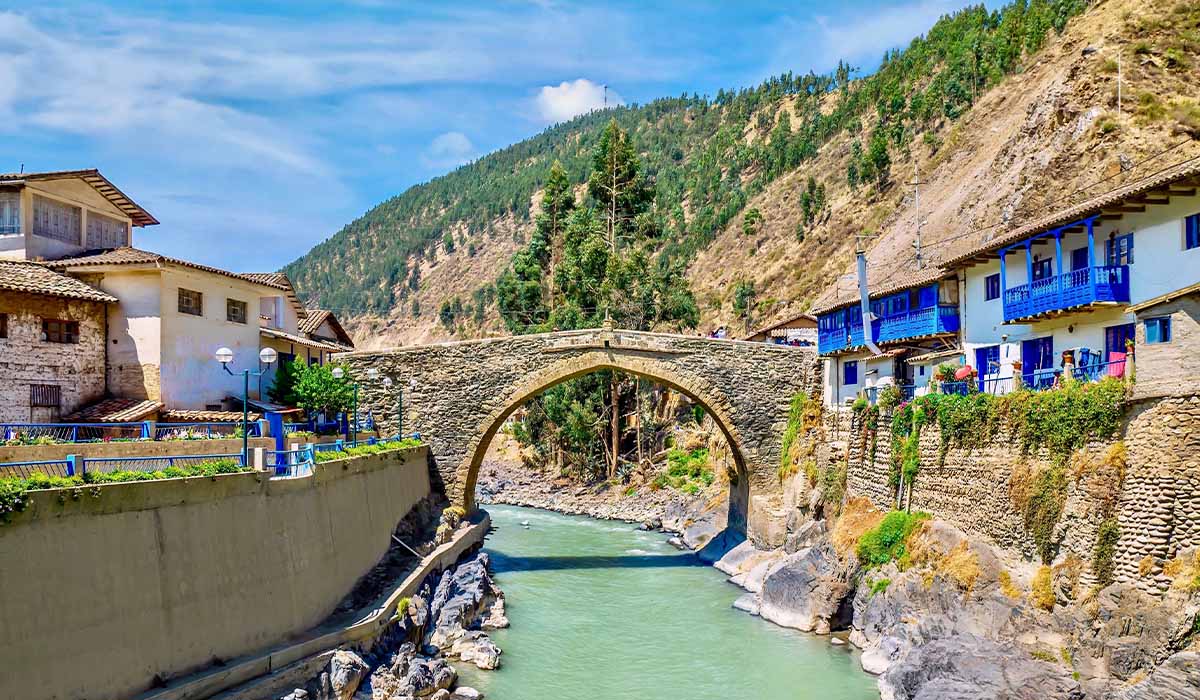
As you walk through the town, you’ll discover beautifully preserved colonial architecture, characterized by whitewashed houses with bright blue balconies. Beyond its picturesque streets, Paucartambo is nationally recognized as the birthplace of Peru’s most vibrant customs. These traditions reach their pinnacle during the world-famous Virgen del Carmen Festival (Mamacha del Carmen), held every July. During this festival, dozens of traditional dancers blend the Andean and Amazonian worlds in a spectacular display of faith and color.
The experience in this region extends far beyond its cobblestone plazas. Paucartambo is the gateway to the Amazon basin and the perfect base for visiting the Tres Cruces de Oro viewpoint. There, you can witness a unique natural phenomenon: a sunrise over the clouds of the Manu jungle. History buffs can also explore lesser-known locations like the Paucona archaeological site, ensuring a complete journey through Peru's ancient and living heritage.
Essential Facts about Paucartambo
Before adding this town to your itinerary, here is some basic information about this province to give you a clear view of it:
- Geographic location: It is located southeast of the city of Cusco, set at the bottom of an Andean valley that is crossed by local rivers.
- Origin of its name: Its name comes from the combination of two Quechua words: pawqar, meaning "colorful," and tampu, meaning "lodging," "inn," or "place of rest." Its exact translation is "colorful inn."
- Architecture: The town center maintains a uniform colonial identity. Walking through the square means walking on cobblestone streets lined with traditional white adobe houses that stand out because of their distinctive blue wooden balconies.
- Virgin of Carmen Festival: It is the most important cultural and religious event in the region. Celebrated every year from July 15 to 19, it attracts thousands of visitors.
Information on how to reach Paucartambo from the city of Cusco is provided here
Paucartambo is located about 109 kilometers east of Cusco. Depending on traffic and the type of vehicle, the road trip takes between three and four hours. Much of the road is paved, but it goes up the Andes, crosses the Huancarani Pass, and then goes down into the deep Mapacho River valley.
There are two main options for making this trip:
- Public Transportation: Shared Taxis or Minivans This is the cheapest option and the one most used by locals. The vehicles depart from the San Jeronimo Checkpoint, which is located on the outskirts of Cusco (about a 25-minute taxi ride from the historic center). These shared taxis do not have a fixed schedule and leave once they are full. The ticket price is usually between 15 and 20 soles.
- Private Transportation vs. Organized Tours: Hiring a private service is ideal if you are traveling in a group, want more comfort, or have a tight schedule. If your goal is to reach the Three Golden Crosses viewpoint at dawn or explore the Manu National Park, an authorized agency can handle the complex logistics of traveling to these remote areas.
Paucartambo Festival Calendar
Although July gets all the tourist attention, Paucartambo is a town deeply rooted in its traditions year-round. If you want to time your visit to coincide with a local celebration and experience the culture firsthand, here is the town's official festival calendar:
- February 3: It is the anniversary of the pontifical coronation of the Virgin of Carmen.
- February / March: The Carnival Festival features the traditional Paucartambo Charcay game and celebration.
- March / April: Holy Week. It is a time of deep religious sentiment, with processions such as the Lord of Holy Monday, the Lord of the Sentence, the Lord of the Fall, the Holy Sepulcher, and the Virgin of Sorrows.
- May 3: Vigil of the Cross (Festival of the Crosses): Crosses from different areas, such as Ccolcca, Conchupata, Yawarpata, Tres Cruces, and Cruz Pampa, are honored.
- May / June: Corpus Christi Celebration.
- June 21: Anniversary of the political creation of the province of Paucartambo, with civic parades and local celebrations.
- July 15 to 19 (Main day: July 16): The Festival of the Virgin of Carmen is the top event of the year. This top event of the year features dances, music, and the arrival of thousands of followers and tourists.
- October 8: A festival in honor of the Virgin of the Rosary.
- November 1: All Saints' Day is an important date in the Andean calendar when people remember the dead with traditional offerings.
The Festival of the Virgin of Carmen: The Most Important Celebration
This festival, declared a Cultural Heritage of the Nation, goes far beyond a traditional religious celebration. It is one of the most impressive examples of the blending of Andean and Catholic traditions in all of Peru. From July 15 to 19, the quiet town of Paucartambo transforms its stone streets to pay massive tribute to "Mother Carmen", drawing followers, photographers and travelers.
To help you understand the size of this celebration before your trip, here are its most iconic elements and moments:
- The display of the 19 dances: The soul of the party lies in its 19 traditional dance groups. The dancers don't just dance; they act out the history and diversity of Peruvian society. During the parades, you will see the Qhapaq Qolla, who represent ancient highland traders, and the Qhapaq Chunchu, who represent agile Amazonian warriors. You will also see funny dances that mock the colonial era, such as the Little Doctors and the Waca Waca.
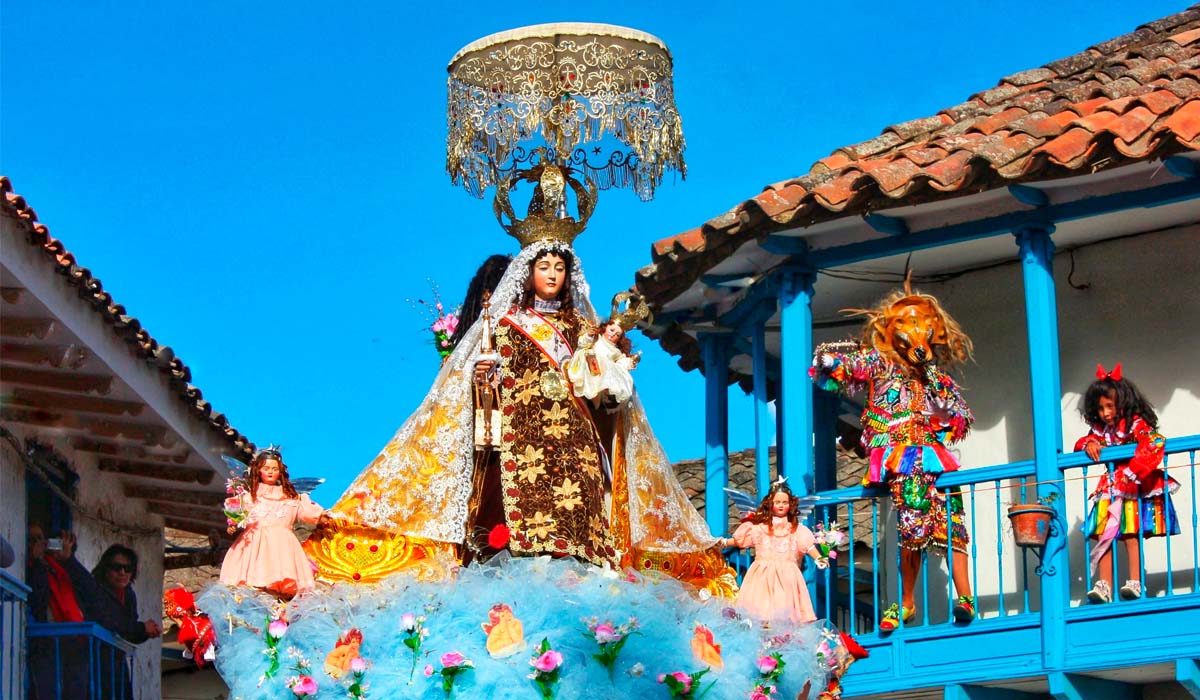
- The Saqras and the main procession (July 16): On the main day of the festival, the image of the Virgin is carried through the narrow streets of the town on a platform. The most visually striking part of this procession is the Saqras, dancers dressed as colorful demons with animal masks. Following tradition, these characters climb onto the roofs and balconies of houses to watch the Virgin pass by. They always hide their faces or look away because, according to the myth, they cannot look the "Mother" directly in the eyes.
- The spectacular "Guerrilla" (July 17): This is the theatrical highlight of the festival. The main square is cleared out and transformed into a symbolic battlefield where groups of Qollas and Chunchus fight. This performance is full of fire, humor, and stunts. It reenacts the historical battle for the Virgin's devotion, which always ends with the jungle warriors' victory.
- The blessing at the Carlos III bridge: During the final stage of the celebration, the image of the Virgin is carried to the historic, stone, colonial bridge that crosses the Mapacho River. An emotional ceremony is held at this spot where the image is turned to bless the four corners of the world. The Virgin says goodbye to her followers until next year.
Natural attractions and cultural wealth
Beyond its passionate festivals, the province of Paucartambo has fascinating places that deserve to be explored to understand the true essence of this transition region.
- The sunrise at Tres Cruces de Oro: Without a doubt, it is its greatest natural attraction. Strategically located on the edge of the mountain, this viewpoint offers a unique spectacle: the sunrise lighting up the endless blanket of clouds covering the Amazon basin.
- Paucona Archaeological Site: This is a pre-Inca complex of great historical value. This place is special because of the clear architectural evidence of the area's evolution, which shows a unique blend of original stone structures and colonial-era buildings.
- Museum of the Peoples: The exhibition rooms showcase the deep historical connection and cultural exchange between the Andean highland communities and the indigenous peoples of the Amazon.
- Ephemeral art in Holy Week: If you travel to Paucartambo in March or April, you will see that the streets become a canvas of devotion. Locals make huge, colorful floral carpets to welcome the traditional processions of the season.


