
The Salkantay Trek is the main alternative route to the four-day Inca Trail for accessing the Machu Picchu archaeological complex. This trekking circuit in Peru is notable for its ascent through various ecological zones within the Cusco region. Starting in the high Andean regions dominated by the Salkantay and Humantay glaciers, the route then descends into subtropical valleys.
This journey begins with an official gathering at the starting point for expeditions on this route: Challacancha. This Andean settlement is located in the Mollepata district, northwest of the Sayllapata sector. From here, the first part of the hike begins towards the Soraypampa base camp.
This first segment covers a distance of about 16.9 kilometres and has a moderate level of physical difficulty. Furthermore, the terrain is most stable during the dry season, which runs from May to September.
Location of Challacancha
Geographically, Challacancha is located in the district of Mollepata, which belongs to the province of Anta in the Cusco region of Peru. This starting point for hiking routes is situated at an altitude of 4,092 metres above sea level, which means hikers must acclimatise before setting off towards the snowy mountains.
Localities near Challacancha Perú
- Sayllapata Hamlet: 3 km southeast
- Cruzpata Hamlet: 5 km southeast
- Soraypampa Hamlet: 5 km north
- Chiribamba Hamlet: 6 km southwest
- Tablabamba Hamlet: 9 km southwest
- Mollepata Village: 9 km south
How to get to Challacancha Perú?
You will leave Cusco and head to the Mollepata community, which is located 2,803 metres above sea level. The journey continues along a floating trail until you reach Challacancha Peru, where muleteers and horses await to carry your expedition's cargo. From there, we will begin our ascent to Salcantaypampa. First, we will reach Soroycocha, which is located at an altitude of 4,491 metres, where we will set up camp. From there, you will catch your first glimpse of the impressive Apu Salcantay.
- Distance: 12km
- Elevation gain: 670m
- Highest elevation: Humantay Lagoon (4,200m)
- Trail hours: 4.5hrs
- Highlights: Enjoy stunning views of the Humantay and Salkantay glaciers throughout the walk. Hike up to the beautiful Lake Humantay and sleep under the Milky Way in the Sky Domes.
- Campsite: Sky Camp at Soraypampa (3,920m)
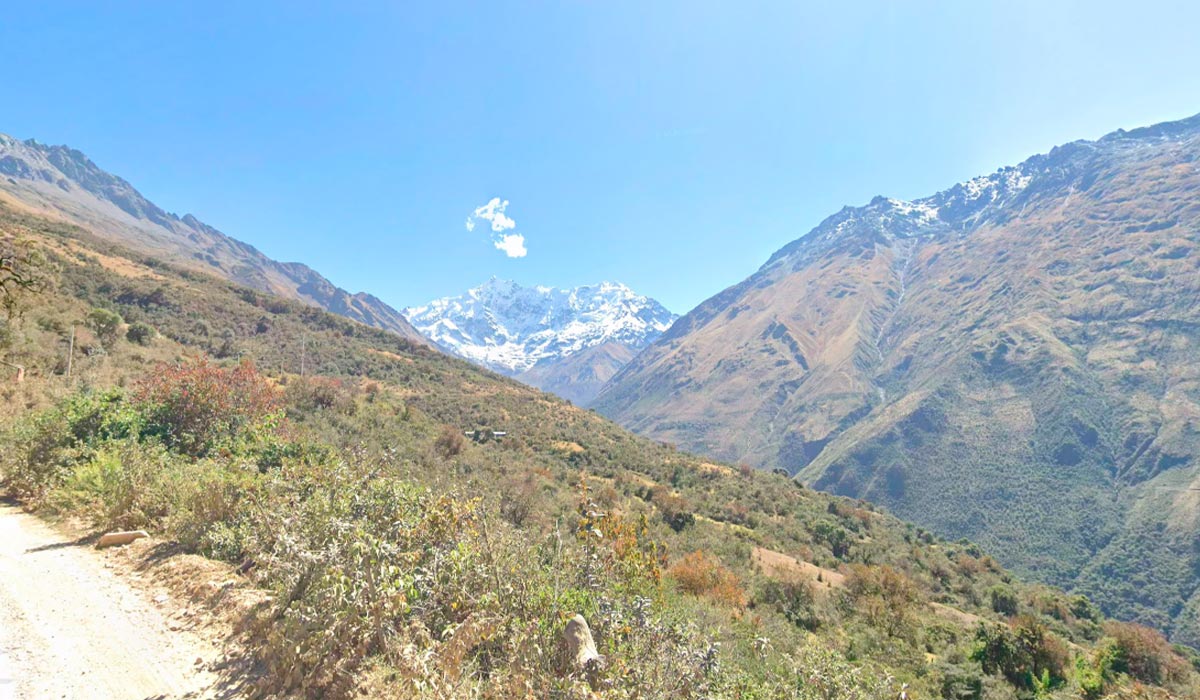
Hike along the Salkantay route
Trek groups start the Salkantay Trek from Challacancha. This logistical route links the Mollepata district to the Machu Picchu archaeological site by crossing the Vilcabamba mountain range.
Unlike the traditional Inca Trail, the Salkantay route is freely accessible. Currently, no government permits are required and there are no daily capacity limits, allowing for a less crowded journey.
This expedition's itinerary is defined by the following geographical and operational features:
- The snowy Salkantay mountain: The trail encircles this glacial formation, which is known in the Quechua language as 'wild mountain'. The peak reaches 6,271 metres above sea level (masl) and is located 50 kilometres northwest of Cusco. The highest transit point for hikers (Salkantay Pass) is over 4,600 metres above sea level, making it the most physically demanding section.
- Topographical transition: The hike requires the body to withstand a sudden change in ecological levels, descending from freezing high-mountain ecosystems to humid forests (the jungle belt) over the course of several days.
- Complementary circuits: The standard structure of this route includes a technical detour to Humantay Lake during the first 24 hours, which helps with the active acclimatisation process.
- Expedition logistics: Due to the constant altitude and geographical isolation, this hike requires the services of logistical operators and certified guides to ensure the transportation of equipment, supplies, and safety support along the route.
Where is the Salkantay route located?
The snowy Salkantay, located in the Vilcabamba mountain range in the Cusco department, rises to 6,271 metres above sea level. Its name comes from the Quechua words 'salqa', meaning 'wild', and 'antay', meaning 'to produce avalanches'. The mountain occupies an important place in the Andean worldview and is recognised as an Apu, a divine being.
Salkantay Trek Itinerary
Firstly, completing the entire circuit requires a moderate to advanced level of physical preparation due to the altitude changes and long days of walking. The standard five-day expedition is organised as follows:
- Day 1: Acclimatisation: The journey begins with a transfer from Cusco to Soraypampa base camp. The first day of technical hiking involves active acclimatisation through a climb to Humantay Lake, which is fed directly by glacial meltwater.
- Day 2 – Salkantay Pass: This is the most physically demanding stage of the circuit. The route ascends to Salkantay Pass, which is over 4,600 metres above sea level, with the glacier block running alongside. After reaching the summit, a long descent begins to reach the campsite at a lower altitude.
- Day 3 – Ecological Transition: The route then leaves the high mountain ecosystem and descends sharply towards the jungle brow valleys. This section is characterised by a steady increase in temperature and humidity, as well as thick Andean-Amazonian vegetation. From the viewpoints in this area, you can catch your first glimpse of the Machu Picchu complex.
- Day 4 – Hydroelectric Sector: The trail crosses the hydroelectric plant area that supplies the Cusco region. From here, the hike continues along a 10-kilometre flat route, running parallel to the train tracks (the same access road used during the 1911 expeditions), until reaching the town of Aguas Calientes.
- Day 5 – Tour of the Inca citadel: The final day is reserved for climbing to the historical sanctuary and touring the Machu Picchu complex. Travellers who have purchased the correct tickets in advance can include the ascent of Huayna Picchu or Machu Picchu Mountain in their itinerary before returning to Cusco.
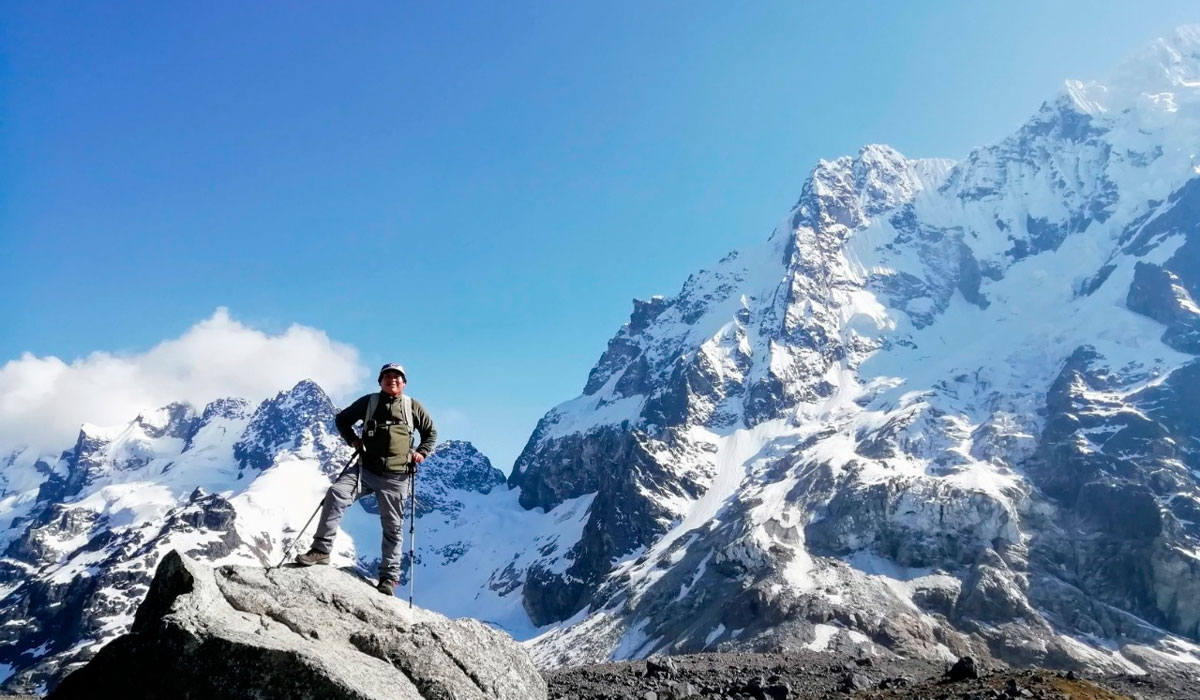
Characteristics of the Salkantay Trek route to Machu Picchu
The Salkantay Trek covers a total distance of around 74 kilometres, typically completed in four to five days. The terrain is characterised by sharp natural contrasts, with the route crossing the Vilcabamba mountain range and descending towards the Amazonian side of the Cusco department.
- Geographical and visual environment: The route initially passes through Puna and high mountain ecosystems, with glacial rocks and ice walls bordering the snowy peaks of Salkantay and Humantay. From the third day onwards, the terrain descends towards the 'jungle brow', where the rocky landscape gives way to lush vegetation, coffee plantations, fruit trees, orchids and the meandering Santa Teresa River. In this area, it is also possible to visit intermediate archaeological sites such as Llactapata.
- Difficulty level: The physical demand is rated as high. This is due to three practical reasons: the extreme altitude at Salkantay Pass (4,630 metres above sea level), steep downhill slopes that put pressure on the joints and long hiking days involving 15–22 kilometres of rough terrain (loose rock, mud and dirt) each day.
- Temperature change: The itinerary requires that hikers' gear can withstand severe temperature changes. High-altitude base camps such as Soraypampa record night-time temperatures that can drop to -5°C. In contrast, low jungle sectors (such as Santa Teresa or Hydroelectric) experience daytime temperatures of up to 28°C with high humidity levels.
- Acclimatisation and operational risks: The main technical risk of this route is altitude sickness (hypoxia). Since the second day of the hike exceeds an altitude of 4,600 metres, it is essential that visitors complete a strict acclimatisation period of at least two full days in Cusco before starting the hike in Challacancha.


