
Getting to Machu Picchu by land is not possible in the last part of the trip: there is no road to Aguas Calientes, so the train to Machu Picchu is the necessary way to travel for most visitors, except those who choose a trekking route. But what happens when there are two companies working on the same track? PeruRail and Inca Rail cover the same route, between the mountains of Cusco and Aguas Calientes, but with different fleets, service classes and prices.
PeruRail or Inca Rail? That is usually the first question. Choosing the train does not only depend on the brand, but on the service class inside each company. Are you looking for the cheapest option? Do you want to go with panoramic views? Or do you prefer a luxury service with an observation car or a private train car? Each company has a different answer for each case, and the most important question is not which company is better, but which mix of class, departure station and schedule fits the budget and travel plan of each traveler better.
But… How much does each class cost? Which station is the best to leave from? Which one is faster? This guide answers these questions and more, comparing in a fair way the available classes of both companies: reference prices, travel time, schedule frequency and the differences in the service on board. The goal is that, when you finish, you can decide which train to Machu Picchu is best to take in 2026.
Getting to know PeruRail
PeruRail is one of the two tourist train operators to Machu Picchu Pueblo, and it offers a range of services that goes from cheap options to luxury experiences. Currently, the company operates three main trains: Expedition, Vistadome and Hiram Bingham, each designed for a different type of traveler and budget.
The difference between these classes is not just the price, but the type of service on board, the available boarding stations, the size of the windows and, in the case of the Hiram Bingham, even the food experience. Next, we will explain each class with its features and an estimated price range.
Expedition (economy class)
It is the cheap option of PeruRail, with large windows on the sides for a wide view, comfortable seats with fixed tables in front of each seat, inside decorated with paintings, background music on board, more frequent schedules and boarding available from Cusco, the Poroy station, and the Ollantaytambo station.
- Estimated price: 65–85 USD per one-way trip
- Time from Ollantaytambo: About 1 hour 50 minutes
- Includes: Free water
- Recommended for: travelers on a tight budget, backpackers, or those who prefer to arrive efficiently without spending on extra services
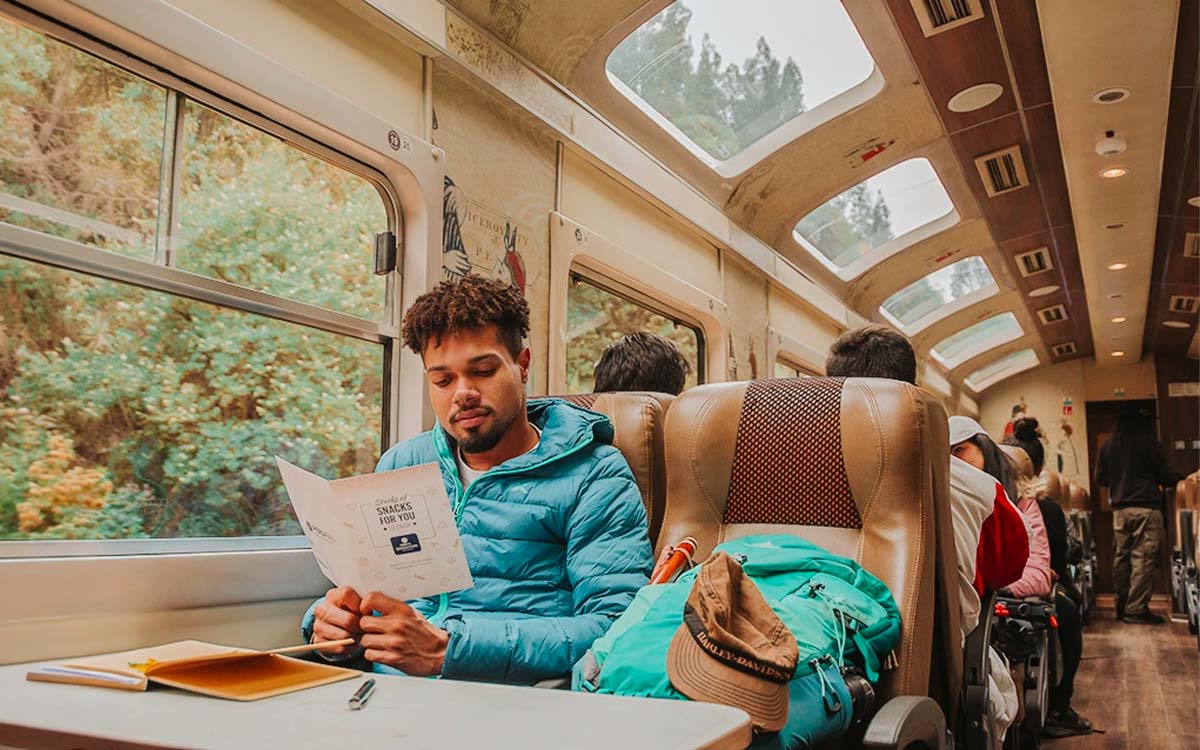
Vistadome (panoramic class)
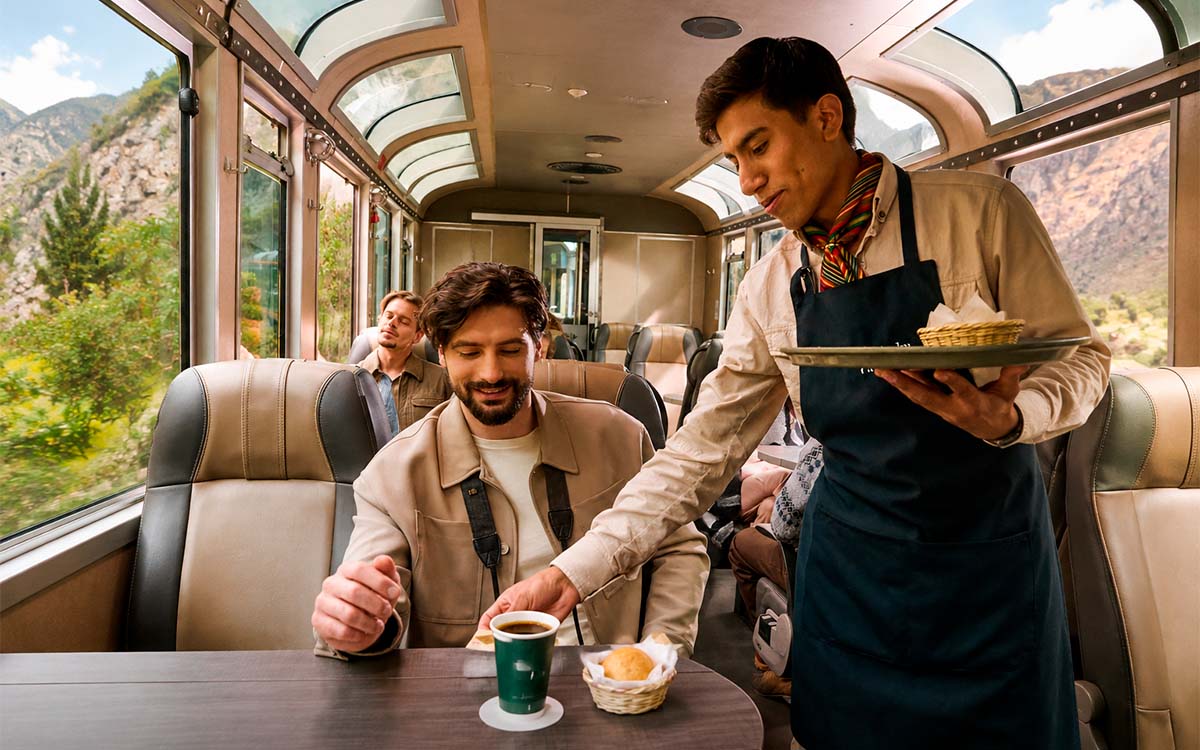
The Vistadome is the mid-range panoramic service, with its main difference in the visual aspect: the train cars have side and roof windows that allow a wider view of the Andean landscape and the change into the jungle edge.
- Estimated price: 95–130 USD per one-way trip
- Includes: Snack on board and, on the return trip, a short traditional Andean dance show
- Windows: Panoramic on the sides + roof (key difference compared to the Expedition)
- Recommended for: Those who want to improve the visual experience without moving to the luxury level; it is the most requested class of the operator
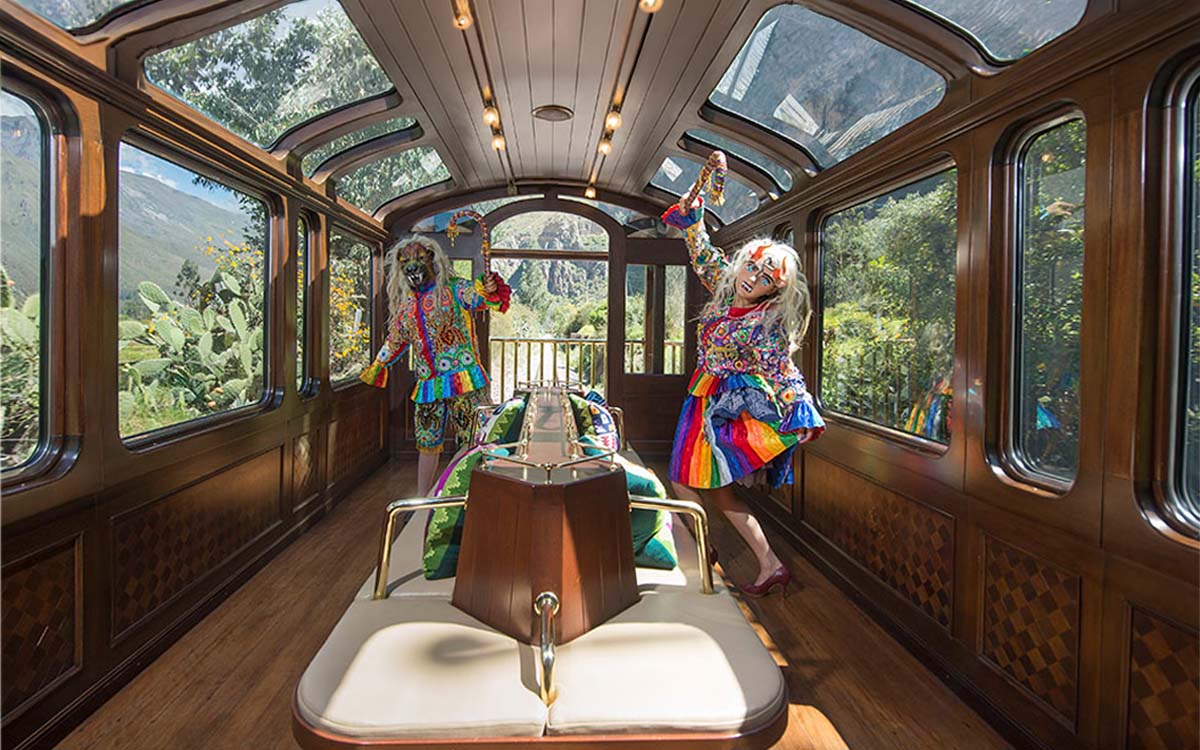
Belmond Hiram Bingham (luxury class)
The Hiram Bingham, operated by Belmond, is the most exclusive train to Machu Picchu. It has two dining cars, a bar car and an observation car with an open balcony.
- Estimated price: ~500 USD per one-way trip (~1,000 USD round trip)
- Includes: Brunch on the way there, dinner on the way back, unlimited drinks (including Peruvian pisco), live band, guided tour, entrance tickets to Machu Picchu and transfers
- Recommended for: Honeymoons, anniversaries or premium trips where the train is part of the main experience, not just transport
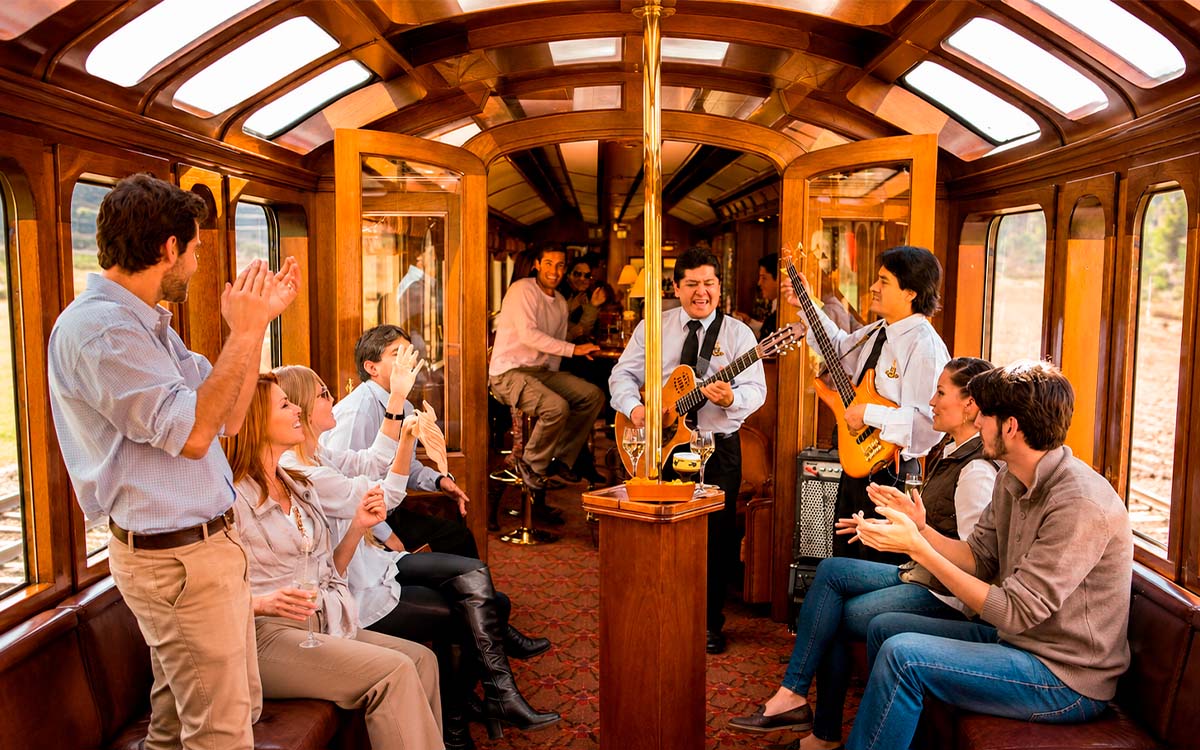
Getting to know Inca Rail
Inca Rail is the second tourist train operator to Machu Picchu Pueblo, and it competes directly with PeruRail on the same track. Its current catalog includes up to five service categories (The Voyager, The 360°, The Prime, The First Class and The Private), although for this guide we focus on the three that best represent each segment: budget, panoramic and luxury.
Just like PeruRail, Inca Rail trains leave mainly from two points: the city of Cusco (with a bimodal bus + train service) and the Ollantaytambo station, being the latter the one that offers the shortest travel times. The differences between classes can be seen in the size of the windows, the type of seats, the food on board and, in the higher categories, in extra experiences like traditional ceremonies or live music. Next, we will explain each class to you with its features and a reference price range.
Voyager (budget class)
The Voyager is the most accessible option of Inca Rail, with large windows on the sides and spacious seats designed to enjoy the landscape without spending on extra services.
- Reference price: 60–90 USD per way
- Includes: On-board sale of snacks and drinks made with Andean ingredients
- Recommended for: Travelers on a tight budget looking for basic comfort without giving up the view
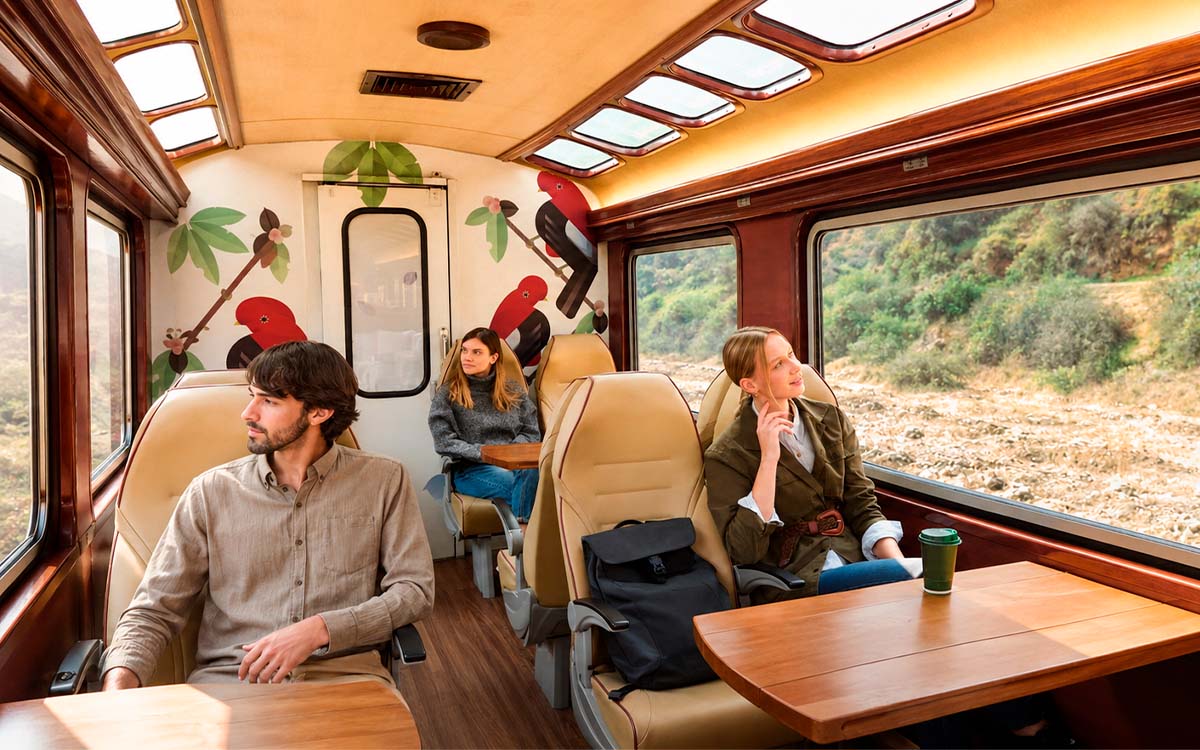
360° (panoramic class)
The 360° is one of the most requested services of Inca Rail and its great difference compared to the direct competition (Vistadome of PeruRail): it has an open-air observation car, the only one of its kind on the route, which allows taking pictures without the reflection of the windows.
- Reference price: 95–140 USD per way
- Includes: Traditional Andean snacks and drinks, entertainment app with route information and Inca history
- Windows: Side panoramic + roof
- Recommended for: Photography lovers and those looking for the best visual experience available on the route
First Class (luxury class)
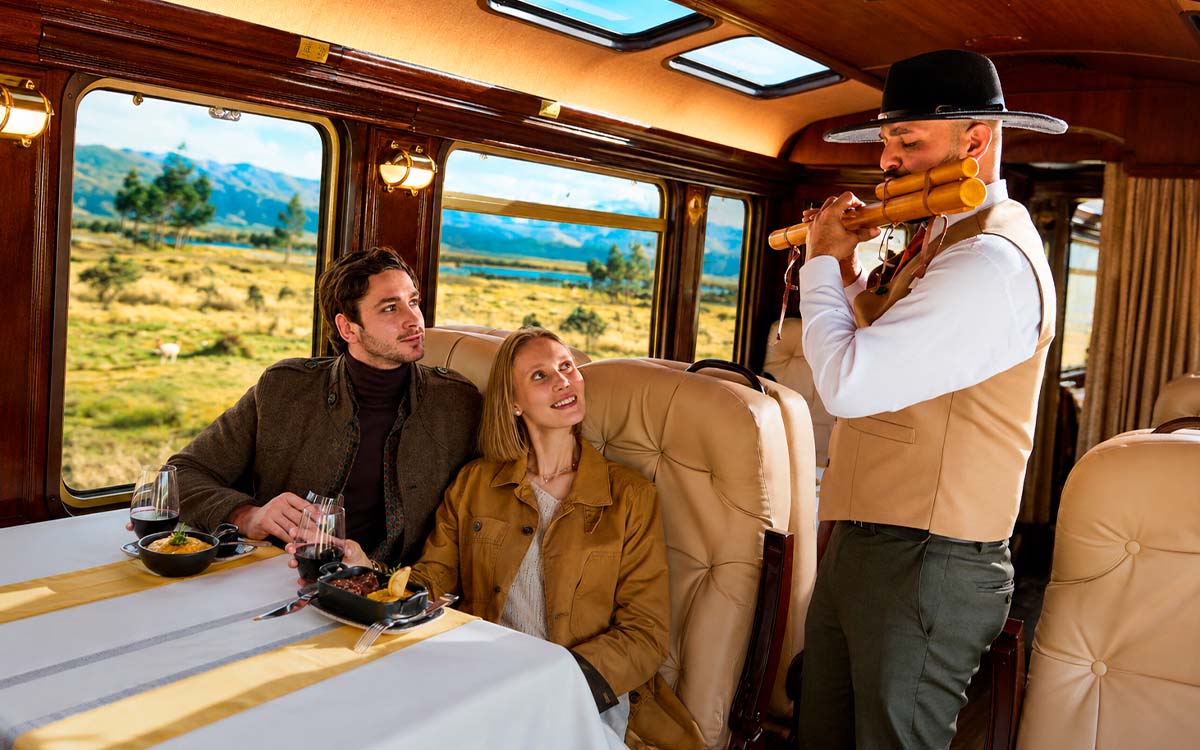
The First Class is the luxury category of Inca Rail, with a dedicated dining car, exclusive lounge/bar and open-air balcony. Upon boarding, passengers are welcomed with a traditional Kero ceremony, and a three-course gourmet menu with wine pairing is served on board, along with live music (saxophone and violin on selected services).
- Reference price: 250–350 USD per way
- Includes: Welcome ceremony, three-course gourmet menu with pairing, live music, observation balcony
- Recommended for: Special celebrations, honeymoons or travelers looking for a dining experience of a similar level to the Hiram Bingham of PeruRail, without reaching that price
Comparison table: prices, duration and stations
| Operator | Class | Reference price | Departure station | Approximate time | Frequency |
|---|---|---|---|---|---|
| PeruRail | Expedition | $65–85 USD | Poroy, Ollantaytambo | ~3h30 (Poroy) / ~1h50 (Ollantaytambo) | High — several times a day |
| PeruRail | Vistadome | $95–130 USD | Poroy, Ollantaytambo, Urubamba | ~3h30 (Poroy) / ~1h30 (Ollantaytambo) | Medium — several times a day |
| PeruRail | Hiram Bingham (Belmond) | ~$500 USD | Cusco, Poroy, Ollantaytambo | ~3h30 (Cusco/Poroy) | Low — 1 departure a day |
| Inca Rail | Voyager | $60–90 USD | Cusco (bimodal bus+train), Ollantaytambo | ~4h (Cusco bimodal) / ~1h40–2h (Ollantaytambo) | High — several times a day |
| Inca Rail | 360° | $95–140 USD | Cusco (bimodal), Ollantaytambo | ~4h (Cusco bimodal) / ~1h40–2h (Ollantaytambo) | Medium — several times a day |
| Inca Rail | First Class | $250–350 USD | Ollantaytambo | ~1h40–2h | Low — 1 to 2 departures a day |
Schedules and departure stations: Poroy, Ollantaytambo, Urubamba
Before choosing the train class, there is an earlier planning decision that shapes the whole experience: from which station to board. PeruRail and Inca Rail operate from three possible points, Poroy (near Cusco), Urubamba and Ollantaytambo, both in the Sacred Valley, and choosing one or the other can mean up to double the travel time.
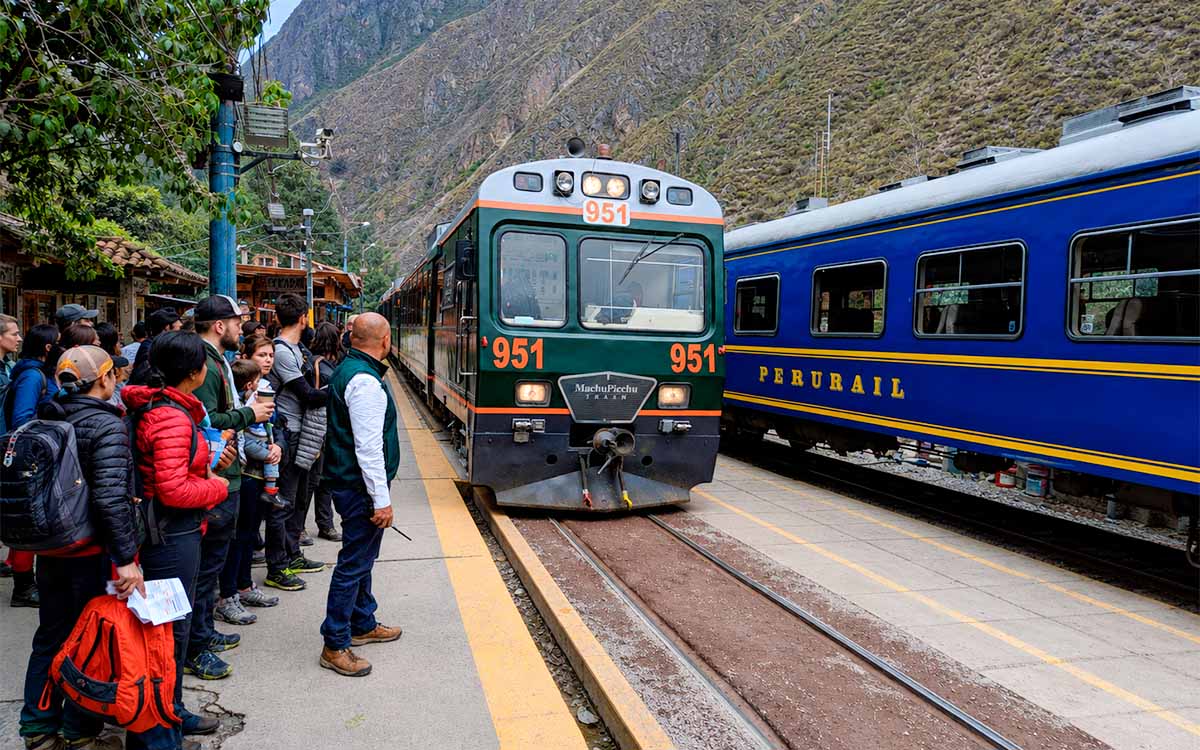
Why is Ollantaytambo the most used station?
Ollantaytambo gathers most of the departures for both operators, this is because, by being located inside the Sacred Valley, it greatly reduces the travel time to Aguas Calientes compared to leaving directly from Cusco or Poroy. This has two benefits for the traveler:
- Less time on the train: Instead of the 3 and a half hours it takes from Poroy, the trip from Ollantaytambo goes down to about 1 hour 40 minutes to 2 hours, depending on the class.
- Better travel plan logistics: Most tours that include the Sacred Valley (Pisac, Ollantaytambo, Chinchero) already leave the traveler in this area the night before, which allows them to board the train without needing to return to Cusco.
Travel time differences based on starting point
The travel time changes a lot depending on the departure station, regardless of the chosen class:
- From Poroy (Cusco): About 3 hours 30 minutes to Aguas Calientes. It is the option with the least frequent schedules and is usually used by those who do not have time to visit the Sacred Valley before the train.
- From Urubamba: Available only with some PeruRail services; the travel time is at a middle point between Poroy and Ollantaytambo, although with fewer departures than both.
- From Ollantaytambo: The shortest trip, between 1 hour 40 minutes and 2 hours depending on the operator and class, with the most frequent daily schedules of the three stations.
- From Cusco (bimodal service, only Inca Rail): The trip combines a bus section to Ollantaytambo and then the train, with a total time of about 4 hours. It is an option for those staying in Cusco who do not plan to go through the Sacred Valley.
How to buy train tickets to Machu Picchu?
Once the class and departure station are decided, the next step is buying the ticket. Both operators sell directly through their official channels, and buying this way is the safest way to avoid extra charges or invalid tickets.
Official channels
- PeruRail: The purchase is made through their official website, perurail.com, selecting the date, departure station, service class, and available time.
- Inca Rail: The purchase is made on incarail.com, with the same process of selecting the date, station, class, and time.
Steps to buy
- Choose the date and departure station (Poroy, Urubamba, or Ollantaytambo, depending on the operator and availability).
- Select the service class (Expedition, Vistadome, Hiram Bingham on PeruRail; Voyager, 360°, First Class on Inca Rail).
- Check the round trip time, making sure that the return time fits the time you plan to spend in Machu Picchu.
- Enter the passenger details exactly as they appear on the passport or identity document, since the boarding staff checks them before getting on the train.
- Complete the payment with an international credit or debit card; both sites accept major cards.
- Download or print the ticket (or save it on your phone), as it is asked for along with the identity document when boarding.
Common mistakes when buying
- Buying on unofficial resale sites: There are third-party pages that resell tickets with big extra charges or without a guarantee that they are valid. Buying directly on perurail.com or incarail.com avoids this risk.
- Not checking the return time: Some travelers buy round trip tickets without calculating the real time they need in Machu Picchu, running out of time or having hours of waiting in Aguas Calientes.
- Errors in the passenger's name: A difference between the name on the ticket and the identity document can cause problems when boarding; it is recommended to check the details before confirming the purchase.
Frequently asked questions
- Can I change the date of my train ticket?
Yes, both PeruRail and Inca Rail allow date changes, usually based on availability and a fee or price difference depending on how early the change is asked for. It is recommended to check the current change policy on the official website when buying, as it can change based on the type of service. - What happens if my flight is delayed and I miss the train?
Neither of the two companies guarantees a refund or automatic schedule change if you miss the train for reasons out of their control, like flight delays. For this reason, it is recommended to leave a lot of time between arriving in Cusco and the train time, especially if traveling on the same day. - Is there a direct train from Cusco (Poroy) or do I always have to go to Ollantaytambo?
Yes, there is a direct train from the Poroy station, close to Cusco, with both companies. However, the trip is much longer (~3h30) than from Ollantaytambo, and there are fewer train times. - What is the real difference between Vistadome and 360° if both are panoramic?
The main difference is the open-air viewing car only found on Inca Rail's 360°, which PeruRail's Vistadome does not have. Other than that, both share side and roof viewing windows, and a similar level of service. - Can I take large suitcases on the train?
No. Both companies limit hand luggage to one small piece per passenger. Large suitcases must be left at the hotel in Cusco or the Sacred Valley, or in a luggage storage service. - Is it necessary to book the train far in advance?
In high season (June to August) yes, especially for the panoramic and luxury classes, which usually sell out first. In low season there are more spots for last-minute bookings. - Do children pay the same price as adults?
Both companies offer lower prices for children, usually up to 12 years old, though the discount amount and specific rules change by company and class. It is recommended to confirm this price directly on the official site when booking. - What happens if I miss the return train from Aguas Calientes?
There is no guarantee of getting a seat on a later train without an extra cost. It is recommended to arrive at the station with plenty of time, keeping in mind that the bus from Machu Picchu to Aguas Calientes can have long lines during busy hours.


