
Traveling to Peru usually means visiting Machu Picchu, touring the Sacred Valley, and returning home with hundreds of experiences and stories from the trip. But is this the only experience you want to live on your trip to Peru? Experiential tourism offers something else, to stop being a viewer and become part of a community, where you can sleep in a family home, take part in planting or weaving, eat what is cooked that day, and get to know the daily life of a place from those who live there.
Few countries offer such a rich ground for this way of traveling as Peru. The Andean mountains, with Quechua communities that have kept their weaving and farming traditions; the Amazon, with towns that live daily with one of the most biodiverse ecosystems on the planet; and the Titicaca high plateau, where floating islands and lake communities keep their ways of life. This geographic and cultural diversity makes Peru one of the most complete destinations for those looking for meaningful tourism.
At Tierras Vivas we have been building content that goes beyond listing popular destinations, we care about tourism that makes communities stronger, that respects how they organize, and that works with the environmental sustainability of the lands (from tree planting efforts to saving species). In this guide we tell you what experiential tourism really is, what benefits it brings for both you and the communities you visit, how to choose a responsible program, and a tour through the most authentic communities and experiential destinations in Peru.
What is experiential tourism?
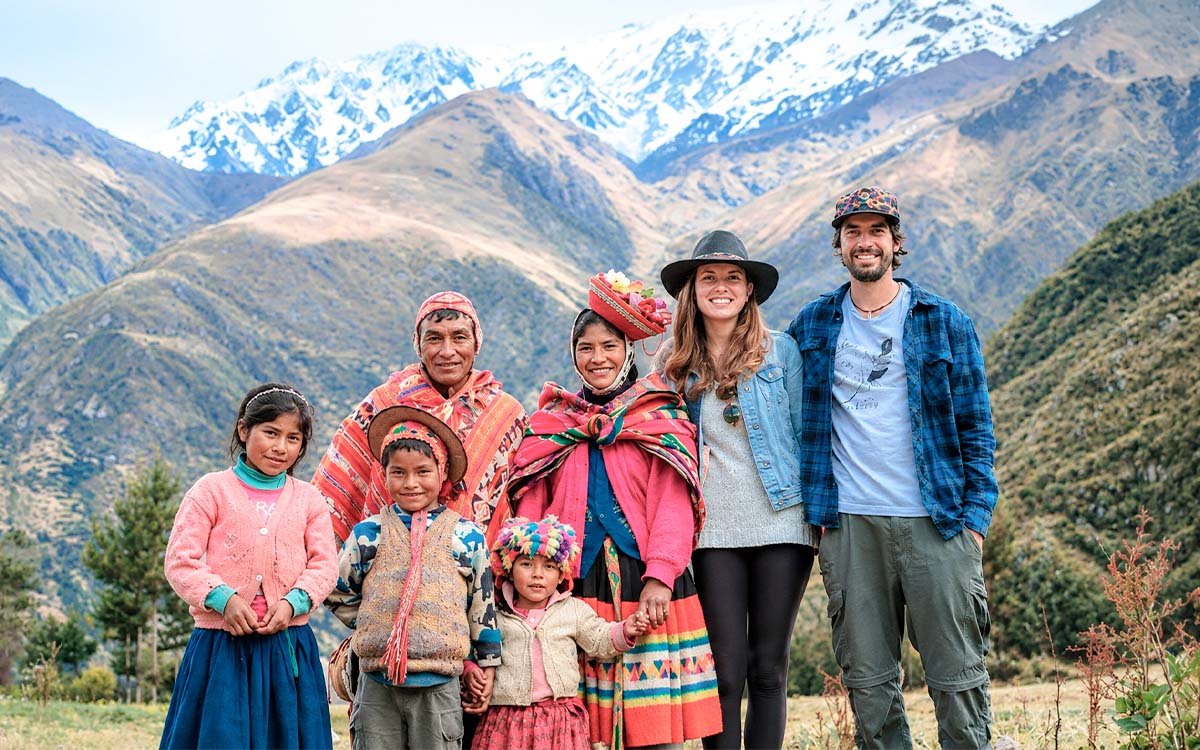
Experiential tourism is a way of traveling where the visitor temporarily joins the daily life of a host family or community, shares their home, their meals, their daily chores, and their customs, instead of just watching them from the outside. It is not a guided tour to a community, but a real, though short, living experience with those who live there.
What is NOT experiential tourism?
Often this concept is mixed with other terms of sustainable tourism. To make it completely clear, here we present the most common mix-ups:
- Community tourism (CRT): Also known as Community Rural Tourism, it is a business management model. A tourist business organized, managed, and controlled together by the community, which decides how visitors are welcomed and how the benefits are shared.
- Volunteering: In this visit model you will give a service or labor for a social, environmental, or educational project (building schools, teaching languages, planting trees, among others). It usually requires long stays and the focus is on free or supported community work.
- Ecotourism and agrotourism
Here the dividing line is set by the main focus of the attraction:
> Ecotourism: It focuses on wild nature and its protection (watching plants, animals, and ecosystems with the lowest possible impact). Cultural contact can be minimal or zero.
> Agrotourism: It focuses on farming activities, like visiting coffee, cocoa, or native potato farms to learn about the production process. It is a very close subsector, but an agrotourism tour can last just a couple of hours, with no need to live with or spend the night with the community.
Both can be part of an experiential trip, but their main focus is the activity (the natural setting or the production process), while the focus of experiential tourism is the human connection: living with a family or community as an experience itself.
Benefits of experiential tourism
Experiential tourism in Peru is not just a different way to travel, it creates real benefits for both sides, for the one who visits and for the one who receives (that is, for both the traveler and the community).
For the traveler: Connection and cultural learning
Whoever chooses experiential tourism in Peru does not just look to fill a schedule, but to have an experience that changes the way they see travel. So, by living with an Andean, Amazonian, or highland family, the traveler:
- Sees and learns first-hand community skills (like weaving, farming, or traditional fishing) that no regular tour teaches.
- Builds empathy by sharing the daily routine of people with a culture different from their own.
- Takes away a memorable experience, instead of just one more photo among thousands.
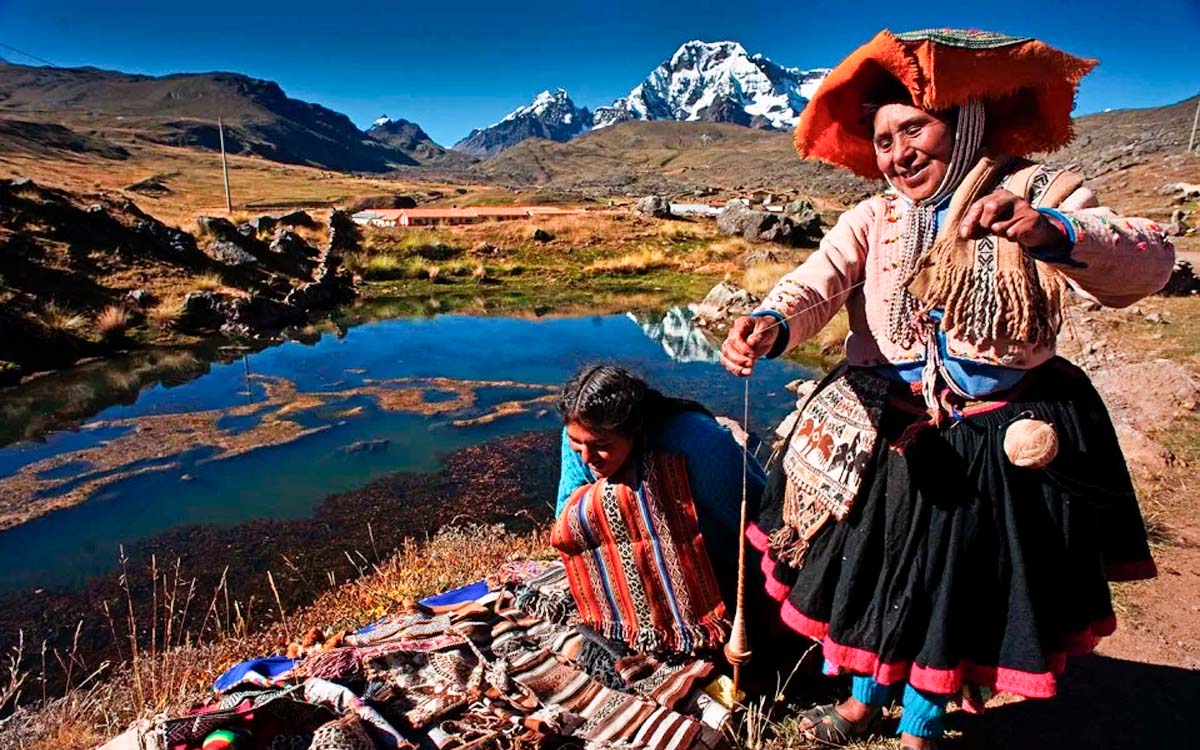
A good example of this is the Willoq community, where the visitor does not just watch traditional weaving, but joins the process along with the weaving families.
For the community: Economic, cultural, and management impact
On the other hand, well-managed experiential tourism creates benefits for communities, such as:
- Direct economic impact: The money goes without middlemen to the host families (for lodging, food, and crafts), unlike other tourist models where a large part of the profit stays with outside agencies.
- Cultural preservation: When a tradition (a weave, a language, a farming skill) becomes something that creates value and pride in front of the visitor, new generations have a real reason to keep doing it instead of leaving it behind.
- Community control of tourism: The community decides how many visitors to receive, how to organize, and where to invest the money made, which avoids the bad effects of massive and unruled tourism.
This type of impact is, also, part of a wider commitment that we have seen in projects like the protection of the spectacled bear in Chaparri, where tourism also becomes a tool for environmental protection
How to choose a responsible experiential program
This is, maybe, the most important part of the guide and the one that almost no one explains in depth. Not everything advertised as "experiential tourism" really is, and choosing wrong can mean ending up in a shallow experience or, worse, in a model that does not benefit the community it claims to represent.
Key questions before booking
Before committing to a program, it is worth asking these questions to the operator or agency:
- Who runs the program: the community or a middleman?
Ask directly if the lodging and activities are run by the community itself or if it is a third party that only "sells" access to it. It is not necessarily bad to work with a responsible middleman, but the difference decides how much of the money you pay really reaches the families. - Where does the money go?
A clear program should be able to explain to you, even in a general way, how the money is split: how much goes to the host family, how much to community funds (education, infrastructure, conservation), and how much to the logistics. If no one can answer this question clearly, it is a warning sign. - How many nights does the community itself recommend?
Communities with experience in experiential tourism usually have a clear recommendation on the ideal stay length (usually between one and three nights) so the experience is real and not a quick visit dressed up as "experiential". If a program offers you "experiential tourism" in a few hours, it probably is not.
Signs of "folklorized" tourism vs. authentic experience
Folklorized tourism happens when the local culture becomes a show put on for the visitor, instead of being a real shared experience. Some signs to spot it:
| Staged tourism | Real experience |
|---|---|
| "Acted" activities outside their real context (dances or rituals staged only for tourists) | Activities that are a real part of the family's routine that day |
| Traditional clothing used only as a photo prop | Clothing worn normally, as part of daily life |
| Little or no direct contact with families; everything guided by a tour guide | Direct interaction, even with language barriers |
| Exact same programs for every group, with no change | The experience changes depending on the season, the current chores, and the host family itself |
In short, if you can clearly tell the difference between "they did this for me" and "this is what they always do, and they let me join", you already have a good compass to choose a responsible program.
Communities and destinations for Experiential Tourism by region
Experiential tourism in Peru is practiced in dozens of communities across the country, each with its own cultural identity and its special way of welcoming visitors. Next, we will take a region-by-region tour, mixing well-known communities with other less-explored ones that are worth discovering.
Cusco and the Sacred Valley
Cusco is the region with the highest development of Community Rural Tourism in the country, and that is why it gathers some of the best experiential tourism experiences in Peru. Among the options to live this adventure, you can find:
- Willoq: Popularly known as the "red towns" because of the color of their traditional clothes. In this community in Ollantaytambo you will learn about herding camelids and their famous textile art
- Misminay: Located above the circular terraces of Moray, it is the ideal destination to learn about seasonal farming, Andean astronomy and enjoy one of the panoramic views of the Sacred Valley.
- Amaru: Located high up in Pisac, it is a guardian of Andean biodiversity. Here families teach how to gather wild plants for natural dyes and prepare the land with tools like the chakitaqlla.
- Raqchi: Famous for being located next to the Temple of Wiracocha, the community stands out for its red clay pottery and for offering an option to know its archaeology and daily life.
- Q'eros: Considered by many as the last living Inca community, it keeps ancient traditions practically untouched due to its geographic isolation.
Lake Titicaca
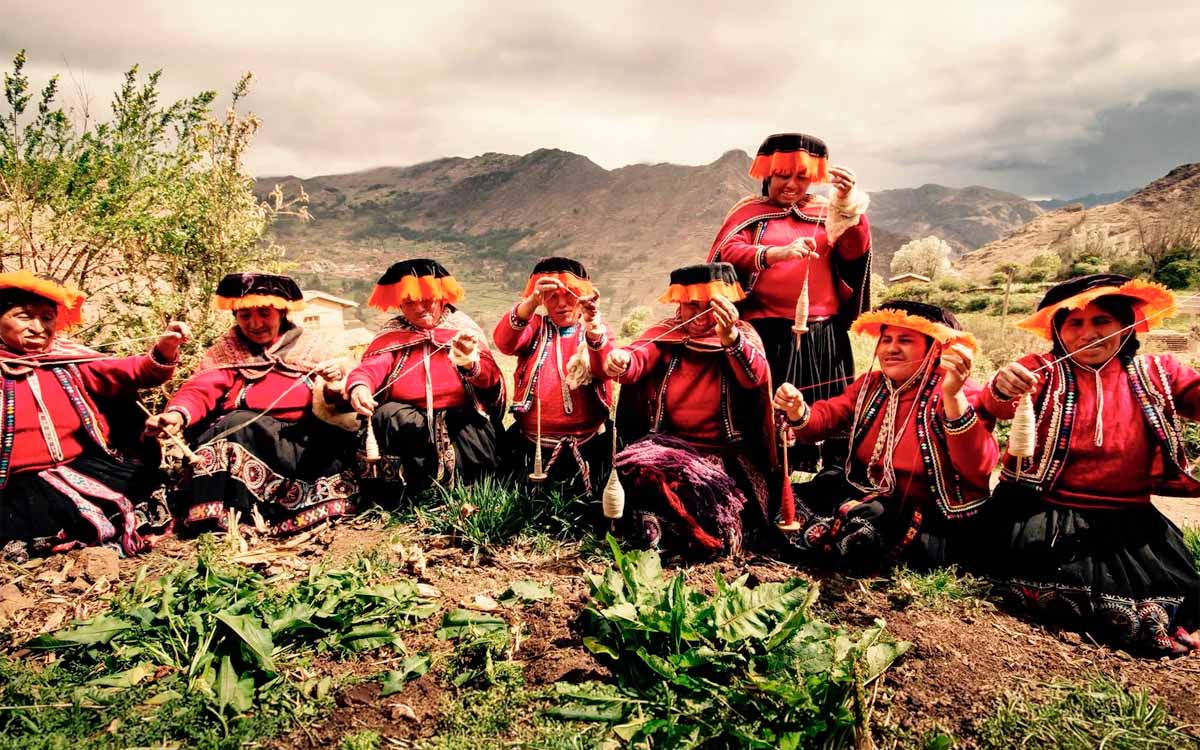
The highest navigable lake in the world offers one of the most unique experiential tourism experiences in Peru, between the blue of the water and the high plateau sky. Here you can meet the communities of:
- Taquile: Where you will witness a unique textile art, where men hand-weave clothes declared World Heritage.
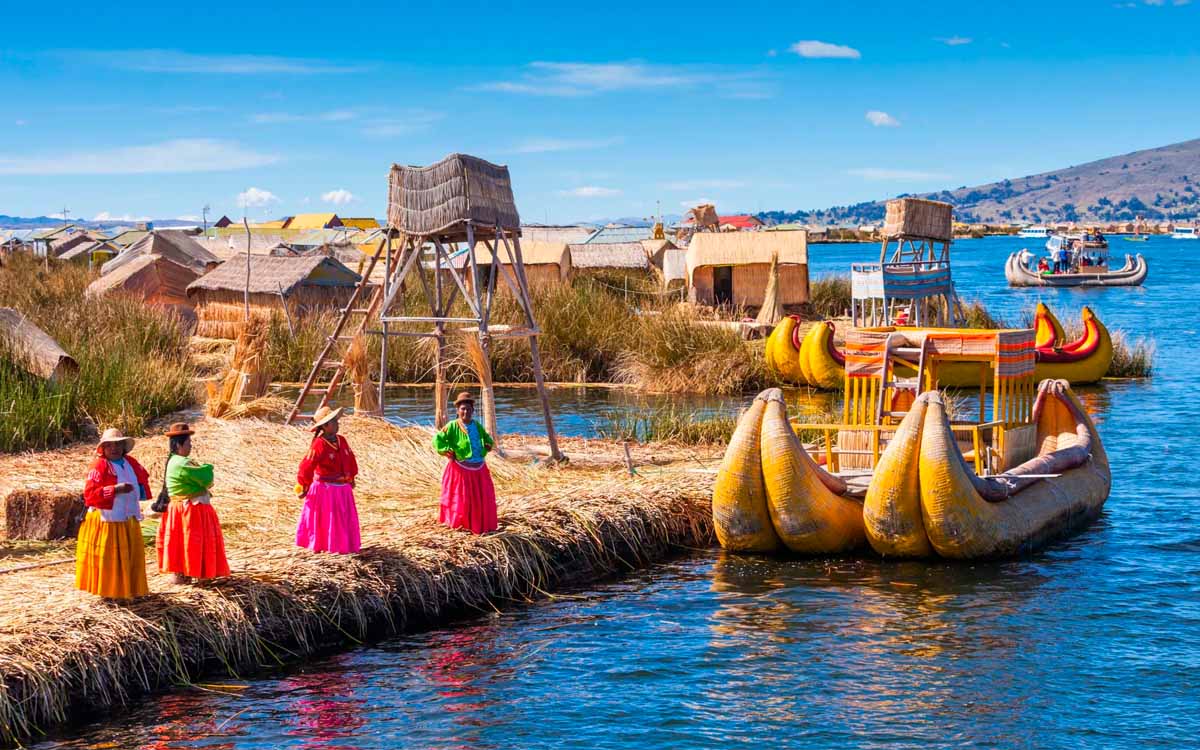
- Uros: The famous floating islands artificially made of totora reed. Although it is the most visited and tourist destination on the lake, it is still a proof of the community engineering developed for generations.
Colca Canyon (Arequipa)
Beyond condor watching, the towns of Colca hold a cultural wealth that beats strongly at the bottom of the canyon, and are a must-stop for anyone looking for experiential tourism in Peru outside the Cusco circuit.
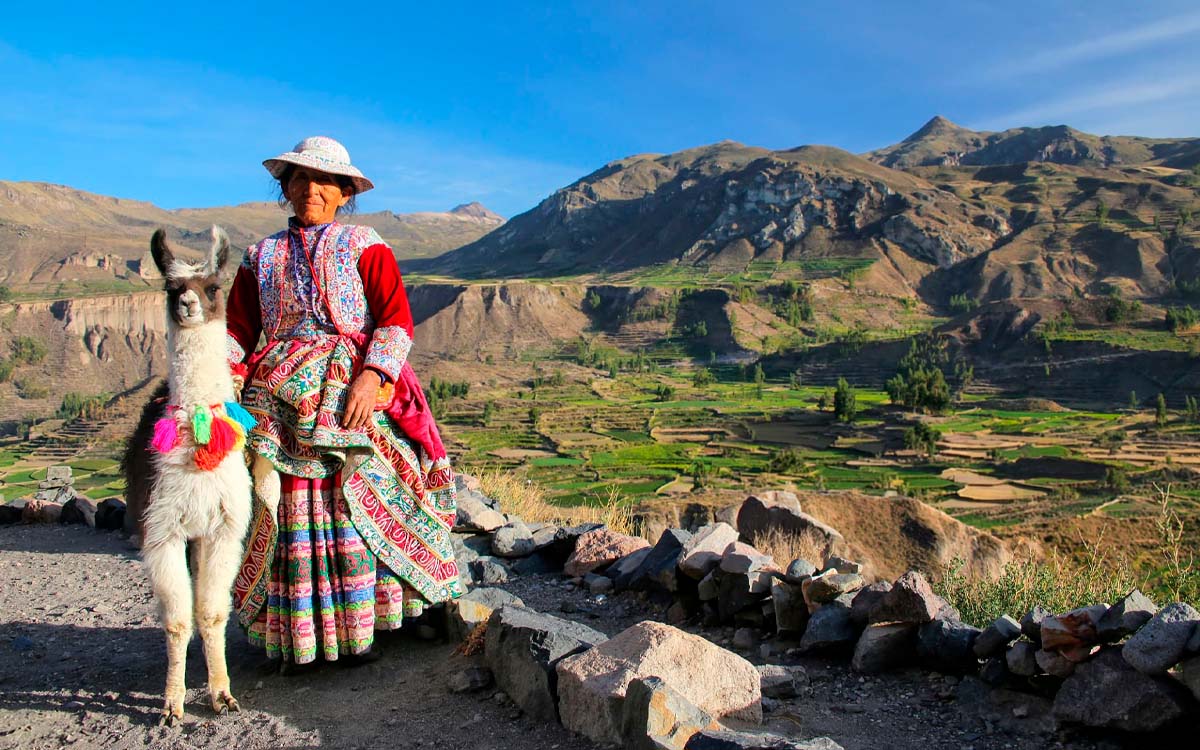
- Sibayo: Calling itself the "Town of Stone" due to the traditional architecture of its houses, it is a spectacular destination to do llama trekking (guided walks with pack llamas) and learn to spin the very fine alpaca fiber.
- Coporaque: Located on the right bank of the Colca river, it is a peaceful haven where local families invite you to ride horses on their trails, relax in their medicinal hot springs and take part in the traditional milling of Andean grains.
Cordillera Blanca (Ancash)
The Huaylas alley is not only for mountain climbers; it also houses communities that guard the rural life of the high mountain, such as:
- Vicos: Located on the slopes of the Copa snow-capped mountain, this community was a pioneer in the development of rural tourism in Peru. Here you will experience the daily life of a farming community and learn about the sustainable management of glacier water.
- Huamacchuco: A corner surrounded by forests and pre-Hispanic archaeological remains, where the local food based on native potatoes, guinea pig and high-altitude aromatic herbs are important.
Amazon
An area little explored in an experiential way, ideal for those seeking to understand the jungle from the worldview and respect of its original inhabitants. In this place you can meet towns and communities like:
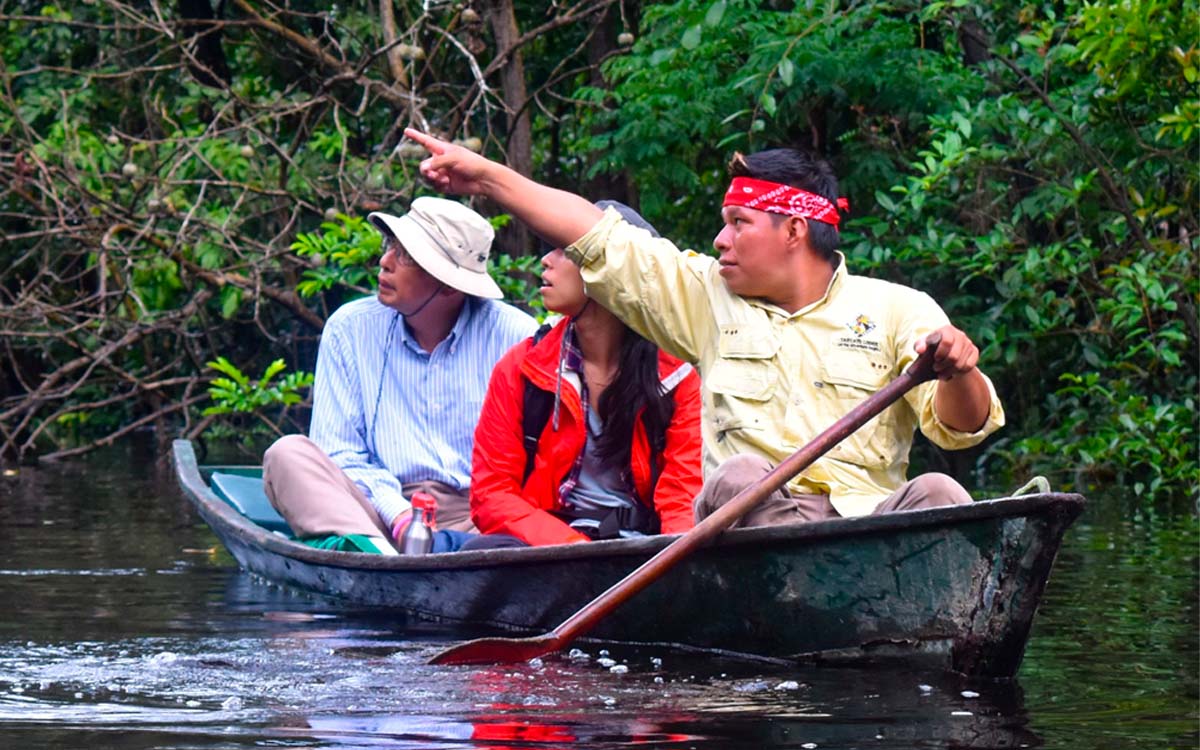
- Yarina (Pacaya Samiria National Reserve): A complete experience in the heart of the lowland jungle. Local people guide in canoes through black rivers, teach traditional piranha fishing techniques and share their Amazonian myths and legends around the fire.
- Tingana: An eco-tourist and experiential refuge managed by local families dedicated to forest conservation. You will sail on the river to spot monkeys and birds, while learning how the community saved this ecosystem from deforestation.
- Bora Community (Iquitos): Located on the banks of the Momon river. Although it gets day visits, the most valuable thing is to stay overnight in the community to learn about their painting on llanchama bark, their ritual dances in the main maloca and their relationship with jungle plants.
North (Lambayeque)
The Peruvian north breaks the Andean mold to show that experiential tourism also blooms in the dry forests of the coast, here are the:
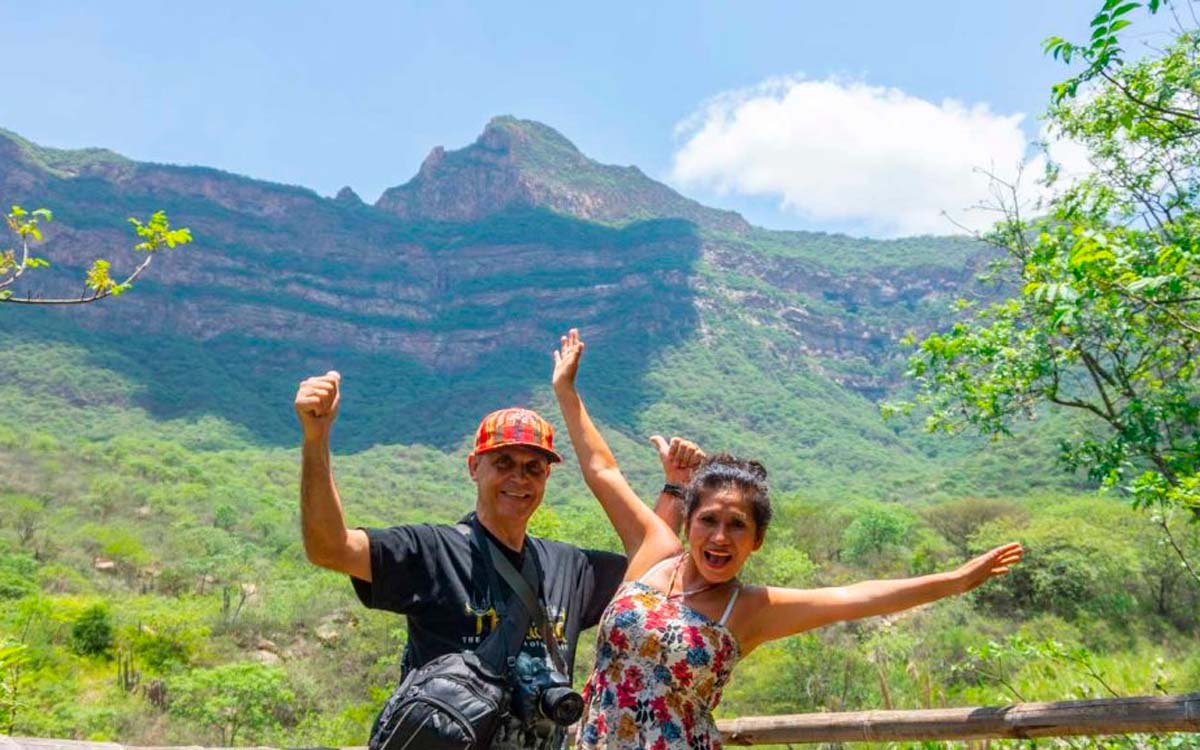
Chaparrí: The perfect example of how experiential tourism goes hand in hand with ecology and reforestation. It is the first Private Conservation Area in Peru, managed by the farming community of Muchik Santa Catalina de Chongoyape. Here you will live with the community members who protect the spectacled bear and the Peruvian plantcutter, taking part in tracking walks, carob tree reforestation and learning about the traditional healing of the Lambayeque culture.
What to bring and how to prepare for experiential tourism in Peru
Before starting your experiential tourism experience in Peru, it is a good idea to prepare both your luggage and the mindset you arrive with.
What to bring
- Warm clothing: Most Andean communities are at a high altitude, where temperatures drop a lot during the night, even in the dry season. Bring layers, a good windbreaker, and something to cover your head and hands.
- Gifts for host families: A simple gift (school supplies, non-perishable food, basic needs items) is well received and is part of the sharing nature of community living.
- Cash in soles: Many communities do not have access to ATMs or signal for digital payments. Bring enough cash in small bills to cover extra costs, craft purchases, or tips.
- Open mind: More than an object, it is the attitude you arrive with. Being willing to adapt to other paces, other ways of talking, and other comforts is, in practice, the most important requirement of all.
Acclimatization
Many of the communities mentioned in this guide are located between 3,500 and 4,000 meters above sea level, so altitude sickness is a factor to keep in mind before starting the trip. Some basic tips:
- Spend at least one or two days in Cusco or Puno before heading to the communities, to give your body time to adapt.
- Avoid alcohol and heavy meals during the first few days at altitude.
- Stay hydrated and consider coca tea, a traditional remedy very common in the Andean area.
- If you have existing medical conditions, check with your doctor before the trip, since the altitude can affect blood pressure and heart function.
Frequently asked questions about experiential tourism in Peru
- Is the lodging uncomfortable?
It depends on your expectations. Lodging is usually simple (basic beds, shared bathrooms or latrines in the most remote communities, limited hot water) but generally clean. It is not luxury tourism, and that is exactly part of the idea: living the real conditions of the community. - Do I need to speak Quechua?
It is not necessary. Many host families speak Spanish, especially the younger generations, and organized programs usually have a guide who translates when needed. Even so, learning a few basic words in Quechua (a greeting, a thank you) is highly valued by the communities and helps break the ice. - How many days are recommended?
As we saw in the section on how to choose a responsible program, most communities recommend between one and three nights. Less than that usually stays as a surface-level visit; more than three nights requires more time and is usually saved for travelers with more specific interests (research, volunteering, documentary photography, among others). - Is experiential tourism in Peru safe?
In general terms, yes. Communities that offer experiential tourism programs usually have years of experience hosting visitors and a strong interest in protecting their reputation. Like on any trip, it is a good idea to book through trusted operators, share your travel plan with someone you trust, and follow local advice, especially regarding altitude and weather.


